
Main Courses
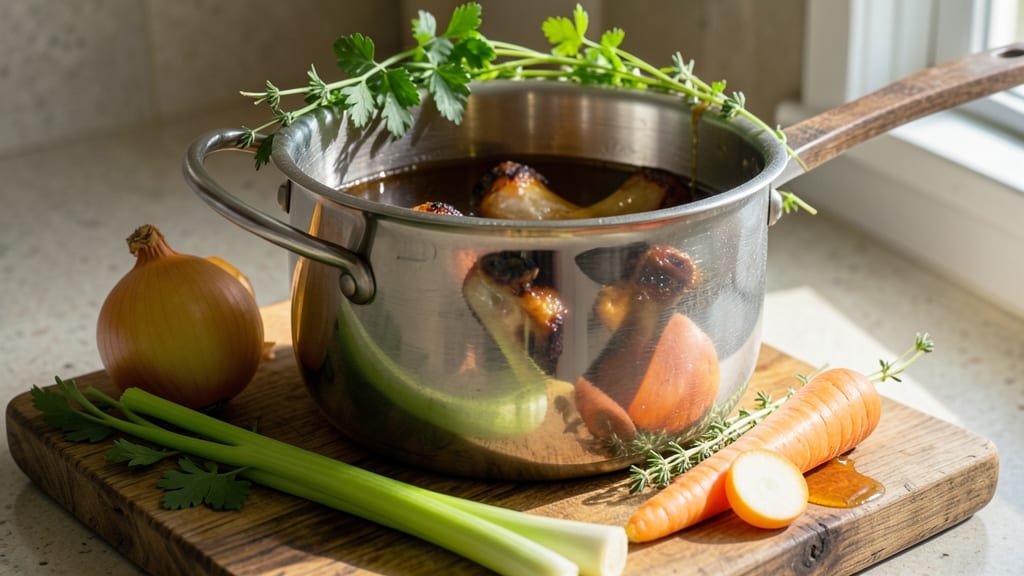
Alton Brown’s chicken stock recipe transforms raw bones and scraps into a deep-flavored, restaurant-quality broth that elevates every dish it touches. Growing up in small-town Georgia, I learned that homemade stock isn’t just a cooking technique—it’s the foundation of flavor, turning simple ingredients into something extraordinary.
The key lies in patience and precision: blanching bones removes impurities, while slow simmering extracts every nuance of meat and aromatics.
This method delivers rich, golden broth in just one pot, requiring only basic ingredients—chicken bones, vegetables, and herbs—simmered for hours. Unlike store-bought versions, homemade stock develops layers of complexity, with a savory depth that transforms soups, sauces, and braised dishes.
The process is straightforward but demands attention to detail, like skimming foam and straining carefully to ensure clarity.
What you’ll end up with is a versatile, aromatic liquid that freezes beautifully for future use. Whether you’re making creamy bisques, tender braises, or velvety sauces, this stock becomes the secret weapon in your kitchen.
The technique is foolproof, and the results speak for themselves—bold flavor without the guesswork. Let’s get started.
Perfect for meal prep, holiday cooking, or anytime you crave that homemade touch, this stock recipe is a game-changer. The best part? You’ll never go back to store-bought once you taste the difference. Here’s how to make it.
Ingredients for alton brown chicken stock
Pantry staples meet Alton Brown's precision technique for restaurant-quality chicken stock.
| Ingredient | Amount | Notes |
|---|---|---|
| Chicken Bones 🍗 | 3 lb | Raw or roasted, with meat attached |
| Yellow Onion 🧅 | 1 whole | Peeled, halved, root end intact |
| Carrots 🥕 | 2 lb | Whole, unpeeled, scrubbed clean |
| Celery Stalk 🧄 | 4 whole | Browned ends trimmed, cut into 2-inch pieces |
| Fresh Parsley Stems 🌿 | 1 bunch | Tough stems only, no leaves |
| Fresh Thyme Sprigs 🌿 | 4 whole | Stems only, tied with kitchen twine |
| Fresh Bay Leaves 🍃 | 2 whole | Dried if fresh unavailable |
| Black Peppercorns 🌶️ | 1 tbsp | Crushed lightly in mortar |
| Kosher Salt 🧂 | 2 tsp | Diamond Crystal preferred |
| Cold Water 💧 | 12 cups | Filtered preferred for clarity |
| Lemon Juice 🍋 | 1 tbsp | Freshly squeezed, for brightness |
| Extra-Virgin Olive Oil 🫒 | 2 tbsp | For initial bone searing |
The bones are non-negotiable—chicken backs and necks yield the most gelatinous, flavorful stock. Local butchers often sell them for free or cheap, or check the meat counter at Whole Foods or Costco for pre-packaged options. Roast them first at 400°F for 20 minutes to deepen flavor, but raw works too. Avoid anything with meat still clinging if you're sensitive to cloudiness—blanching removes impurities. For vegetables, organic carrots and celery from the produce section add natural sweetness without pesticides. The parsley stems and thyme sprigs are flavor powerhouses—don't skip them.
No fresh bay leaves? Dried work at half the quantity, but fresh infuses better. Short on thyme? Rosemary sprigs at a 1:1 ratio add piney depth. The lemon juice brightens the final product—bottled works in a pinch, but fresh is ideal. For salt, Diamond Crystal kosher dissolves cleanly, while table salt can leave grit. The olive oil isn't just for searing—it adds a subtle fruity note that elevates the finished stock. Store-bought chicken stock cubes? Skip them entirely—this method delivers complexity they can't replicate.
This stock peaks after 8-12 hours of simmering, but never boil—gentle heat extracts collagen without breaking down proteins. Strain through a fine-mesh sieve or cheesecloth for crystal clarity. Portion into ice cube trays for easy use in recipes, or freeze in airtight containers with 1-inch headspace. Thaws beautifully overnight in the fridge. The flavor actually improves after 3-4 days of refrigeration as flavors meld. For long-term storage, vacuum-seal portions for up to 6 months—label with the date to track freshness.
Why You'll Love This Recipe
- No Dutch Oven? No Problem: Honestly, I’ve made this with just a heavy-bottomed pot—no fancy equipment needed. The key’s in those seared chicken bones and scraping up the fond (those browned bits at the bottom are flavor gold). Between the olive oil sear and the gentle simmer, you’re extracting collagen like a pro, even without a Dutch oven.
- Freeze It, Forget It: I make this once a month, but it lasts forever. Pop it into ice cube trays for soups or risottos, or freeze in pints for stews. And here’s the thing: the flavor gets even better after 3-4 days in the fridge. My freezer’s always stocked, and I never have to stress about last-minute cooking. Twenty minutes of prep, months of satisfaction.
- One Pot, Endless Possibilities: This stock’s my secret weapon for everything from creamy mashed potatoes to pan-seared chicken thighs. My kids don’t even notice it’s homemade—they just ask for seconds. And honestly? It’s half the cost of store-bought, with no weird additives. Just bones, veggies, and herbs doing their thing.
Step-by-step instructions for Alton Brown's chicken stock recipe
This method delivers restaurant-quality stock with maximum flavor extraction in a single pot.
Prepare and Sear the Chicken Bones
Pat the 3 lb chicken bones completely dry with paper towels to remove any moisture. This step is crucial for achieving maximum browning and flavor development. Place the bones in a large Dutch oven and arrange them in a single layer, ensuring they don't overlap.
Heat the Dutch oven over medium-high heat and add the 2 tbsp extra-virgin olive oil. Once the oil shimmers, carefully add the bones and let them sear undisturbed for 8-10 minutes. You'll see the bones develop a deep golden-brown crust, which is packed with concentrated flavor. Flip the bones occasionally to ensure even browning on all sides. The goal is to create a rich, caramelized base for your stock.
Build the Aromatic Base
Remove the seared bones from the pot and set them aside. In the same Dutch oven, add the halved 1 yellow onion, cut-side down, and cook for 3-4 minutes until the cut surfaces begin to caramelize. This step develops sweetness that will permeate your stock.
Add the 2 lb carrots (whole and unpeeled) and the 4 celery stalks (cut into 2-inch pieces) to the pot. Stir to combine with the caramelized onion. Cook for 5 minutes, stirring occasionally, until the vegetables begin to soften slightly and release their natural juices. This process draws out additional flavor from the vegetables.
Add the tied 4 fresh thyme sprigs, 2 fresh bay leaves, and the 1 tbsp crushed black peppercorns. Stir everything together to distribute the spices evenly. The thyme and bay leaves will infuse the stock with their aromatic qualities, while the peppercorns add a subtle heat that enhances depth.
Deglaze and Combine All Ingredients
Pour in the 12 cups cold water, making sure to scrape up any browned bits from the bottom of the pot. These bits, known as fond, contain concentrated flavor that would otherwise be lost. Add the 2 tsp kosher salt and the 1 tbsp freshly squeezed lemon juice. The lemon juice brightens the stock and helps prevent cloudiness.
Return the seared chicken bones to the pot and bring everything to a gentle simmer. You'll notice small bubbles forming at the bottom of the pot, but the liquid should not be rolling vigorously. A gentle simmer is key to extracting flavor without breaking down the collagen in the bones too quickly, which could make the stock cloudy.
Simmer for Maximum Flavor Extraction
Once the stock reaches a simmer, partially cover the pot with a lid, leaving a small gap for steam to escape. This allows for slow evaporation while still maintaining a gentle simmer. Let the stock cook for 2 to 2.5 hours. During this time, you'll notice the liquid gradually reduce and deepen in color, indicating that the collagen is breaking down and releasing gelatin into the broth.
After 2 hours, add the 1 bunch fresh parsley stems (tough stems only). The parsley adds a fresh, bright note to balance the richness of the stock. Continue simmering for another 30 minutes. The stock should now have a rich, golden color and a deep, aromatic scent. If you skim any foam or impurities that rise to the surface, do so gently to maintain clarity.
Strain and Finish the Stock
Remove the pot from heat and let the stock sit for 10 minutes to allow any settled particles to sink to the bottom. Line a fine-mesh strainer with cheesecloth or a coffee filter if you desire extra clarity, then carefully strain the stock into a large bowl or clean containers. Discard the solids in the strainer.
Taste the stock and adjust the seasoning if needed. It should have a well-rounded flavor with notes of caramelized onion, thyme, and bay leaf, balanced by the brightness of the lemon juice. The finished stock should be rich, clear, and deeply flavorful. Store any unused stock in the refrigerator for up to 5 days or freeze for up to 3 months.
Pro Tips For Making Alton Brown Chicken Stock
- Sear Bones Until Golden: DESCRIPTION:
- Caramelize Onion Cut-Side Down: DESCRIPTION:
- Skim Foam Early, Often: DESCRIPTION:
- Crush Peppercorns Lightly: DESCRIPTION:
Dietary considerations for these flavors
Gluten-Free Friendly
This chicken stock recipe is naturally gluten-free since it relies solely on chicken bones, vegetables, and herbs—no grains or thickeners are involved. I always double-check my ingredients to ensure no cross-contamination occurs, especially when using kosher salt or olive oil from shared spaces.
The Diamond Crystal kosher salt is a safe choice, as it’s processed in gluten-free facilities. 💪
Low-Sodium Adaptation
If you prefer lower sodium, reduce the 2 tsp kosher salt to just 1 tsp and rely on the natural saltiness from the bones and aromatics. You can also add a pinch of sea salt at the end for brightness.
I’ve found that the lemon juice and crushed peppercorns enhance flavor enough to compensate for less salt. This makes it perfect for those watching their sodium intake.
Dairy-Free and Egg-Free
This stock is inherently dairy-free and egg-free, making it suitable for those avoiding these ingredients. The extra-virgin olive oil and vegetable aromatics ensure there’s no risk of cross-contamination with dairy products.
It’s also ideal for vegan dishes, though it’s not vegan itself—just a great base for plant-based cooking once strained. 🌱
Allergy-Friendly Considerations
For those with shellfish allergies, this recipe is safe as long as you confirm the chicken bones haven’t been processed in shared facilities. Always check with your butcher or supplier to avoid cross-contamination.
The fresh herbs and vegetables add natural clarity and depth without relying on additives, making it a clean choice for sensitive palates.
Keto and Low-Carb Friendly
This stock is naturally low-carb, with just 2 lb carrots contributing minimal natural sugars. The celery and onion add flavor without significantly impacting carb counts. For an even stricter keto approach, you could omit the carrots entirely or use zucchini instead.
The gelatin-rich broth also supports collagen intake, which is great for low-carb diets focused on satiety and joint health. 🍽️
Nutrition facts
Frequently asked questions
Why does this recipe call for unpeeled carrots?
The unpeeled carrots add natural sweetness and depth to the stock without needing extra sugar. The skin contains valuable nutrients and flavor compounds that dissolve into the broth during simmering. Plus, it cuts down on prep time while still delivering rich, earthy notes. The peel doesn't affect clarity if strained properly!
Can I use chicken thighs instead of bones for this stock?
While you can use chicken thighs, they won't yield the same gelatinous richness as bones. Bones contain collagen that breaks down into gelatin during simmering, creating a velvety texture. Thighs will make a lighter broth with more meaty flavor but less body. For best results, stick with bones or use a mix if you're short on them.
What if I don't have fresh thyme or bay leaves?
Dried herbs work perfectly—just use half the amount of dried thyme and bay leaves compared to fresh. For example, 2 teaspoons dried thyme equals 4 sprigs fresh. Rosemary makes a great substitute too, tied in twine like the thyme. The dried versions still infuse well during the long simmer.
Why is skimming the foam important?
Skimming removes impurities that rise to the surface during simmering, which can make your stock cloudy. These bits contain protein and fat that don't contribute to flavor but can create an unpleasant texture. Gently skim every 30 minutes for the first hour to maintain crystal clarity and clean taste. It's a small step that makes a big difference!
How do I prevent my stock from burning?
Always maintain a gentle simmer—not a rolling boil—using a partially covered pot with a small gap for steam. If you notice bubbles forming rapidly, reduce the heat immediately. The stock should have small bubbles at the bottom but not vigorous action. A well-controlled simmer extracts flavor without scorching the fond at the bottom.