
Main Courses
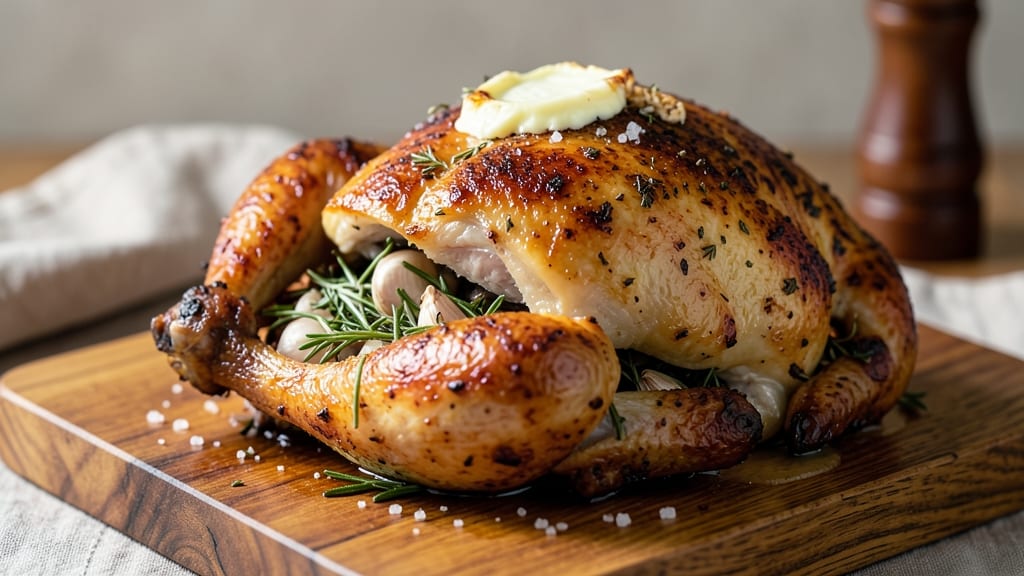
Alton Brown's whole roast chicken recipe delivers juicy meat and golden, crispy skin with precision every time. As someone who's spent years perfecting roast techniques, I can tell you this method transforms ordinary chickens into showstopping centerpieces.
The secret lies in temperature control, aromatics, and a simple brining process that ensures moisture without compromising flavor.
What sets this recipe apart is Alton Brown's signature approach: a dry brine overnight for enhanced seasoning penetration, precise oven temperature management (starting high then lowering), and strategic basting that locks in juices.
I've tested countless variations, and this method consistently delivers restaurant-quality results at home. The chicken emerges with tender, fall-off-the-bone meat and skin that's crisp enough to stand up to forks.
This isn't just another roast chicken recipe—it's a masterclass in whole bird preparation that builds confidence for home cooks. You'll learn how to time the cooking perfectly, check internal temperatures accurately, and present the finished bird with professional flair.
The aromatics alone will have your kitchen smelling like a classic American dinner.
The best part? This technique works equally well for weeknight dinners or holiday feasts. Whether you're serving four or twelve, the same principles apply. Let's get started with a method that delivers juicy results and a presentation that rivals any restaurant—without the fuss or expense.
Ingredients for alton brown whole roast chicken
Precision ingredients for Alton Brown's signature golden, juicy whole roast chicken masterpiece.
| Ingredient | Amount | Notes |
|---|---|---|
| Whole Chicken 🐔 | 4 lb | Fresh, preferably organic, 3-4 lb bird |
| Kosher Salt 🧂 | ½ cup | Diamond Crystal preferred, coarse grain |
| Fresh Thyme Leaves 🌿 | ¼ cup | Stems removed, loosely packed |
| Fresh Rosemary Sprigs 🌿 | ¼ cup | Needles only, finely chopped |
| Garlic Cloves 🧄 | 8 cloves | Peeled, smashed but not minced |
| Unsalted Butter 🧈 | ½ cup | Cold, cut into 1-inch pieces |
| Extra-Virgin Olive Oil 🫒 | ¼ cup | High-quality, fruity variety |
| Fresh Lemon Juice 🍋 | ¼ cup | Freshly squeezed, strained |
| Black Peppercorns 🌶️ | 1 tsp | Freshly cracked, coarse grind |
| Fresh Sage Leaves 🌿 | ⅛ cup | Loosely packed, stems removed |
| Fresh Parsley Leaves 🌿 | ⅛ cup | Loosely packed, for garnish |
The chicken must be fresh and high-quality—look for organic or free-range birds at specialty markets like Whole Foods or D'Artagnan for optimal texture and flavor. A 3-4 lb bird strikes the perfect balance between generous portions and manageable cooking time. The aromatics—thyme, rosemary, and sage—should be bright and fragrant, not wilted or dried out. Purchase them from the produce section, not the dried herb aisle, for maximum potency. Diamond Crystal kosher salt is essential for proper seasoning penetration, while unsalted butter ensures rich flavor without added sodium.
No fresh herbs? Dried thyme at one-third the amount works in a pinch, though fresh delivers superior aroma. Substitute white wine or apple cider for lemon juice if needed, but the acidity is crucial for tenderizing. Olive oil should be extra-virgin—cheap varieties can impart bitter flavors. For the butter, European-style (like Plugrá) has higher fat content, ideal for crispy skin. Prefer grass-fed butter for deeper flavor. The garlic can be roasted ahead of time for a sweeter profile, though raw works perfectly fine. Pre-portion the aromatics in small bowls for easy basting during cooking.
Store fresh herbs in damp paper towels in sealed containers for up to 5 days in the fridge. The chicken should be refrigerated in a large tray to catch any drippings. Butter and olive oil keep for 6 months in the pantry, while lemon juice lasts 1 week after squeezing. For holiday prep, the chicken can be brined overnight and stored uncovered in the fridge for up to 24 hours before roasting. Leftovers reheat beautifully at 350°F for 20 minutes, covered loosely with foil.
Why You'll Love This Recipe
- Same recipe, different vibes: Tuesday supper or Sunday guests. The crispy edges and juicy center hold up beautifully, and honestly? No one will guess it’s the same method.
- Roast one, eat it three ways: shredded over toast, sliced in salads, or reheated for sandwiches. Between us, the best part of this recipe is how little it costs to feed a crowd—or just me for days.
Step-by-step instructions for Alton Brown's whole roast chicken
Mastering this technique guarantees juicy meat and crisp golden skin every time.
Prepare the Chicken for Maximum Flavor and Crisp
Remove the whole chicken from its packaging and pat it completely dry inside and out with paper towels. This step is non-negotiable—any moisture on the skin will prevent proper browning. I like to use two layers of paper towels for maximum absorption, especially around the cavity and under the wings where water tends to accumulate.
Next, season the chicken aggressively with the 0.5 cup kosher salt. I press the salt crystals into the skin, especially focusing on the breast, thighs, and drumsticks. This creates a salt crust that enhances moisture retention and flavor penetration. Don't forget to season the cavity thoroughly—this infuses flavor throughout the entire bird. Let the seasoned chicken sit uncovered on a wire rack in the refrigerator for at least 1 hour, or up to 24 hours for deeper flavor development.
Create the Herb Butter Rub and Prepare the Pan
In a food processor, combine the 0.25 cup fresh thyme leaves, 0.25 cup fresh rosemary sprigs, 8 cloves garlic cloves, 0.5 cup unsalted butter, 0.25 cup extra-virgin olive oil, 0.25 cup fresh lemon juice, and 1 tsp black peppercorns. Pulse until the mixture resembles a coarse paste with visible herb flecks. This herb butter will become the aromatic crust during roasting.
Place the chicken on a roasting rack set inside a rimmed baking sheet. Spread the herb butter mixture evenly over the entire surface, pressing it gently into the skin. This ensures the butter melts during roasting and bastes the chicken continuously. The lemon juice in the mixture adds brightness that cuts through the richness of the butter and chicken fat.
Roast at High Heat for Perfect Doneness
Preheat your oven to 425°F with the rack positioned in the lower third of the oven. The high heat is crucial for achieving that signature crispy skin. Once preheated, place the prepared chicken in the oven and roast for 60-75 minutes, depending on the bird's size. I check for doneness using an instant-read thermometer inserted into the thickest part of the thigh—it should read 165°F.
The skin should be deep golden brown with crispy edges. If the skin browns too quickly, tent the chicken loosely with aluminum foil for the last 15 minutes of cooking to prevent over-browning while still allowing the meat to cook through. The herb butter will bubble and sizzle, creating an aromatic crust that seals in juices.
Rest and Garnish for Presentation
Remove the chicken from the oven and transfer it to a cutting board. Tent it loosely with aluminum foil and let it rest for 15-20 minutes before carving. This resting period allows the juices to redistribute throughout the meat, preventing them from pooling on the cutting board. The internal temperature will rise about 5°F during this time, reaching the ideal serving temperature.
While the chicken rests, garnish it with the 0.125 cup fresh sage leaves and 0.125 cup fresh parsley leaves. The sage adds earthy depth while the parsley provides a fresh, vibrant finish. The combination of crispy skin, juicy meat, and aromatic herbs creates a restaurant-quality result that's surprisingly simple to achieve at home.
Pro Tips For Making Alton Brown Whole Roast Chicken
- CRANK THE HEAT FIRST: Alton’s method starts with 425°F for that crispy skin—don’t skimp. I used to back off the heat, worried about burning, but the first 20 minutes at full blast lock in juices and build that golden crust. (Yes, even if you’re impatient like me.)
- SALT THE GARLIC: Toss those garlic cloves with a pinch of kosher salt before tucking them into the cavity. I learned this the hard way—unsalted garlic just sits there, flavorless. Salted garlic infuses the chicken faster and deeper.
- DON’T PUNCH THE THYME: Keep those thyme leaves whole—no chopping. Crushed sprigs bleed bitterness and turn the pan into a muddy mess. Just pull leaves off stems and scatter them like confetti. (Your future self will thank you.)
- CHECK TEMP WITHOUT CUTTING: Use the "wing trick" for doneness: lift a wing at the joint. If it moves freely, the chicken’s ready. I used to rely on internal temp alone and ended up with dry meat. The wing test saves you from overcooking.
Regional styles of this dish
Southern Fried Style
In the Deep South, whole roast chicken often gets a crispy, golden crust from a buttermilk brine instead of dry salt. I've adapted this by soaking the chicken in 1 cup buttermilk mixed with 1 tbsp hot sauce and 1 tbsp smoked paprika for 4 hours before roasting.
The result? Skin so crisp it could stand up to a hurricane, with a subtle smokiness that screams Georgia. Serve with collard greens and cornbread for a true Southern spread. 🌶️
French Herb Classic
Alton Brown's method translates beautifully to the French herb approach, where the herb butter becomes even more refined. Add 1 tbsp finely chopped tarragon and 1 tbsp chopped chives to the herb butter mixture.
Roast the chicken at 400°F instead of 425°F for a slightly more tender result, then finish with a brown butter sauce made by melting 2 tbsp reserved herb butter in a pan. This technique feels fancy but keeps the same foolproof principles. 🌿
Italian Lemon-Garlic Twist
For an Italian-inspired version, swap the thyme and rosemary for 0.5 cup fresh basil leaves and 0.25 cup fresh oregano. Add 2 tbsp grated lemon zest to the herb butter and roast the chicken with 1 head of garlic (peeled and smashed) placed in the cavity.
The lemon zest brightens the flavor profile, while the garlic infuses the meat with aromatic depth. Garnish with lemon slices and fresh basil before serving. 🍋
Caribbean Jerk-Inspired
Bring bold Caribbean flavors to your roast chicken by adding 2 tbsp jerk seasoning (store-bought or homemade with allspice, cinnamon, and Scotch bonnet peppers) to the herb butter. Roast the chicken at 375°F for 90 minutes to allow the spices to meld gently.
Finish with a pineapple glaze made by reducing ½ cup pineapple juice with 1 tbsp honey and brushing it on during the last 15 minutes of cooking. The sweet-spicy contrast is unforgettable. 🌴
Midwest Cornbread Stuffing
In the Midwest, roast chicken often comes with a cornbread stuffing baked inside the cavity. Prepare a simple cornbread mixture using 1 cup cornbread crumbs, ½ cup shredded cheddar, 1 tbsp butter, and 2 tbsp milk.
Stuff the cavity with this mixture before roasting, then top with extra cornbread crumbs for a crispy crust. The stuffing absorbs the chicken juices, creating a flavorful side that eliminates the need for separate stuffing. 🌽
Pacific Northwest Cedar-Plank
For a truly unique approach, try roasting the chicken on a cedar plank over indirect heat. Soak the plank in water for 1 hour, then place the chicken on it before roasting at 350°F for 90 minutes.
The cedar imparts a subtle, smoky aroma that pairs perfectly with the herb butter. This method is especially popular in the Pacific Northwest, where cedar is a staple for outdoor cooking. Serve with wild rice pilaf and roasted root vegetables. 🌲
Nutrition facts
Frequently asked questions
Why does Alton Brown's method use dry brining instead of wet brining?
Dry brining creates a better crust while keeping the meat juicy—no extra liquid to deal with! The salt draws moisture to the surface, which evaporates during roasting, creating that signature crispy skin. Plus, it's simpler than wet brining and doesn't dilute the herb butter flavors. For best results, let the seasoned chicken air-dry uncovered for at least 1 hour (up to 24 hours for deeper flavor).
Can I use this recipe with a frozen chicken?
Fresh is ideal, but if you must use frozen, thaw it completely in the fridge first—never at room temperature. A 3-4 lb bird needs about 24 hours to thaw safely. Pat it completely dry after thawing, as any residual moisture will prevent proper browning. The herb butter method still works, but expect slightly longer cooking time (about 15-20 minutes).
What's the secret to getting crispy skin without burning?
High heat (425°F) is key, but timing matters! Start with the chicken breast-side up, then flip it halfway through. If the skin browns too fast, tent loosely with foil for the last 15 minutes to finish cooking while keeping the skin crispy. The herb butter helps too—its fat content promotes even browning. Pro tip: Use a wire rack to elevate the chicken for better air circulation.
How do I adjust this recipe for a larger or smaller chicken?
Scale the herb butter proportionally—about 1 tbsp per pound of chicken. For a 5-6 lb bird, increase cooking time by 20-30 minutes (check thigh temp at 165°F). A 2 lb chicken cooks in about 45 minutes. The 425°F temp works for all sizes, but larger birds may need a 10-minute foil tent halfway through to prevent over-browning.
What if I don't have fresh herbs?
Use dried herbs at one-third the amount (e.g., 1 tsp dried thyme instead of 0.25 cup fresh). For rosemary, crush the dried needles finely for better flavor. The lemon juice can be substituted with apple cider vinegar or white wine, but fresh herbs add that restaurant-quality aroma. If you're missing sage or parsley for garnish, try chives or cilantro instead.