
Main Courses
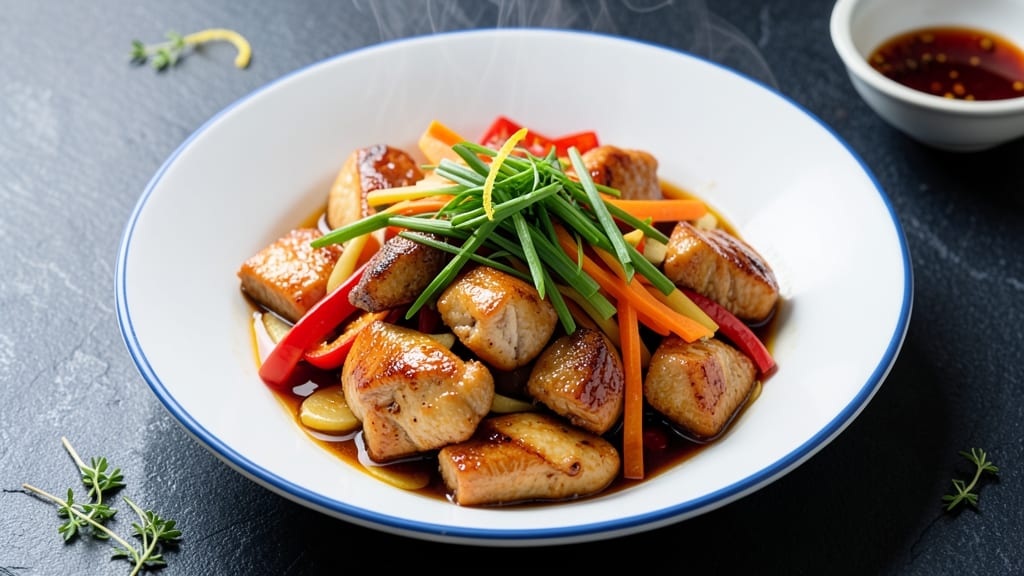
This authentic Chinese chicken stir fry delivers restaurant-quality wok hei—smoky, crisp-tender chicken with vibrant vegetables and a homestyle sauce that balances sweet, salty, and umami. After years of perfecting stir-fry techniques, I've cracked the code for achieving that signature wok char at home, even without specialized equipment.
The secret lies in high heat, proper slicing, and a sauce that's equal parts traditional and approachable.
The foundation begins with chicken thighs or breasts cut into crisp-tender pieces, marinated in a simple soy-ginger-garlic blend that tenderizes while adding depth. Vegetables like bell peppers, carrots, and scallions are prepped in uniform sizes so they cook evenly—no mushy bits here.
What makes this recipe truly authentic is the sauce: a harmonious blend of oyster sauce, soy sauce, and a touch of sugar that creates that perfect balance Chinese home cooks swear by.
By the time you're done, you'll have a dish that's restaurant-quality but homemade—crispy edges on the chicken, vibrant vegetables that retain their crunch, and a sauce that clings perfectly to every bite.
The aroma alone will transport you to a bustling Chinese kitchen, where the sizzle of the wok is the soundtrack to dinner. This is the kind of meal that transforms a simple weeknight into something special without requiring hours in the kitchen.
Serve it over steamed jasmine rice or with warm dumplings for the full experience. The beauty of this recipe is its versatility—adjust the spice level with chili oil or swap vegetables based on what's seasonal.
Here's how to make it, step by step, with all the tricks I've learned along the way.
Ingredients for authentic chinese chicken stir fry
Restaurant-quality wok hei starts with these crisp-tender ingredients and bold flavors.
| Ingredient | Amount | Notes |
|---|---|---|
| Boneless Chicken Thighs or Breasts 🍗 | 1 ½ lb | Cut into 1-inch crisp-tender pieces |
| Green Bell Peppers 🧅 | 2 whole | Cut into 1-inch strips |
| Carrots 🥕 | 3 whole | Julienned into thin matchsticks |
| Scallions 🧅 | 6 whole | Cut into 1-inch pieces |
| Fresh Ginger 🌿 | 1 tbsp | Finely grated, fresh preferred |
| Garlic Cloves 🧄 | 4 cloves | Minced, fresh preferred |
| Oyster Sauce 🍶 | 3 tbsp | High-quality, like Lee Kum Kee |
| Light Soy Sauce 🥄 | 2 tbsp | For authentic umami balance |
| Sesame Oil 🫒 | 1 tbsp | Toasted, for aroma |
| Cornstarch 🌾 | 1 tbsp | For crisp-tender coating |
| Vegetable Oil 🫒 | ½ cup | High smoke point for wok hei |
| Granulated Sugar 🍚 | 1 tbsp | Balances salty-sweet |
| Salt 🧂 | ½ tsp | Kosher or sea salt |
| Black Pepper 🌶️ | ¼ tsp | Freshly ground for heat |
| Chili Oil 🔥 | 1 tbsp | Optional, for spice kick |
The chicken is everything here—chicken thighs stay juicier than breasts, but either works. Look for plump, firm thighs at the butcher counter or pre-cut packages at Costco or Trader Joe's. The secret to that signature wok char? Cornstarch coating—toss the chicken with it before frying. For the veggies, uniform sizes are non-negotiable—no one wants mushy carrots. I always grab fresh ginger and garlic from the produce section (the frozen stuff lacks punch), and Lee Kum Kee oyster sauce if I'm feeling fancy—it's worth the splurge for that authentic depth.
No oyster sauce? Soy sauce plus a splash of fish sauce works in a pinch, though it won't be identical. Substitute bell peppers with broccoli or snap peas if you prefer—just cut them the same size. Scallions can be swapped for regular onions, but they add a milder, sweeter note. The sesame oil is non-negotiable for aroma, but if you're sensitive to its flavor, reduce to half a teaspoon and add it at the very end. For extra crispiness, double the cornstarch—just don't skip it entirely. And if you're feeling bold, chili oil takes this from homestyle to restaurant-level spice.
Prep everything before you start cooking—mise en place is your friend here. The sauce comes together in minutes, but the chicken needs time to marinate (even 10 minutes helps). Store leftovers in airtight containers for 3-4 days, though it's honestly better reheated—just toss it in a hot pan with a splash of water to revive the crispiness. Freeze for up to 3 months if you're making a big batch. Pro tip: Steam your rice ahead so it's ready when the stir-fry is done—nothing kills the vibe like waiting for rice.
Why You'll Love This Recipe
- One-Pan Magic: I swear by this recipe because it’s actually one pan—no messy saucepans or extra bowls. Toss in the chicken, veggies, and ginger, then let the wok do the work while you sip tea. (Yes, even on a Tuesday night.)
- Ginger-Zing Kick: That fresh ginger isn’t just for show—it’s the secret weapon. Thinly sliced and seared first, it releases this bright, citrusy heat that cuts through the richness of the chicken. Honestly, it’s the kind of flavor that makes you reach for the recipe again.
- Lunchbox Hero: Between us, this stir-fry is my go-to for meal prep. Pack it in containers with rice, and it’s still ridiculously good three days later—no sad, soggy takeout here. My kids fight over the last piece, and my husband brings it to work. (That’s my stamp of approval.)
- Budget Win: Chicken thighs are forgiving, carrots last forever, and bell peppers? You can use half a bag and still have leftovers. I’ll be real: I’ve made this for $10 and fed four people. That’s not just cheap—it’s smart cooking.
Step-by-step instructions for wok-heated chicken stir fry
Here's how to achieve that signature crisp-tender texture and balanced homestyle sauce.
Prepare the Chicken for Maximum Crisp-Tenderness
Cut the boneless chicken thighs or breasts into 1-inch crisp-tender pieces - this size ensures even cooking and that perfect texture contrast. Place them in a bowl and toss with the 1 tablespoon cornstarch, ½ teaspoon salt, and ¼ teaspoon black pepper. The cornstarch creates a light coating that will give you that wok-hei crispiness while keeping the inside juicy. Let the chicken sit for 10 minutes while you prep the vegetables - this resting period helps the coating adhere better.
Here's the thing - if you skip the cornstarch or use too much, you'll either get dry chicken or a gummy coating. I like to pat the chicken pieces dry with paper towels before coating to ensure maximum crispiness. The resting time also lets the seasoning penetrate slightly, giving you better flavor distribution.
Prep Vegetables for Even Cooking
Cut the 2 whole green bell peppers into 1-inch strips - this size ensures they cook quickly without becoming mushy. Julienne the 3 whole carrots into thin matchsticks using a mandoline or sharp knife for even cooking. Cut the 6 whole scallions into 1-inch pieces and finely grate the 1 tablespoon fresh ginger. Mince the 4 cloves garlic cloves - I like to use a microplane for the ginger and garlic to get the finest texture possible.
Keep all your vegetables separate until ready to cook. The reason we cut them to similar sizes is to ensure everything cooks at the same rate. If you mix them now, you'll end up with some vegetables overcooked while others remain underdone. Also, don't skip grating the ginger fresh - jarred ginger just doesn't have the same impact in this dish.
Create the Wok Hei and Cook the Chicken
Heat a wok or large skillet over high heat until it's smoking hot. Add the ½ cup vegetable oil and swirl to coat the bottom. Working in batches if needed, add the chicken pieces and cook undisturbed for 2-3 minutes until the edges are golden brown and crispy. This is where you get that signature wok hei - the smoky, charred flavor that defines authentic stir fry.
Here's the crucial part: don't move the chicken around. Let it develop that beautiful crust on the bottom. If you stir too soon, you'll steam the chicken instead of getting that crispy sear. Once the chicken is browned on one side, stir and cook for another 1-2 minutes until fully cooked through. Remove the chicken to a plate and set aside - it'll stay warm while you cook the vegetables.
Stir-Fry Vegetables and Build the Sauce
In the same wok, add a bit more oil if needed and stir-fry the bell peppers for 1-2 minutes until they begin to soften. Add the carrots and cook for another 1 minute, then stir in the scallions, ginger, and garlic. Cook for 30 seconds until fragrant - you should smell that wonderful aroma of garlic and ginger.
Now it's time to build the sauce. Pour in the 3 tablespoons oyster sauce, 2 tablespoons light soy sauce, 1 tablespoon sesame oil, and 1 tablespoon granulated sugar. Stir everything together and cook for 1-2 minutes until the sauce begins to thicken slightly. The sugar helps balance the salty flavors while adding a touch of sweetness that's characteristic of homestyle Chinese cooking.
Combine and Finish with Chili Oil
Return the chicken to the wok and toss everything together for 1-2 minutes until everything is well coated with the sauce and heated through. Taste and adjust seasoning if needed - you might want to add a splash more soy sauce or a bit of sugar depending on your preference.
For that final touch, drizzle with the 1 tablespoon chili oil and toss gently. This adds a nice spicy kick that complements the other flavors perfectly. Serve immediately over steamed rice - the dish should be hot and sizzling when it hits the table. The chicken should be crisp-tender with a slight char, the vegetables should be vibrant and slightly crisp, and the sauce should coat everything beautifully.
Pro Tips For Making Authentic Chinese Chicken Stir Fry
- CUT CHICKEN SMALL: I learned this the hard way—big chunks stay chewy no matter how long you cook them. Cut thighs into 1-inch pieces, breasts into ½-inch strips. The extra surface area sears faster and absorbs sauce better, especially when you’re working with that high-heat wok method.
- JULIENNE VEGGIES UNIFORM: Carrots and bell peppers should be matchstick-thin, not random chunks. Use a mandoline for consistency—it’s faster than hand-chopping and guarantees even cooking. Uneven pieces burn on the outside while staying raw inside, and nobody wants that in a stir-fry.
- START HIGH, END LOW: Crank the heat to max for the first 30 seconds—this gets the chicken searing and the oil shimmering. After adding veggies, drop to medium-high and keep stirring constantly. I used to rush the transition and end up with soggy peppers or undercooked chicken. Trust the process.
- GINGER DOUBLE GRATE: Skip the pre-minced jar—fresh ginger adds depth. Use a microplane for fine, even shreds, then pulse the same amount in a food processor for texture contrast. The tiny bits infuse flavor faster, while the slightly larger pieces add chew. (Yes, it’s extra work, but your stir-fry will taste like it came from a dim sum cart.)
Essential equipment for authentic chinese chicken stir fry
Wok Essentials
You don't need a traditional Chinese wok to make this stir-fry, but it does help. If you have a carbon steel wok, great—it heats up fast and retains heat perfectly.
I use my 14-inch Lodge carbon steel wok for this recipe, but a heavy-bottomed stainless steel skillet (like All-Clad) works too. The key is getting that high heat for wok hei—smoky, charred flavor.
If you're using a nonstick pan, avoid it for stir-fry; the high heat will ruin the coating. 🔥
High-Heat Tools
Your stove matters! Gas burners are ideal—they give you instant, even heat control. If you have an electric or induction cooktop, look for a burner that can reach high heat (some struggle).
I've even made this on a camp stove with great results. The goal is to get your pan smoking hot before adding oil—this is where that wok hei magic happens.
Knives and Prep Gear
Sharp knives are non-negotiable. A 8-inch chef's knife and mandoline (for julienning carrots) are my go-tos. If you don’t have a mandoline, a sharp knife and steady hand work fine—just take your time.
For ginger and garlic, a microplane gives the finest texture, but a grater or mincer works too. Pro tip: Keep your cutting board wet while prepping veggies—they’ll slide less and stay crisp.
Sauce and Oil Supplies
Measure your sauces precisely: Lee Kum Kee oyster sauce (the gold standard) and light soy sauce are must-haves. For oil, high-smoke-point vegetable oil (like Avocado Brand) is best—it won’t burn at high heat.
A small saucepan for quick sugar dissolution (if needed) and a whisk for emulsifying the sauce come in handy. I keep a small bowl nearby to toss the chicken in cornstarch before cooking.
Optional Upgrades
Want to take it to the next level? A tongs set (like OXO Good Grips) helps toss everything without crushing veggies. A meat thermometer ensures chicken reaches 165°F safely. For extra wok hei, a gas burner with a diffuser (like Weifang) mimics restaurant-style heat control.
And if you love chili oil, Lao Gan Ma is my favorite—it’s spicy, aromatic, and adds that authentic kick. 🌶️
Nutrition facts
Frequently asked questions
Can I use chicken breasts instead of thighs?
Yes, but with caution! Chicken breasts cook faster and can dry out if overcooked. Cut them into ½-inch thick slices (instead of 1-inch) and cook for just 1-2 minutes per side—they're done at 165°F. For extra juiciness, pound them slightly before cooking or add ½ teaspoon cornstarch to the marinade. Thighs stay more forgiving for beginners.
What's the best way to get that smoky "wok hei" flavor at home?
Heat your pan until it's smoking hot before adding oil—this creates the signature smoky aroma. Use a carbon steel or cast iron skillet (or wok) on high heat and cook the chicken undisturbed for 2-3 minutes to develop a crust. If you're on an electric stove, preheat the pan for 5 minutes before adding oil. Gas burners work best for this!
Can I make this stir-fry ahead of time?
I don't recommend it—stir-fry is best served immediately for that crisp-tender texture. But you can prep components ahead: marinate the chicken (up to 4 hours), chop all veggies (1 day in airtight containers), and mix the sauce (2 days). Reheat gently in a hot pan with a splash of water to revive crispiness. For leftovers, store for 3-4 days and reheat quickly.
What can I substitute if I don't have oyster sauce?
Mix 2 tablespoons soy sauce + 1 teaspoon fish sauce + ½ teaspoon sugar for a close substitute. For vegetarian versions, use 2 tablespoons vegetarian oyster sauce (like Kikkoman) or 1 tablespoon hoisin sauce + 1 tablespoon soy sauce. The umami depth will be different but still delicious—just adjust other seasonings to taste.
Why does my stir-fry turn out soggy?
Two likely culprits: overcrowding the pan (steams instead of sears) or undercooked chicken. Cook in batches if needed, and always use high heat. Also check your veggies—if they're too thick, they'll release more moisture. For extra crispiness, add ½ teaspoon cornstarch to the sauce or toss cooked stir-fry with ½ teaspoon sesame seeds before serving.