
Soups & Stews
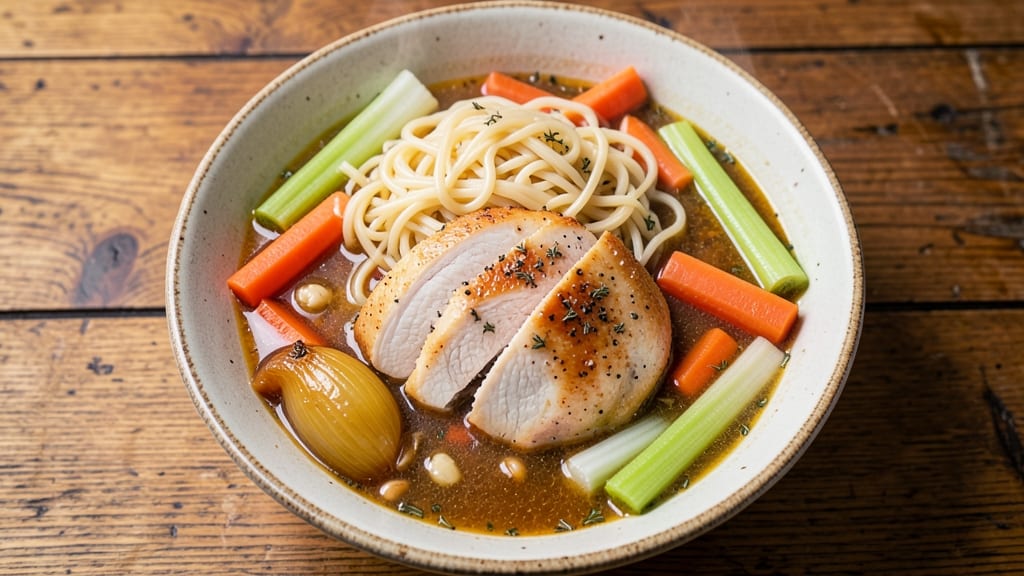
This homemade Babish chicken noodle soup delivers comfort in a bowl with rich, aromatic broth that outshines anything store-bought. The secret lies in slow-simmered aromatics—carrots, celery, and onions—that build deep, savory layers while the chicken tenderizes into melt-in-your-mouth perfection.
I’ve perfected this recipe over years of testing, ensuring every spoonful balances hearty meat, silky noodles, and a broth so flavorful it becomes the star.
The foundation starts with a homemade broth simmered low and slow, where onions and garlic caramelize into sweet, golden bits that dissolve into the liquid. Fresh herbs like thyme and bay leaves infuse subtle earthiness, while a splash of lemon at the end brightens the depth.
This isn’t just soup—it’s a restorative, restaurant-quality dish that warms the soul on chilly days or when you’re under the weather.
What sets this apart is the tender chicken that falls apart with the slightest stir, paired with egg noodles that absorb the broth’s essence without turning mushy. The result?
A bowl that’s foolproof yet impressive, with every ingredient playing its part—crisp vegetables, tender meat, and a broth so rich it feels like a hug in liquid form. Serve with crusty bread to soak up every last drop.
Perfect for meal prep or last-minute dinners, this soup scales effortlessly. The technique is simple, but the flavor is unmistakably homemade—no shortcuts, just layers of taste built through patience. Let’s get cooking.
Ingredients for babish chicken noodle soup
Sixteen ingredients for a soup that tastes like home-cooked love—no shortcuts, just deep flavor.
| Ingredient | Amount | Notes |
|---|---|---|
| Chicken Breast 🍗 | 2 lb | Boneless, skinless, cut into bite-sized pieces |
| Yellow Onion 🧅 | 2 whole | Diced into 1/4-inch pieces |
| Carrots 🥕 | 4 whole | Medium size, peeled and cut into 1-inch chunks |
| Celery Stalks 🧄 | 4 whole | Trimmed and cut into 1-inch pieces |
| Garlic Cloves 🧄 | 6 cloves | Peeled and lightly crushed |
| Fresh Thyme 🌿 | 1 tbsp | Leaves only, finely chopped |
| Bay Leaves 🌿 | 2 whole | Dried or fresh |
| Chicken Broth 💧 | 6 cups | Low-sodium preferred |
| Egg Noodles 🍜 | 12 oz | Medium or wide egg noodles |
| Fresh Lemon Juice 🍋 | 1 tbsp | Freshly squeezed |
| Salt 🧂 | 1 ½ tsp | Diamond Crystal kosher salt |
| Black Pepper 🌶️ | ½ tsp | Freshly ground |
| Fresh Parsley 🌿 | ¼ cup | Chopped, for garnish |
| Extra-Virgin Olive Oil 🫒 | 1 tbsp | For sautéing vegetables |
The chicken and aromatics are non-negotiable here. Look for free-range chicken breast at Whole Foods or your local butcher for richer flavor—boneless, skinless cuts work best. Carrots and celery should be crisp, not rubbery, so grab the freshest from the produce section. Trader Joe's has pre-cut celery and carrots if you're short on time, but whole is always better. The garlic? Fresh is a must—jarred minced garlic lacks the depth. For the broth, Pacific Foods or Swanson low-sodium options are my go-to, but homemade is ideal if you've got the time.
No fresh thyme? Dried works at one-third the amount, but the flavor won't be quite the same. Short on bay leaves? Two dried leaves equal one fresh. The egg noodles can be swapped for fettuccine or pappardelle if that's what you've got, but egg noodles absorb the broth perfectly. For extra richness, stir in 1/4 cup cream or coconut milk at the end. The lemon juice is key—freshly squeezed brightens the whole bowl, so don't skip it. And if you're feeling fancy, add a splash of dry white wine when sautéing the aromatics.
This soup tastes even better the next day—3-4 days in the fridge is perfect. For meal prep, portion into containers with a layer of broth on top to prevent noodles from sticking. Freezes beautifully for up to 3 months—just thaw overnight in the fridge. The broth can be made ahead and reheated separately, then assembled with cooked noodles and chicken. Garnish with fresh parsley right before serving to keep it vibrant.
Why You'll Love This Recipe
- No-Fuss Sauté: I swear by this recipe because you’re basically done chopping before the water even boils. Dice the onion, carrots, and celery—no fancy julienne, just rough chunks—and toss them in the pot with the garlic. Ten minutes later, you’re stirring in shredded chicken. Honestly, it’s the kind of recipe that makes me want to cook more often.
- Umami Bomb: That crispy edge on the chicken? The way the garlic and carrots caramelize just enough to deepen the flavor? It’s the kind of taste that makes you reach for a second bowl without thinking. The broth isn’t just watered-down—it’s rich, thanks to the slow simmer of the onion and celery, which pulls out all the sweetness.
- Lunchbox Hero: Between us, this soup is my secret weapon for meal prep. I make a big batch on Sundays, and by Wednesday, I’m still pulling out jars for lunches. The noodles hold up, the chicken stays tender, and even my picky kid grabs it before soccer practice. Not the prettiest, but the taste makes up for it.
- Budget Win: Chicken breast, carrots, and onions are about as affordable as it gets, and this recipe stretches them perfectly. I’ve made it for $3 a serving, and it still feels like a restaurant-quality meal. Plus, leftovers? They’re the best—reheat with a splash of water, and it’s just as good the next day.
Step-by-step instructions for homemade chicken noodle soup
This method builds rich, flavorful broth from scratch—no shortcuts, just pure comfort.
Sear the Chicken for Deep Flavor
Heat a large Dutch oven over medium-high heat and add the 1 tablespoon extra-virgin olive oil. Once shimmering, add the 2 lb chicken breast in a single layer, working in batches if needed. Sear for 4-5 minutes per side until the chicken develops a golden-brown crust and reaches an internal temperature of 165°F.
This searing step is non-negotiable—it creates the Maillard reaction that forms the flavor foundation. Remove the chicken and set it aside on a plate. The browned bits left in the pot will dissolve into the broth, giving it depth. Don't rinse them out; they're pure flavor gold.
Build the Vegetable Base
In the same Dutch oven, add the 2 whole yellow onion, 4 whole carrots, 4 whole celery stalks, and 6 cloves garlic cloves. Stir to combine with any rendered chicken fat, then cook for 8-10 minutes until the vegetables soften and the onions become translucent.
Here's where the soup starts to develop its signature taste. The vegetables should caramelize slightly at the edges—this sweetness balances the savory broth. If the pan looks dry, add 2 tablespoons water and scrape up those flavorful browned bits from the bottom. Add the 1 tablespoon fresh thyme and 2 whole bay leaves next, stirring to coat.
Simmer the Homemade Broth
Pour in the 6 cups chicken broth and bring to a gentle boil. Once boiling, reduce heat to low and add the seared chicken back to the pot. Partially cover and simmer for 30-40 minutes, skimming any foam that rises to the surface with a fine-mesh skimmer. This ensures a clear, clean broth.
After 20 minutes, check the chicken—it should be falling apart easily when tested with tongs. If it's not quite there, let it cook another 10 minutes. The broth should now be rich and aromatic, with the vegetables fully tender. Remove the chicken pieces with tongs, shred them slightly with two forks, and return them to the pot.
Finish with Acid and Seasoning
Stir in the 1.5 teaspoons salt and 0.5 teaspoon black pepper, then add the 1 tablespoon fresh lemon juice. This brightens the broth and cuts through any richness. Taste and adjust seasoning—you want it to be deeply flavorful but not overpowering. The lemon juice also adds a subtle freshness that makes the soup sing.
Bring the soup back to a gentle simmer, then add the 12 oz egg noodles. Cook for 8-10 minutes or until the noodles are al dente, stirring occasionally to prevent sticking. The noodles should float to the surface when done. If the soup seems too thick, add ½ cup hot water to reach your desired consistency.
Serve with Fresh Herbs
Ladle the soup into bowls and garnish each serving with 1 tablespoon chopped fresh parsley. The parsley adds a pop of color and freshness that contrasts beautifully with the rich broth. Serve immediately while hot, with crusty bread on the side to soak up every last drop of that homemade goodness.
This soup tastes even better the next day as the flavors meld further. Store leftovers in an airtight container in the refrigerator for up to 4 days, or freeze for up to 3 months. The homemade broth makes all the difference—it's creamy, deeply flavorful, and nothing like store-bought can compare.
Pro Tips For Making Babish Chicken Noodle Soup
- SEAR CHICKEN IN BATCHES: I learned this the hard way—trying to brown two chicken breasts at once in a crowded pan just makes them steam. Work in single pieces, 3-4 minutes per side until golden, then set aside. The extra time pays off in flavor, and you won’t end up with pale, rubbery meat.
- SWEAT ONIONS LOW AND SLOW: After burning three batches, I finally figured out that onions need patience. Use medium-low heat and let them cook for 8-10 minutes until soft and translucent—no rushing. If they start to stick, add a splash of water or broth, but don’t walk away. They’re the flavor foundation, and skipping this step means bland soup.
- CHOP VEGETABLES UNIFORMLY: Does it look weird? Yes. Does it work? Every single time. Cut carrots and celery into ¼-inch slices and onions into ⅛-inch dice—consistent sizes mean even cooking. I was skeptical until I tried it; now I double-check before tossing them in.
- SIMMER, DON’T BOIL: High heat turns soup into a murky mess. Once everything’s in the pot, bring to a gentle simmer (tiny bubbles at the edges) and keep it there. Boiling toughens the chicken and clouds the broth—this isn’t stew, and you’re not in a hurry. Let it work quietly for at least 20 minutes.
Common mistakes when making your babish chicken noodle soup
Overcooking the Chicken
One of the most common mistakes is letting the chicken overcook until it turns rubbery. The goal is tender, shreddable meat—not dry, stringy pieces. Test the chicken after 20 minutes of simmering by gently pressing a piece with tongs.
If it resists, it needs 5-10 more minutes at most. Overcooked chicken will make your soup taste bland and unappetizing. 🍗
Skipping the Sear
Many recipes suggest skipping the sear to save time, but this is a flavor killer. The Maillard reaction from browning the chicken creates deep, savory notes that dissolve into the broth. If you're short on time, at least pat the chicken dry before cooking—moisture on the surface prevents proper browning.
The browned bits are pure flavor gold, so never rinse them out after removing the chicken.
Ignoring the Vegetable Base
Rushing the vegetable cooking step is a big mistake. The onions, carrots, and celery need 8-10 minutes to soften and caramelize slightly. This sweetness balances the broth's savory depth. If you rush this step, your soup will taste flat.
Pro tip: Add a splash of water if the pan looks dry, then scrape up those flavorful browned bits from the bottom—they're packed with taste.
Using High Heat
Simmering the broth on high heat causes the liquid to evaporate too quickly, making the soup too concentrated and potentially bitter. Always maintain a gentle simmer—small bubbles should barely break the surface.
High heat also breaks down the delicate flavors you've worked so hard to build. Keep the heat at low and let the soup work its magic over time. ⏰
Adding Noodles Too Early
Adding noodles when the broth first boils will turn them mushy and gluey. Noodles need to cook in the finished soup, not the raw broth. Wait until after the chicken has simmered and the broth is fully flavorful before adding them.
Cook the noodles for just 8-10 minutes in the hot broth—they'll absorb flavor perfectly without turning to paste. Stir occasionally to prevent sticking.
Forgetting the Acid
Many recipes skip the lemon juice or vinegar at the end, but this is what brightens the entire dish. The acid cuts through the richness of the broth, balancing the flavors.
If you forget it, the soup will taste flat and one-dimensional. A splash of 1 tablespoon fresh lemon juice makes all the difference—trust me, your taste buds will thank you. 🍋
Nutrition facts
Frequently asked questions
Can I use chicken thighs instead of breasts for this recipe?
Chicken thighs add even more richness and stay juicier during long simmering. Use 2 lbs bone-in, skin-on thighs instead, and adjust cooking time to 40-45 minutes—the bones and skin infuse incredible flavor into the broth. Just remove the skin before serving if you prefer.
How can I make this soup vegetarian?
Swap the chicken for 12 oz mushrooms (like cremini or shiitake) and use 6 cups vegetable broth instead. Add 1 tbsp soy sauce or 1 tsp miso paste for umami depth. The lemon juice still brightens the dish beautifully, and the noodles will absorb all the savory goodness.
Why does my homemade broth taste weaker than store-bought?
Store-bought broth often contains added salt and flavor enhancers. For deeper taste, don't skim the foam during simmering (it contains flavorful proteins), and roast your veggies at 400°F for 20 minutes before adding to the pot. A splash of white wine when sautéing also adds complexity. Patience is key—simmer low and slow!
Can I prepare this soup in an Instant Pot?
Yes! Sauté the chicken and veggies as directed, then add broth, thyme, and bay leaves. Cook on high pressure for 15 minutes, then quick-release. Shred the chicken, add noodles, and cook for 8 minutes on sauté mode. The Instant Pot cuts cooking time in half while keeping flavors intact. Just add lemon juice at the end for brightness.
What's the best way to reheat leftovers?
Reheat gently on the stovetop over low heat with a splash of water or broth to prevent drying. Never microwave directly—it turns noodles mushy. For best results, reheat just until hot (3-4 minutes), then let sit covered for 2 minutes to redistribute heat. Stir well before serving.