
Main Courses
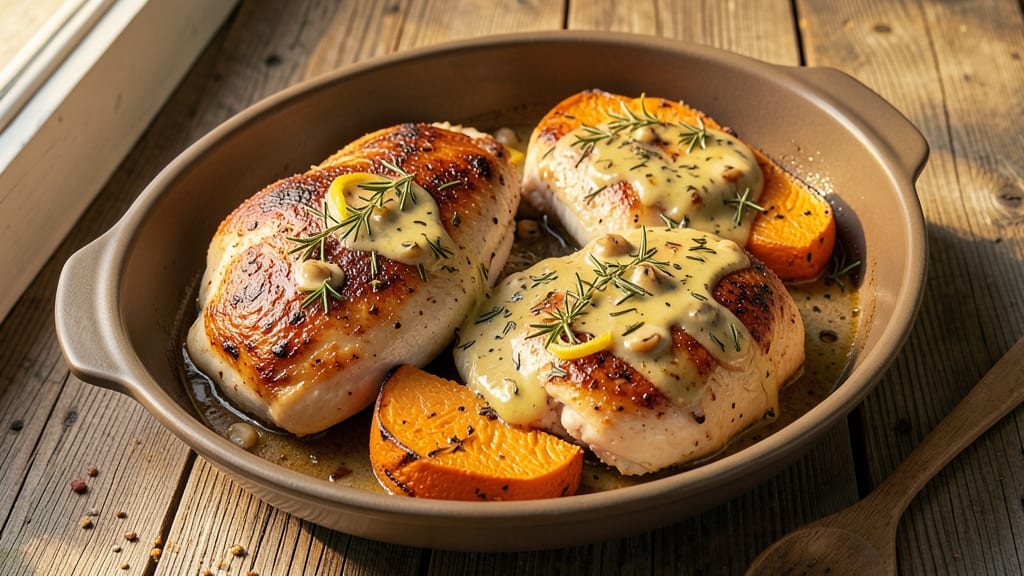
This herb-crusted baked chicken breast and butternut squash recipe transforms weeknight dinner into a restaurant-worthy meal with minimal effort. The secret lies in balancing tender, golden chicken with silky, caramelized squash—both roasted together for a cohesive, aromatic dish that feels indulgent yet simple.
I developed this after years of perfecting oven techniques for juicy poultry and perfectly textured squash, ensuring every bite delivers harmony of flavors and textures.
The chicken stays moist and flavorful thanks to a herb-infused crust that seals in juices, while the butternut squash develops a velvety sweetness with just the right caramelization. Roasting both components at the same temperature creates a one-pan wonder that simplifies cleanup and ensures perfect timing.
This method works whether you're feeding a family or meal prepping for the week—no fancy techniques required, just precise seasoning and patience.
What you'll achieve is restaurant-quality results at home: crispy-edged chicken with tender centers, paired with squash that's silky and sweet without being mushy. The herb crust adds an aromatic depth that complements the natural sweetness of the squash, creating a dish that's both comforting and impressive.
Serve with a sprinkle of fresh herbs or a drizzle of honey for an elegant touch that makes it perfect for any occasion.
This recipe scales beautifully—double the ingredients for a crowd, or halve it for a light weeknight dinner. The herb crust can be customized with thyme, rosemary, or sage, while the squash absorbs flavors effortlessly.
Whether you're a home cook looking to elevate simple ingredients or a seasoned chef refining techniques, this dish delivers foolproof perfection every time.
Ingredients for baked chicken breast and butternut squash
Twelve ingredients, one pan, restaurant-quality harmony of herb-crusted chicken and velvety squash.
| Ingredient | Amount | Notes |
|---|---|---|
| Boneless, Skinless Chicken Breast 🍗 | 1 ½ lb | Pounded to even thickness |
| Butternut Squash 🎃 | 2 lb | Peeled, cubed (1-inch pieces) |
| Extra-Virgin Olive Oil 🫒 | ½ cup | For crust and roasting |
| Fresh Rosemary 🌿 | ¼ cup | Chopped finely (stems removed) |
| Fresh Thyme 🌿 | 0.15 cup | Leaves only, chopped |
| Garlic Cloves 🧄 | 6 cloves | Minced finely |
| Diamond Crystal Kosher Salt 🧂 | 1 ½ tbsp | Divided for seasoning |
| Freshly Ground Black Pepper 🌶️ | 1 tsp | Freshly cracked |
| Raw Honey 🍯 | 1 tbsp | For squash caramelization |
| Unsalted Butter 🧈 | 2 tbsp | Softened for herb crust |
| Fresh Parsley 🌿 | 0.1 cup | Chopped for garnish |
| Lemon Zest 🍋 | 1 tsp | From 1 medium lemon |
The chicken breast quality makes all the difference—look for evenly sized breasts at Whole Foods or local butcher shops for optimal texture. Pounding to even thickness ensures even cooking, and Trader Joe's carries pre-trimmed breasts that save time. For the butternut squash, pre-cut cubes from Costco or Harris Teeter eliminate prep work, though fresh squash develops deeper flavor. The herb crust relies on fresh rosemary and thyme—dried works in a pinch but lacks aromatic depth. Store herbs in damp paper towels in the fridge for up to 5 days.
No fresh rosemary? Dried works at one-third the amount, but the flavor profile shifts. Substitute sage or oregano for thyme if needed, though rosemary's piney notes are essential for balance. For the squash, acorn squash works identically, while delicata squash offers easier peeling. The honey can be swapped for maple syrup, though it adds a distinct earthiness. Prefer less sweetness? Reduce honey to 1 teaspoon and add 1/4 teaspoon cinnamon for warmth. The lemon zest adds brightness—zest only, not juice, to avoid moisture.
Chicken and squash can be prepped 2 days ahead—store separately in airtight containers. The herb crust mixture keeps for 1 day in the fridge, though it's best used immediately. Roasted squash reheats beautifully—simply warm in a 350°F oven for 10 minutes with a splash of water. For meal prep, portion chicken and squash into glass containers with parchment between layers to prevent sticking. Leftovers keep 4-5 days refrigerated or 3 months frozen, though texture softens slightly upon reheating.
Why You'll Love This Recipe
- One-Pan Magic: I swear by this trick—just toss everything on a sheet pan, drizzle with olive oil, and let the oven do the work. No pots, no pans, no stress. The squash caramelizes while the chicken stays juicy, and honestly? That’s my kind of effortless dinner.
- Herb-Packed Perfection: Between us, fresh rosemary and thyme turn this into something ridiculously flavorful without needing fancy seasonings. The squash soaks up the aroma while the chicken develops a golden crust—simple, but it tastes like you slaved over it for hours.
- Meal Prep MVP: This keeps beautifully for days, making it my go-to for busy weeks. Roast a big batch on Sunday, and you’ve got lunch or dinner covered—just reheat and serve. (Yes, even on a Tuesday night when you’re exhausted.)
- Budget-Friendly Luxury: Chicken breast and squash are affordable staples, but they feel special with this treatment. I’ll be real: it’s the kind of dish that makes cheap ingredients taste like a restaurant meal without breaking the bank.
Step-by-step instructions for herb-crusted roast chicken with silky squash
This method delivers perfectly juicy chicken with a golden herb crust and tender, caramelized squash every time.
Prepare the Herb Butter Crust
In a small bowl, combine the 2 tablespoons softened unsalted butter, 0.25 cup finely chopped fresh rosemary, 0.15 cup chopped fresh thyme, 6 minced garlic cloves, 1 teaspoon freshly ground black pepper, and 1 teaspoon lemon zest. Mix thoroughly until evenly distributed and the butter reaches a smooth, spreadable consistency.
This herb butter forms the foundation of your chicken's flavor profile. The lemon zest brightens the earthy herbs while the garlic adds depth. Keep the mixture at room temperature until ready to use—cold butter won't adhere properly to the chicken.
Season and Crust the Chicken
Place the 1.5 lb boneless, skinless chicken breast between two sheets of plastic wrap and pound gently to an even ½-inch thickness using a meat mallet. This ensures even cooking throughout. Pat the chicken dry with paper towels to remove any moisture, which is crucial for achieving crispy crust.
Season both sides generously with ½ tablespoon of the 1.5 tablespoons diamond crystal kosher salt and ½ teaspoon of the freshly ground black pepper. Spread the herb butter mixture evenly over the entire surface, pressing gently to ensure full coverage. Let the chicken rest at room temperature for 15 minutes while you prepare the squash.
Roast the Butternut Squash
Preheat your oven to 400°F. Toss the 2 lb peeled, cubed butternut squash with 0.25 cup extra-virgin olive oil, 0.5 tablespoon diamond crystal kosher salt, 0.5 tablespoon raw honey, and ½ teaspoon freshly ground black pepper until evenly coated. Spread the squash in a single layer on a parchment-lined baking sheet.
Roast for 25-30 minutes, stirring once halfway through, until the squash is tender when pierced with a fork and the edges begin to caramelize. The honey helps create a beautiful golden crust while balancing the earthy sweetness of the squash. Remove from the oven and set aside while you finish the chicken.
Bake the Herb-Crusted Chicken
Place the herb-butter-coated chicken breast on the same baking sheet as the squash (or a separate sheet if needed). Roast in the 400°F oven for 20-25 minutes, until the internal temperature reaches 165°F and the crust is deep golden brown with crisp edges. The chicken should release easily from the baking sheet when gently lifted.
During the last 5 minutes of roasting, you can broil the chicken for 1-2 minutes to intensify the crust color. Watch carefully to prevent burning. Remove from the oven and let the chicken rest for 5 minutes before slicing—this allows the juices to redistribute for maximum tenderness.
Garnish and Serve
Transfer the chicken to a serving platter and sprinkle generously with the 0.1 cup chopped fresh parsley. The parsley adds a fresh, vibrant contrast to the rich herb crust. Serve the chicken alongside the roasted squash, drizzling any accumulated pan juices over both components.
This dish pairs beautifully with a simple arugula salad or crusty bread to soak up the flavorful juices. The combination of crispy chicken and silky squash creates a harmonious balance of textures and flavors that will impress even the most discerning diners.
Pro Tips For Making Baked Chicken Breast And Butternut Squash
- Pound Chicken Evenly: A ½-inch thickness makes all the difference—skip the uneven slabs, or you’ll end up with one side overcooked and another underwhelming. Use a meat mallet or rolling pin (yes, even if it’s not your favorite kitchen tool) and press until consistent. I learned this the hard way when my first batch had one piece dry and another still pink inside.
- Roast Squash Cubes First: Toss the butternut squash in olive oil and roast it alone at 400°F (200°C) for 15 minutes before adding the chicken. This jump-start gets it tender and caramelized without stealing heat from the chicken—no more mushy squash or dry chicken fighting for oven space.
- Salt Chicken 30 Minutes Early: Sprinkle salt on the chicken breasts before you even think about searing or baking—this guarantees seasoning penetrates deep. I used to salt right before baking, and the outside always tasted better than the inside. (Your future self will notice.)
- Use a Meat Thermometer: Pull the chicken at 155°F (68°C)—it’ll hit 165°F (74°C) while resting, and you’ll avoid that sad, dry center. No guessing, no cutting into it to check (which, let’s be honest, ruins the presentation). I was skeptical until I tried it—now I never bake chicken without one.
Essential equipment for this recipe
Oven Essentials
You'll need a 400°F-capable oven—most home ovens reach this temperature, but I recommend a convection setting for even browning. My go-to is a Lodge 24-inch cast iron Dutch oven for roasting, as it distributes heat perfectly and adds rustic charm to the dish.
If you don’t have one, a heavy stainless steel baking sheet works just as well. 🔥
For temperature precision, invest in an infrared thermometer like the Meater—it reads surface temps instantly, helping you monitor the chicken's crust development without opening the oven door and losing heat. A basic oven thermometer ($10 at any kitchen store) also works for basic checks.
Prep Tools
A sharp chef’s knife (I use my Victorinox 8-inch) and cutting board are essential for prepping the squash and chicken efficiently. For the chicken, a meat mallet (or heavy pan) is crucial for pounding to even thickness—Trader Joe’s sells affordable ones for under $15.
A microplane comes in handy for zesting the lemon quickly.
For mixing the herb butter, a small mixing bowl and rubber spatula ensure even distribution. I keep my Oxo Good Grips spatula handy—it’s sturdy and easy to clean. A fine-mesh strainer helps drain excess moisture from herbs if needed.
Storage Solutions
Use airtight glass containers (like Pyrex) to store leftovers—glass preserves flavors better than plastic. For meal prep, divide the chicken and squash into portion-sized containers with parchment paper between layers to prevent sticking. Label with dates to track freshness.
For the herb butter crust, I store any unused mixture in a small airtight jar in the fridge for up to 3 days, though it’s best used fresh. A silicone baking mat on your cutting board makes cleanup effortless—no scrubbing required after prep.
Optional Upgrades
For a crispier crust, try a cast iron skillet to sear the chicken before roasting—this adds extra depth of flavor. My Lodge 10-inch skillet is perfect for this. A digital meat thermometer (like Thermoworks Smoke) ensures your chicken hits 165°F precisely every time.
For presentation, a wooden serving board elevates the dish instantly. I love using reclaimed barn wood from local markets—it adds rustic Southern charm. A small squeeze bottle (for honey or olive oil drizzles) makes plating effortless and professional-looking.
Nutrition facts
Frequently asked questions
Can I use frozen butternut squash instead of fresh?
Yes, but with adjustments! Thaw frozen squash completely first, then pat dry thoroughly before cubing. Reduce roasting time by 5-7 minutes since frozen pieces take longer to tenderize. The texture will be slightly less velvety but still delicious—just check for doneness with a fork after 20 minutes.
Why does my chicken breast turn out dry?
Overcooking is the #1 culprit! Use a meat thermometer to pull chicken at 160°F (it'll rise to 165°F while resting). Pounding to ½-inch thickness and brining for 30 minutes in salted water (1 tbsp salt to 1 cup water) adds moisture. Never skip the 5-minute rest after baking!
What's the best way to reheat leftovers?
For chicken: Warm in a 350°F oven for 10-12 minutes with a splash of water or broth to restore juices. For squash: Microwave for 1-2 minutes covered with damp paper towel—this revives texture better than oven reheating. Both reheat best when combined on the same plate to redistribute flavors.
Can I make this dish ahead of time?
Prep all ingredients 1 day ahead—store chicken and squash separately in airtight containers. Roast the squash first (it reheats better), then bake chicken fresh. For a make-ahead meal, assemble everything on the baking sheet in the morning, cover, and refrigerate until ready to bake—just add 5 extra minutes to roasting time.
What herbs can I substitute if I don't have rosemary or thyme?
For rosemary: Use 1 tbsp dried rosemary or 1 tsp oregano (both add earthiness). For thyme: Swap with 1 tbsp fresh sage or 1 tsp dried marjoram. Pro tip: If substituting dried herbs, reduce amounts by ⅓ since they're more concentrated. The key is maintaining the herbaceous depth**—don't skip this step!