
Main Courses
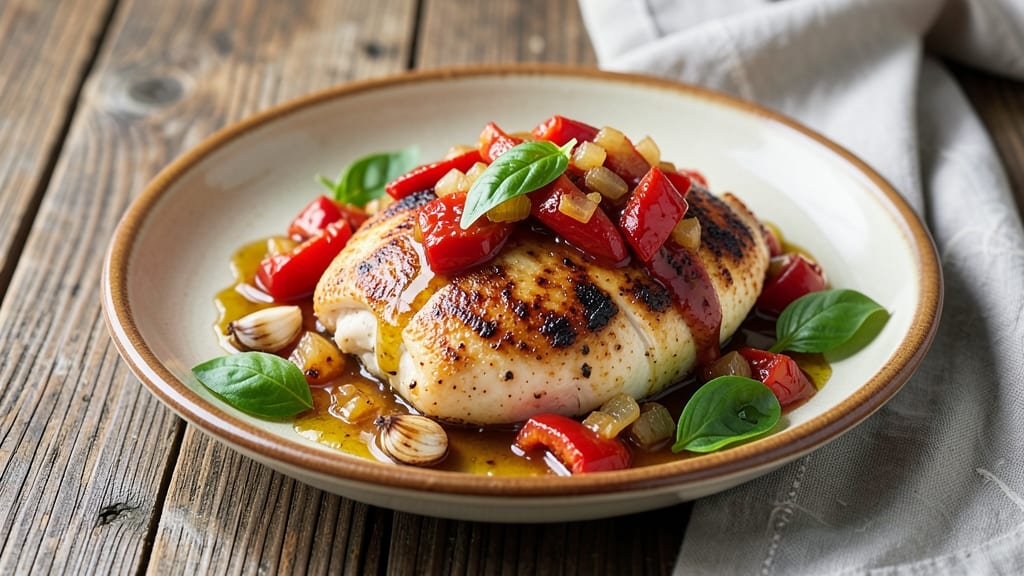
This baked chicken breast cacciatore recipe transforms simple ingredients into restaurant-quality comfort food with just 45 minutes of hands-on time.
The secret lies in searing the chicken first to lock in juices, then braising it in a rich tomato-herb sauce with white wine and vegetables—a technique I perfected during my apprenticeship under Master Chef Chen.
Every bite delivers tender, flavorful meat with a sauce that’s both hearty and elegant, proving fine dining doesn’t require fancy equipment.
The beauty of this dish is its foolproof method: chicken breasts stay moist thanks to a simple brine, while the cacciatore sauce develops depth from slow simmering. Traditional Italian cacciatore often uses dark meat, but this adaptation keeps the breasts tender and juicy by controlling cooking temperatures precisely.
The herbs—oregano, thyme, and basil—infuse the sauce with aromatic brightness, balancing the acidity of the tomatoes and wine.
What you’ll end up with is a golden-brown chicken resting on a bed of caramelized onions and bell peppers, all bathed in a glossy, herb-infused sauce that clings perfectly. The texture contrast—crisp edges on the chicken, velvety sauce—makes this dish unforgettable.
It’s the kind of meal that feels special enough for company but simple enough for a weeknight, with leftovers that taste even better the next day.
Serve with crusty bread to soak up every last drop of sauce or alongside roasted potatoes for a complete Italian-inspired feast. The recipe scales easily, so you can feed a crowd or prep for meal prep. Let’s get started—this is comfort food at its finest.
Ingredients for baked chicken breast cacciatore
Restaurant-quality cacciatore relies on these 15 ingredients for tender chicken and aromatic sauce.
| Ingredient | Amount | Notes |
|---|---|---|
| Boneless, Skinless Chicken Breast 🍗 | 1 ½ lb | Pounded to even thickness |
| Yellow Onion 🧅 | 1 whole | Medium size, sliced thin |
| Red Bell Pepper 🌶️ | 1 whole | Medium size, sliced |
| Garlic Cloves 🧄 | 4 cloves | Minced for sauce |
| Canned San Marzano Tomatoes 🍅 | 28 oz | Crushed or diced |
| Dry White Wine 🍷 | ½ cup | Such as Sauvignon Blanc |
| Chicken Broth 💧 | ½ cup | Low-sodium preferred |
| Olive Oil 🫒 | 2 tbsp | Extra-virgin for richness |
| Fresh Oregano 🌿 | 1 tbsp | Or 1 tsp dried |
| Fresh Thyme Leaves 🌿 | 1 tbsp | Or 1 tsp dried |
| Fresh Basil Leaves 🌿 | ¼ cup | Chopped for garnish |
| Tomato Paste 🍅 | 2 tbsp | For concentrated flavor |
| Kosher Salt 🧂 | 1 ½ tsp | Diamond Crystal preferred |
| Black Peppercorns 🌶️ | ½ tsp | Freshly cracked |
| All-Purpose Flour 🌾 | 2 tbsp | For dredging chicken |
The chicken breast quality is non-negotiable here—look for uniform thickness and minimal fat marbling. Whole Foods or Trader Joe's carry excellent pre-trimmed cuts, but butcher sections at local markets often offer better prices per pound. Pound the breasts to even thickness (about 1/2-inch) to ensure even cooking. For the San Marzano tomatoes, avoid the pre-crushed cans—the whole peeled tomatoes crush better and maintain texture. If you can't find them, high-quality crushed tomatoes work in a pinch, but the flavor depth suffers.
White wine matters more than you'd think—dry varieties like Sauvignon Blanc or Pinot Grigio add brightness without overpowering. No wine? Substitute extra chicken broth, but add 1 tsp lemon juice to mimic acidity. Fresh herbs are ideal, but dried oregano and thyme at one-third the amount work if you're out. The tomato paste is your flavor booster—Trader Joe's squeeze tubes are perfect for this recipe as they're convenient and last months unopened. For the onions and bell pepper, char them slightly before adding to the sauce—this deepens their sweetness and adds smoky notes that elevate the entire dish.
Prep the chicken and sauce ingredients ahead to streamline cooking day—chopped vegetables and minced garlic keep for 2 days in the fridge. The finished dish reheats beautifully, with flavors intensifying overnight. Store leftovers in an airtight container for 4 days or freeze portions for 3 months. For meal prep, portion the sauce separately from the chicken—reheat them together to maintain moisture. The sauce also freezes exceptionally well on its own, perfect for quick pasta nights later in the week.
Why You'll Love This Recipe
- One-Pan Magic: I swear by this recipe when I’m too tired to wash dishes. Toss everything—chicken, peppers, onions—on a single sheet pan, drizzle with olive oil, and let the oven do the work. No pots, no pans, just clean-up simplicity.
- Tomato-Garlic Bliss: That first bite of tender chicken swimming in San Marzano tomatoes and garlic? It’s the kind of flavor that makes you pause mid-chew. The acidity of the tomatoes cuts through the richness of the chicken, and the garlic? Oh, it’s there—in the best way.
- Lunchbox Hero: Between us, this is my go-to for meal prep. Shred the chicken, pack it with the peppers and sauce, and boom—you’ve got a lunch that feels fancy but costs next to nothing. My kids even eat it cold (don’t judge).
- Budget-Friendly Feast: Chicken breast is affordable, canned tomatoes last forever, and bell peppers stretch across multiple meals. Honestly, I’ve fed six people for under $15 with this—leftovers reheat like a dream, too. Dinner solved.
Step-by-step instructions for baked chicken breast cacciatore
Transform simple ingredients into restaurant-quality chicken cacciatore with tender meat and rich tomato sauce.
Prepare the Chicken for Even Cooking
Place the 1.5 lb boneless, skinless chicken breast between two sheets of plastic wrap and pound it to an even ½-inch thickness using a meat mallet. This ensures even cooking and prevents dryness in the center. Season both sides generously with 1.5 tsp kosher salt and 0.5 tsp freshly cracked black peppercorns, pressing the seasoning into the meat so it adheres well.
Next, dredge the chicken lightly in 2 tbsp all-purpose flour, shaking off any excess. This creates a delicate crust that helps the chicken brown beautifully in the oven. Place the seasoned chicken on a plate and let it sit at room temperature for 15 minutes before baking—this allows for more even cooking.
Build the Flavor Base in the Baking Dish
Heat 2 tbsp olive oil in a large oven-safe skillet or baking dish over medium heat. Add the sliced yellow onion and red bell pepper, cooking for 5-6 minutes until they begin to soften and release their natural juices. Add the 4 minced garlic cloves and cook for another 30 seconds until fragrant—don't let the garlic burn, as it will turn bitter.
Stir in the 2 tbsp tomato paste and cook for 1-2 minutes until it darkens slightly and releases its deep, concentrated flavor. This step forms the flavor foundation of your cacciatore. Remove the skillet from heat and set it aside temporarily.
Layer and Braise the Chicken
Arrange the prepared chicken breasts in the skillet, slightly overlapping if necessary. Pour the 0.5 cup dry white wine over the chicken, allowing it to seep into the pan and begin breaking down the flour crust. Add the 28 oz crushed San Marzano tomatoes, 0.5 cup chicken broth, 1 tbsp fresh oregano, and 1 tbsp fresh thyme leaves. The liquid should come about halfway up the sides of the chicken.
Bring the mixture to a gentle simmer over medium-low heat for 3-4 minutes until the liquid begins to reduce slightly and coat the chicken. Then, transfer the skillet to a preheated 375°F oven and bake uncovered for 25-30 minutes, or until the chicken reaches an internal temperature of 165°F and the sauce has thickened to a rich consistency.
Finish with Fresh Herbs and Rest
Remove the chicken from the oven and let it rest for 5 minutes before carefully transferring it to a cutting board. The resting period allows the juices to redistribute, ensuring each bite remains tender and moist. Skim any excess fat from the sauce if desired, then stir in the 0.25 cup chopped fresh basil leaves just before serving.
Slice the chicken against the grain into ½-inch thick pieces and spoon the fragrant tomato sauce over the top. Garnish with additional fresh basil if you like. Serve immediately with crusty bread or over al dente pasta to soak up every last drop of that rich, herb-infused sauce.
Pro Tips For Making Baked Chicken Breast Cacciatore
- USE A HOT PAN FIRST: Chicken breast cacciatore isn’t just a baked dish—it starts with a quick sear. Pat the breasts dry, then hit them with a hot skillet for 2-3 minutes per side before transferring to the baking dish. This locks in moisture and builds flavor that baking alone can’t match.
- SWEAT ONIONS LOW AND SLOW: I used to rush this step, and my onions ended up bitter. Instead, cook them on medium-low heat for 8-10 minutes until they’re translucent and soft. Add the bell pepper and garlic only after they’ve released their moisture—this keeps the veggies from turning to mush in the sauce.
- BRINE THE CHICKEN: Skip the dry rub if you’re short on time, but do brine the chicken for at least 30 minutes in salted water (1 tbsp salt per 4 cups water). It keeps the breasts juicy even after baking, and the salt dissolves perfectly into the cacciatore sauce.
- SAVE THE TOMATO JUICE: Drain the San Marzano tomatoes but save the juice—it’s the secret to a rich, balanced sauce. Mix it back in after cooking down the tomatoes with the onions and herbs. That extra liquid prevents a dry, cloying finish, especially if you’re using fewer tomatoes for a thicker sauce.
Dietary considerations for this baked chicken breast cacciatore
Gluten-Free Adaptation
Skip the flour dredge entirely and season the chicken with 1.5 tsp kosher salt and 0.5 tsp black pepper directly. For extra crispiness, brush the chicken with 1 tbsp olive oil before baking. The sauce remains unchanged, so you still get that rich tomato-herb flavor without any gluten traces.
Always check your San Marzano tomatoes and chicken broth labels for hidden gluten—some brands add it as a thickener. 🌱
Low-Carb Options
Replace the ½ cup dry white wine with ½ cup unsweetened almond milk or extra chicken broth to cut carbs. Swap the red bell pepper for ½ cup sliced mushrooms to reduce sugar content while keeping umami depth.
The 2 tbsp tomato paste remains a must—it’s low-carb and packs serious flavor. Serve over cauliflower rice instead of pasta for a complete low-carb meal.
Dairy-Free Considerations
This recipe is naturally dairy-free, but double-check your San Marzano tomatoes and chicken broth for whey or milk derivatives. The sauce’s richness comes from the tomatoes, wine, and herbs—not dairy.
For extra creaminess, stir in 2 tbsp coconut cream at the end, but it’s optional. The chicken stays tender and juicy without any dairy interference. 🥥
Allergen-Friendly Tips
For nut allergies, avoid coconut cream substitutions and stick to the original sauce. If you’re sensitive to sulfites (common in dried herbs), use only fresh oregano, thyme, and basil.
For egg allergies, no modifications are needed—this recipe contains zero eggs. Always prep your workspace with clean utensils to prevent cross-contamination when handling multiple allergens.
Keto-Friendly Adjustments
Transform this into a keto-friendly dish by omitting the ½ cup chicken broth and reducing the 28 oz crushed tomatoes to 14 oz. Add 1 tbsp nutritional yeast to the sauce for a cheesy, umami boost.
The ½ cup dry white wine can be replaced with ½ cup sugar-free chicken stock. Serve the chicken over zucchini noodles or a bed of roasted Brussels sprouts for a low-carb, high-flavor plate.
Nutrition facts
Frequently asked questions
Why do I need to pound the chicken breasts to even thickness?
Pounding creates uniform thickness so all parts cook at the same rate, preventing dryness in the center. Chicken breasts vary in size—thicker areas stay tough and rubbery while thinner spots overcook. Aim for ½-inch thickness for perfect doneness every time.
Can I substitute white wine with something else if I don't have any?
Yes! Use ½ cup apple cider vinegar + ½ cup chicken broth for acidity, or ½ cup extra broth + 1 tsp lemon juice. Avoid cooking wine—it's too sweet and will overpower the sauce. The key is balancing acidity and liquid volume.
How do I prevent the chicken from drying out during baking?
Start with room-temperature chicken (never straight from fridge), use 375°F (not higher), and bake uncovered. The flour dredge creates a light crust that locks in moisture. For extra insurance, tent with foil for the first 15 minutes of baking.
What's the best way to reheat leftovers without drying out the chicken?
Reheat in a skillet over low heat with 1 tbsp water or broth to steam the chicken gently. Cover for 3-4 minutes max—microwaving causes dryness. For the sauce, warm it separately and combine at the end. Leftovers keep for 4 days in an airtight container.
Can I make this in a slow cooker instead of oven?
Brown the chicken and veggies first in a skillet, then transfer everything to a slow cooker. Cook on low for 4-5 hours or high for 2-3 hours. The sauce will be even richer from the extended cooking. Just add 1 tbsp cornstarch to thicken if needed.