
Main Courses
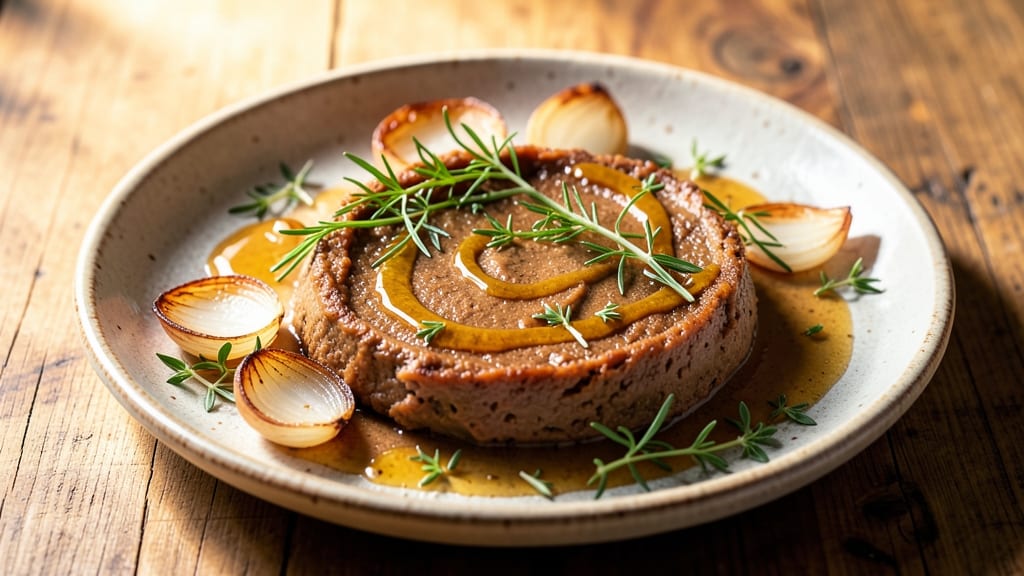
This baked chicken liver pâté delivers restaurant-quality richness with just five ingredients and a simple technique. My grandmother used to make it in her cast-iron skillet, and I've perfected the method for foolproof results at home.
The secret lies in rendering the fat properly and baking the pâté low and slow to achieve that signature silky texture.
What makes this recipe special is its balance of earthy flavor and luxurious texture—creamy yet firm, with a delicate crust that forms naturally during baking. Unlike store-bought versions, this pâté develops deep, complex flavors from fresh herbs and slow cooking.
The process is straightforward, but the results are anything but ordinary.
By the time you serve this pâté, you'll have a dish that's elegant enough for dinner parties but simple enough for weeknight meals. The rich, herby flavor pairs beautifully with crusty bread or crackers, making it perfect for appetizers or light lunches.
This is comfort food at its finest—decadent yet approachable.
Whether you're serving it in a traditional terrine or deconstructed as a spread, this pâté will impress without requiring advanced skills. Let's get started on creating something truly special that tastes like it came from a Parisian bistro.
Ingredients for baked chicken liver pate
Five ingredients transform humble chicken livers into a silky, restaurant-worthy pâté with earthy herb complexity.
| Ingredient | Amount | Notes |
|---|---|---|
| Chicken Livers 🍗 | 1 ½ lb | Fresh, trimmed of connective tissue |
| Unsalted Butter 🧈 | ½ cup | Cold, cut into small cubes |
| Shallots 🧅 | 3 whole | Minced, vibrant purple variety |
| Fresh Tarragon 🌿 | ¼ cup | Chopped, stems removed |
| Fresh Thyme 🌿 | ¼ cup | Leaves only, finely chopped |
| Extra-Virgin Olive Oil 🫒 | ½ tbsp | For greasing terrine mold |
| Diamond Crystal Kosher Salt 🧂 | 1 tsp | Fine grain preferred |
| Freshly Ground Black Pepper 🌶️ | ½ tsp | Cracked peppercorns preferred |
| Heavy Cream 🥛 | ¼ cup | Cold, for finishing |
| Puff Pastry 🍞 | 1 sheet | Store-bought or homemade |
| Egg Yolk 🥚 | 1 whole | For egg wash |
The chicken livers are the foundation—freshness is critical. Purchase from a trusted butcher or specialty market where they're handled carefully. Look for livers that are deep red and moist, not gray or slimy. Trim away any connective tissue or bile ducts immediately after purchase, then store in an airtight container with a paper towel to absorb moisture. Whole Foods Market or D'Agostino's typically carry high-quality livers, but check your local butcher first—they often have better selection. For the herbs, fresh tarragon and thyme make all the difference; dried versions simply can't replicate the bright, aromatic depth. If you can't find tarragon, marjoram at half the amount works as a substitute, though it lacks that signature anise-like note.
Butter quality matters significantly here—European-style unsalted butter with high fat content renders beautifully. If you're using salted butter, omit the additional salt in the recipe. For the shallots, vibrant purple varieties have the most delicate sweetness, but yellow shallots work perfectly fine. The olive oil should be extra-virgin and fruity—none of that cheap, bitter supermarket oil. If you're making this ahead, the pâté actually improves with time, developing deeper flavors over 24-48 hours of refrigeration. For the terrine, use a 4-6 cup capacity mold—if you don't have one, a loaf pan works in a pinch, though the edges will be less elegant. The puff pastry should be thawed completely before using to prevent soggy edges.
Once assembled, the pâté keeps beautifully in the refrigerator for up to 5 days, though it's best enjoyed within 3 days for peak texture. For longer storage, wrap tightly in plastic wrap and freeze for up to 3 months. When reheating, cover with foil and warm in a 350°F oven for 15-20 minutes—this preserves that delicate crust. The terrine can be sliced directly from the mold for elegant presentation, or deconstructed as a spread on crusty bread. If you find yourself with leftover pâté, it makes an excellent filling for croissants or danishes. The herb-infused butter used for rendering can be strained and saved for future recipes—it's pure flavor gold.
Why You'll Love This Recipe
- No-Fuss Ingredients: I swear by this recipe because it uses stuff I already have—just chicken livers, butter, shallots, and a handful of herbs. No obscure spices or last-minute grocery runs. Honestly, the only prep is trimming the livers and chopping shallots, and even that’s quick.
- Rich, Herby Depth: That tarragon-thyme combo? It’s what makes this pâte sing—bright, earthy, and just a little fancy without trying too hard. The butter melts into a velvety texture while the livers stay tender, and the crispy edges? Chef’s kiss.
- Weeknight to Party Fix: Same recipe, totally different vibes. Slather it on toast for a lazy Sunday breakfast or pipe it into puff pastry for a dinner party showstopper. Between us, it’s the kind of dish that makes you look like a pro with zero effort.
- Budget-Friendly Luxury: Chicken livers are cheap, and this recipe stretches them into something restaurant-worthy. I’ve made it feed four for under $10, and the leftovers? Just as good reheated the next day. My wallet and taste buds win.
Step-by-step instructions for baked chicken liver pâté
Transform delicate chicken livers into a luxurious pâté with velvety texture and vibrant herb notes.
Prepare and Sear the Chicken Livers
Trim any connective tissue from the 1.5 lb chicken livers and rinse thoroughly under cold water. Pat them completely dry with paper towels—this ensures they sear properly rather than steam. Cut each liver into ¼-inch thick slices for even cooking.
Heat a large skillet over medium-high heat and add 0.5 cup unsalted butter in small cubes. Once the butter foams but doesn't brown, add the liver slices in a single layer. Cook undisturbed for 2-3 minutes per side until they develop a rich mahogany crust and reach 145°F internally. Remove and set aside on a paper towel-lined plate to drain excess fat.
Build the Herb Base
In the same skillet (don't wipe it clean), reduce heat to medium and add 3 whole shallots that have been minced. Cook for 5-6 minutes until softened and translucent, stirring occasionally. Add 0.25 cup chopped fresh tarragon and 0.25 cup finely chopped fresh thyme, cooking for another 2 minutes until fragrant.
Remove the pan from heat and stir in 1 tsp Diamond Crystal kosher salt and 0.5 tsp freshly ground black pepper. Let the mixture cool slightly—this prevents the butter from separating when blended later. The herbs should release their aromatic oils, creating a fragrant foundation for the pâté.
Process the Pâté Mixture
Transfer the seared chicken livers and herb mixture to a food processor fitted with the metal blade. Add 0.25 cup cold heavy cream and pulse 4-5 times until the mixture is smooth but still retains some texture—this ensures a silky yet rustic finish. Scrape down the sides as needed to incorporate all ingredients.
For an ultra-smooth texture, strain the mixture through a fine-mesh sieve into a bowl. This removes any fibrous bits that might make the final pâté grainy. The consistency should be like thick, velvety custard—neither too runny nor too stiff. Taste and adjust seasoning if needed.
Assemble and Bake the Pâté
Preheat your oven to 350°F. Grease a 4-cup terrine mold with 0.5 tbsp extra-virgin olive oil (or use nonstick spray). Spoon the pâté mixture into the mold, pressing down gently to eliminate air pockets. Cover with plastic wrap and refrigerate for 30 minutes to firm up slightly.
Once chilled, bake the pâté for 25-30 minutes until the center reaches 160°F and the edges are set but still jiggly. This gentle baking ensures the pâté holds its shape when unmolded. For extra shine, brush the top with 1 whole egg yolk thinned with a teaspoon of water, then bake for 5 more minutes until golden.
Serve with Puff Pastry
Unmold the pâté onto a serving plate by running a thin knife around the edges. Let it sit at room temperature for 10 minutes before serving to allow flavors to meld. Roll out the 1 sheet puff pastry to ¼-inch thickness and cut into strips or shapes using a sharp knife or cookie cutter.
Arrange the puff pastry around the pâté and bake at 375°F for 12-15 minutes until golden brown. The contrast of crispy pastry with the silky pâté creates the perfect textural experience. Serve immediately with crusty bread or crackers for spreading.
Pro Tips For Making Baked Chicken Liver Pate
- SEAR LIVERS FIRST: Skip the raw liver straight to baking—give them a quick 2-minute sear in a hot pan with butter until just browned. The Maillard reaction here makes the pâte richer, and it prevents that metallic aftertaste when overcooked later. (Yes, even if you’re impatient like me.)
- TRIM FAT, KEEP FLAVOR: Chicken livers bleed like crazy when raw. Rinse them in cold water, pat very dry, then trim off any yellowish fat—it turns bitter when cooked. Save the fat for frying eggs later, though. (I learned this the hard way after one disastrous batch.)
- LOW AND SLOW BAKES BEST: Don’t blast those livers at 400°F—325°F is the sweet spot. They’ll render their own juices, and the butter won’t separate into a greasy mess. Cover the dish loosely with foil for the first 20 minutes to trap steam, then uncover to crisp the top.
- SAUTE SHALLOTS UNTIL SOFT: Cook the shallots until they’re almost caramelized—just past translucent, with a hint of color. Raw shallots make the pâte taste sharp and unfinished. If you’re short on time, pulse them in a food processor after cooking to mimic a fine texture. (Sounds weird, but it works.)
Make-ahead tips for this baked chicken liver pate
Prep Ahead
Start by preparing your chicken livers the night before—trim and rinse them, then store in an airtight container with a paper towel to absorb moisture. This prevents them from steaming when you sear them later.
I always do this because fresh livers can be tricky to handle when you're ready to cook. 🌟
Herb Mixture
Mince your shallots and chop your fresh herbs (tarragon and thyme) up to a week ahead. Store them in separate airtight containers in the fridge. When you're ready to cook, simply combine them in the skillet with the butter.
This saves time on the day you're making the pâté and ensures your herbs are as fresh as possible. 🌿
Butter Rendering
Render the butter with the chicken livers the day before and strain it through a fine-mesh sieve into a clean jar. Store it in the refrigerator—this golden, herb-infused butter is a treasure for future recipes!
Use it for cooking vegetables or spreading on toast. It keeps for up to a week in the fridge. ❄️
Terrine Assembly
Assemble the pâté mixture in your terrine mold up to 24 hours before baking. Cover it tightly with plastic wrap and refrigerate. This allows the flavors to meld beautifully and makes unmolding easier.
When you're ready to bake, simply pop it in the oven and let it do its magic. 💡
Puff Pastry Prep
Roll out your puff pastry and cut it into shapes the night before. Store it between parchment paper in the fridge. When you're ready to serve, just bake it alongside the pâté for a crispy, golden finish. This step is foolproof and saves you from last-minute stress. 🍞
Make-Ahead Serving
Bake the pâté and puff pastry up to a day ahead, then store them separately. Reheat the pâté in a 350°F oven for 15-20 minutes covered with foil, and refresh the puff pastry in the oven for 5-7 minutes to crisp it up.
Serve with your favorite crackers or bread for a quick, elegant appetizer. ✨
Nutrition facts
Frequently asked questions about chicken liver pâté
Why does my pâté turn out grainy?
Graininess usually means you didn't process the livers long enough or didn't strain the mixture. For ultra-smooth texture, pulse the food processor for 8-10 seconds per burst (not continuous), then strain through a fine-mesh sieve. Cold ingredients also help prevent separation—keep your butter and cream chilled until the last step.
Can I substitute duck or beef liver?
Duck liver adds richer depth while beef liver gives a slightly gamey flavor. Use the same ratio (1.5 lbs) and adjust cooking time by 1-2 minutes per side—beef liver needs slightly more searing. For duck, reduce the butter to 0.3 cup since duck fat renders more aggressively.
How do I fix a pâté that's too runny?
If your pâté is too loose, chill it uncovered in the fridge for 1-2 hours to evaporate excess moisture, then press it firmly into the mold. For immediate fixes, mix in 1 tbsp cold butter or 1 tsp cornstarch to thicken. The key is proper chilling before baking—never skip the 30-minute fridge rest before oven time.
What's the best way to serve this pâté?
For classic presentation, slice the baked terrine and serve with crusty baguette slices or water crackers. For modern twists, spread on toasted sourdough with a drizzle of honey, or use as a filling for croissants. Pair with a crisp Sauvignon Blanc or dry Chardonnay to complement the herby richness.
Can I make this without a terrine mold?
Yes! Use a loaf pan lined with plastic wrap for easy unmolding, or shape the pâté into a free-form log on a baking sheet. For rustic presentation, press it into a ramekin or small ceramic dish. Just ensure your container is at least 3 inches tall to prevent spreading. The texture will be slightly less refined but still delicious.