
Sauces & Condiments
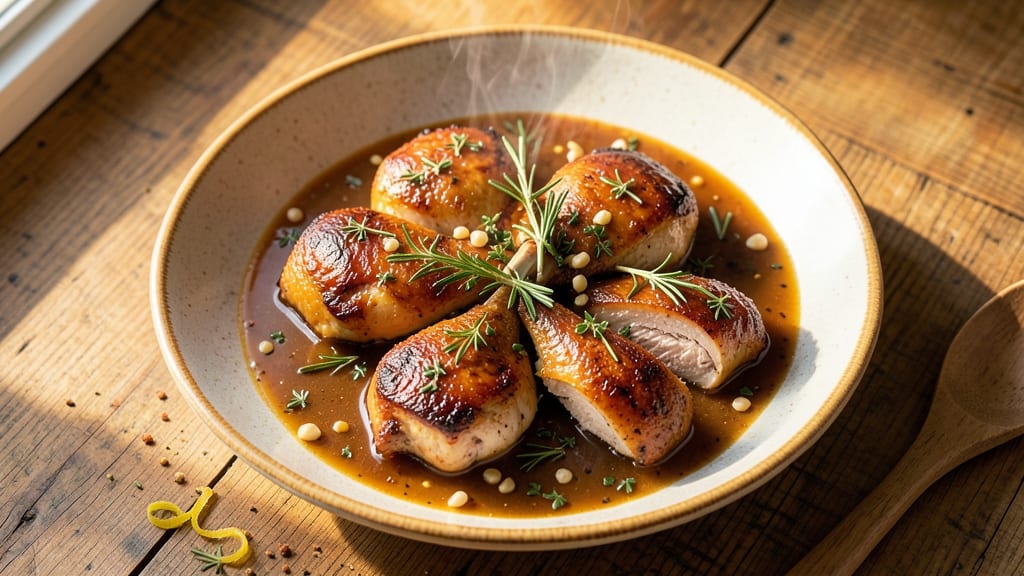
This baked chicken thigh sauce recipe delivers juicy, golden-brown chicken thighs smothered in a rich garlic-herb pan gravy that locks in every drop of flavor.
The secret lies in a simple marinade that tenderizes the meat while the sauce—made from the same pan juices—creates a velvety finish that elevates every bite. What sets this apart is the foolproof technique that ensures crispy skin without drying out the meat, a common pitfall in baked chicken dishes.
The process starts with a 30-minute marinade of olive oil, garlic, and fresh herbs that infuses the chicken with deep, aromatic flavors. After baking at 400°F for 35 minutes, the thighs develop a crispy exterior while staying tender inside.
The real magic happens when you deglaze the pan with broth and butter, transforming the drippings into a luxuriously thick gravy that coats the chicken like a second skin.
What you’ll end up with is a dish that’s restaurant-quality at home—juicy, flavorful chicken thighs paired with a sauce so rich it’ll have everyone asking for seconds.
The gravy isn’t just a side; it’s the star, clinging to the meat and adding layers of garlic, thyme, and rosemary that turn a simple weeknight dinner into something special.
Serve with roasted potatoes or a fresh green salad to balance the richness, and don’t forget to drizzle extra gravy over the top. This recipe proves that moist, flavorful chicken doesn’t require complicated techniques—just patience and the right sauce. Let’s get started!
Ingredients for baked chicken thigh sauce
Juicy chicken thighs paired with a velvety garlic-herb gravy—this recipe delivers restaurant-quality flavor with simple ingredients.
| Ingredient | Amount | Notes |
|---|---|---|
| Chicken Thighs (Bone-in) 🍗 | 1 ½ lb | Skin-on, trimmed of excess fat |
| Extra-Virgin Olive Oil 🫒 | ½ cup | For marinade and crisping |
| Garlic Cloves 🧄 | 6 cloves | Minced for marinade and sauce |
| Fresh Rosemary 🌿 | ¼ cup | Chopped, stems removed |
| Fresh Thyme 🌿 | 0.15 cup | Leaves only, finely chopped |
| Salt 🧂 | 1 ½ tsp | Kosher or sea salt |
| Black Pepper 🌶️ | ½ tsp | Freshly ground |
| Unsalted Butter 🧈 | 3 tbsp | Cold, cubed for gravy |
| Chicken Broth 💧 | 1 cup | Low-sodium preferred |
| All-Purpose Flour 🌾 | 1 tbsp | For gravy thickening |
| Fresh Parsley 🌿 | 0.1 cup | Chopped, for garnish |
| Lemon Juice 🍋 | 1 tbsp | Freshly squeezed |
The chicken thighs are the foundation—bone-in, skin-on for maximum flavor and moisture. Look for thighs with good marbling at the butcher counter or grocery store meat section. Trader Joe's and Whole Foods often carry high-quality cuts, but any reputable grocery store will do. Fresh herbs make all the difference here: rosemary and thyme should smell vibrant, not wilted. If you're short on time, dried herbs work at one-third the amount, but fresh is ideal for that bright, aromatic punch. The garlic? Use fresh, never jarred—it's a game-changer for flavor.
No fresh rosemary? Dried works in a pinch, but reduce to one teaspoon. Short on chicken broth? Low-sodium vegetable broth is a perfect substitute. The butter in the gravy is crucial—don't skimp on quality. European-style butter like Plugrá or Kerrygold adds a richer flavor. For the flour, King Arthur or Bob's Red Mill brands work best for thickening. The lemon juice brightens everything up—if you're out, a pinch of citric acid will do the trick. And if you're worried about the chicken drying out, bake it skin-side up for the first 20 minutes to render fat and crisp the skin properly.
This dish reheats beautifully—just cover with foil and warm in a 350°F oven for 10-15 minutes. The gravy thickens as it cools, so you can reheat it on the stovetop with a splash of broth if needed. Store leftovers in the fridge for up to 4 days, or freeze the chicken and gravy separately for up to 3 months. For meal prep, portion the gravy into ice cube trays—perfect for adding to future meals. The herbs can be prepped ahead and stored in the fridge for up to 5 days in a sealed container.
Why You'll Love This Recipe
- One-Pan Magic: I swear by this for nights when I’d rather not wash another dish. Toss the thighs on a sheet pan with olive oil, garlic, and herbs—no bowls, no mess—just slide it in the oven and forget about it.
- Herb Bomb Flavor: That crispy skin? The rosemary and thyme clinging to the edges? It’s like a little burst of Mediterranean sunshine every bite. Honestly, the sauce isn’t even the star—this chicken is.
- Leftovers That Shine: I make a double batch on Sundays because reheated, these thighs are still juicy and fragrant. Toss them in salads, wraps, or over grains—suddenly, lunch is sorted without extra effort.
- Budget-Friendly Feast: Bone-in thighs stretch my grocery budget, and the olive oil, garlic, and herbs cost pennies. Between us, this is the kind of recipe that makes me feel like I’m feeding a houseful without breaking the bank.
Step-by-step instructions for garlic-herb pan gravy
This method delivers perfectly crispy chicken thighs with a rich, aromatic sauce that locks in every drop of moisture.
Marinate and Season the Chicken
In a large bowl, combine the 1.5 lb chicken thighs (bone-in), 0.5 cup extra-virgin olive oil, 6 cloves minced garlic, 0.25 cup chopped fresh rosemary, 0.15 cup chopped fresh thyme, 1.5 tsp salt, and 0.5 tsp black pepper. Mix gently to coat the chicken evenly, ensuring the marinade penetrates the skin and meat. Let it sit at room temperature for 15 minutes while you preheat the oven to 425°F. This brief marinade infuses the chicken with flavor and helps create that signature crispy skin.
While the chicken marinates, position a wire rack inside a rimmed baking sheet. This allows air to circulate underneath, preventing soggy skin. The high oven temperature will render the skin's fat while keeping the meat juicy—this is the secret to that perfect balance of texture and moisture.
Roast the Chicken Until Golden
Remove the chicken from the marinade (reserve the marinade for later) and place the thighs skin-side up on the prepared wire rack. Roast for 35-40 minutes until the skin is deep golden brown and the internal temperature reaches 165°F when measured at the thickest part of the thigh. The skin should crisp up beautifully while the meat remains tender and moist underneath.
About 10 minutes before the chicken is done, reduce the oven temperature to 375°F. This helps prevent overcooking while allowing the chicken to finish cooking gently. The marinade you reserved will become the base for your sauce, so don't discard it—it's packed with flavor.
Deglaze the Pan for Rich Gravy
While the chicken rests, place the baking sheet on the stovetop over medium heat. Carefully pour the reserved marinade into the pan, scraping up all the browned bits from the bottom with a wooden spoon. These bits are packed with flavor and form the foundation of your gravy. Let the marinade simmer for 3-4 minutes until it reduces by about half and thickens slightly.
Add the 1 cup chicken broth and the 1 tbsp all-purpose flour to the pan, whisking constantly to prevent lumps. The flour will help thicken the sauce, while the broth adds depth and moisture. Simmer for another 2-3 minutes until the sauce coats the back of a spoon and has thickened to a velvety consistency.
Finish with Butter and Herbs
Remove the pan from heat and stir in the 3 tbsp cold unsalted butter, 0.1 cup chopped fresh parsley, and 1 tbsp lemon juice. The butter adds richness and helps emulsify the sauce, while the parsley and lemon juice brighten the flavors. Taste and adjust the seasoning if needed—you may need a pinch more salt or pepper to balance the sauce.
Return the chicken to the baking sheet and spoon the sauce generously over the top. Let the chicken rest for 5 minutes before serving, allowing the juices to redistribute. The result is a perfectly crispy, golden-brown chicken thigh with a luscious garlic-herb gravy that locks in every drop of moisture.
Pro Tips For Making Baked Chicken Thigh Sauce
- CRANK THE HEAT FIRST: Don’t start slow with olive oil—get that pan smoking hot before the chicken hits it. I used to bake these at 375°F and wondered why the skin never got crispy; now I blast them at 425°F for the first 10 minutes. The high heat seals the juices in while rendering fat aggressively, which is what makes the sauce rich later.
- SALT THE THYME STALKS: That little pinch of salt on thyme stems isn’t just for show—it dissolves into the oil as they cook, adding depth to the sauce. Skip it, and your dish will taste flat. I learned this the hard way after tossing out a batch where I’d forgotten to season the herbs properly.
- DON’T OVERCROWD THE PAN: If your thighs are touching, they’ll steam instead of brown. Arrange them in a single layer with space between, even if it means two batches. I’ve ruined more crispy skin than I’d like to admit by ignoring this—your sauce will taste better when the chicken has room to caramelize.
- RESERVE THE FAT: As the thighs render, that golden oil pools in the pan—don’t pour it away. Use a spoon to scoop it into the sauce at the end; it’s the secret to a glossy, flavorful finish. I now keep a small bowl nearby to catch it mid-cook, because once it’s gone, you can’t get it back.
Best sauces and condiments for baked chicken thigh sauce
Garlic-Herb Gravy
The star of this dish is the garlic-herb pan gravy, made directly from the chicken's rendered juices and marinade. After roasting, I scrape up every last bit of flavor from the baking sheet—those browned bits are pure magic.
The sauce gets thickened with just 1 tbsp all-purpose flour and enriched with 3 tbsp cold butter for that velvety finish. Fresh parsley and lemon juice brighten it up, cutting through the richness. 🌿
Creamy Mustard Sauce
For a tangy twist, try a Dijon mustard sauce drizzled over the chicken. Mix 2 tbsp whole-grain mustard, ¼ cup heavy cream, and 1 tbsp lemon juice in a small saucepan.
Simmer for 3-4 minutes until slightly thickened, then whisk in 1 tbsp melted butter. The mustard adds a sharp contrast to the rich chicken and gravy, balancing the dish beautifully.
Honey-Mustard Glaze
Sweet and savory collide in this honey-mustard glaze, perfect for brushing on the chicken during the last 5 minutes of baking. Combine 2 tbsp honey, 1 tbsp Dijon mustard, and 1 tsp apple cider vinegar in a small bowl.
The glaze caramelizes slightly, creating a sticky, flavorful crust. It pairs especially well with the garlic-herb gravy for a layered flavor experience.
Lemon-Caper Sauce
Brighten the dish with a lemon-caper sauce that adds briny depth. Sauté 2 tbsp capers and 2 minced garlic cloves in 1 tbsp olive oil for 2 minutes, then deglaze with ¼ cup white wine and 2 tbsp lemon juice.
Reduce by half, then stir in 1 tbsp chopped parsley. This sauce works wonders as a side drizzle or mixed into the garlic-herb gravy for extra complexity.
Spicy Chipotle Cream
For heat lovers, a smoky chipotle cream sauce adds a kick. Blend ½ cup sour cream, 1 tsp adobo sauce (from canned chipotles), and 1 tsp lime juice.
Thin with a splash of milk if needed. Drizzle over the chicken or mix into the gravy for a spicy-sweet contrast. The chipotle’s smokiness complements the roasted chicken beautifully. 🌶️
Herb Butter Sauce
Simplify with an herb butter sauce that’s ready in minutes. Mix 4 tbsp softened butter with 1 tbsp chopped fresh thyme, 1 tbsp chopped parsley, and a pinch of salt.
Dollop spoonfuls over the chicken before serving, letting the butter melt into the gravy. It’s a foolproof way to add extra richness and herbaceous flavor without extra effort.
Nutrition facts
Frequently asked questions
Why does this recipe use bone-in chicken thighs instead of boneless?
Bone-in thighs stay juicier and more flavorful because the bone acts as a natural insulator, keeping the meat moist during baking. The bone also adds depth to the pan gravy as it renders fat and flavor. For best results, never use boneless thighs—they dry out faster and lack that restaurant-quality richness.
Can I make this sauce ahead of time?
The gravy actually tastes better the next day as the flavors meld. Store it in an airtight container in the fridge for up to 3 days or freeze for 3 months. Reheat gently on the stove with a splash of broth to restore thickness. The chicken reheats well too—cover with foil and warm at 350°F for 10-15 minutes.
What if my chicken skin isn't crispy?
This usually happens when the oven isn't hot enough or the skin isn't dry. First, pat the thighs completely dry with paper towels before baking. Second, increase your oven temp to 450°F for the first 15 minutes to render the fat faster. Finally, use a wire rack instead of baking directly on the sheet pan for better airflow.
Can I substitute chicken broth with something else?
Yes! Use low-sodium vegetable broth for a vegetarian version, or white wine for extra depth (reduce by half first). For a lighter option, try chicken stock with an extra splash of lemon juice. Just remember that broth adds body to the sauce—water alone will make it too thin.
How do I adjust this for a crowd?
Double the recipe easily! Use a larger roasting pan and bake at 425°F for 40-45 minutes (check internal temp at 165°F). For the gravy, increase the butter to 6 tbsp and broth to 1.5 cups. Cook in batches if needed—just keep the chicken warm in a 200°F oven while finishing the sauce.