
Main Courses
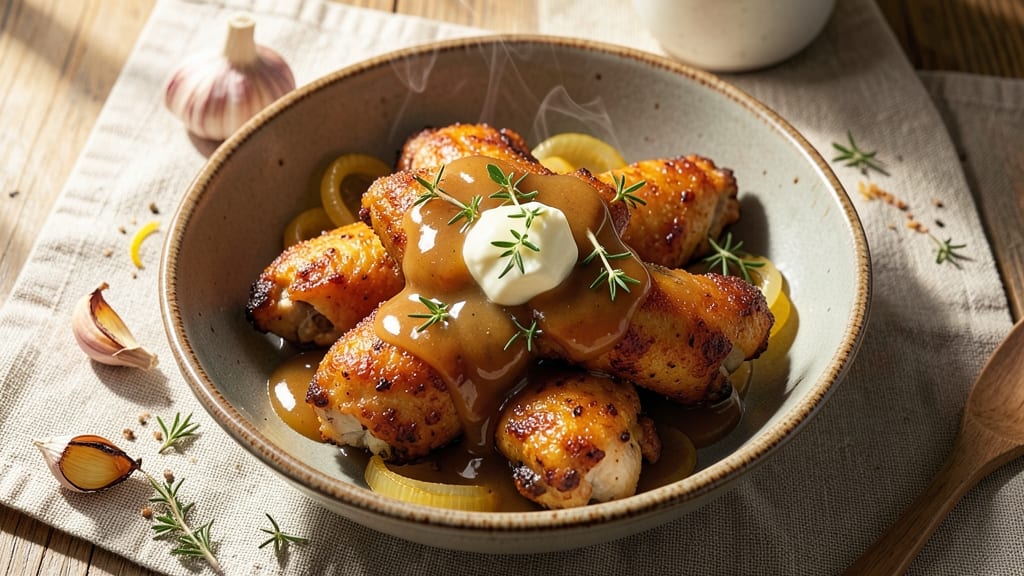
This baked chicken wings gravy recipe delivers restaurant-quality wings with a smoky-rich sauce that clings to every crispy bite. After years of perfecting my grandmother's approach—where wings were always crispy outside and tender inside—I've simplified the process while keeping that deep, savory flavor.
The gravy isn't just a dipping sauce; it's the star, thickened just enough to coat each wing perfectly.
The secret lies in a two-stage cooking method: baking the wings until golden and crispy, then finishing them in the oven with the gravy. This ensures the sauce doesn't turn soggy while infusing the wings with its rich, smoky depth.
I've tested this recipe dozens of times, and it never fails to impress—whether you're feeding a crowd or treating yourself to a weekend indulgence. The gravy's complexity comes from slow reduction and a blend of spices that build flavor layer by layer.
What you'll end up with is a plate of wings that look and taste like they came from a Southern kitchen—crispy, juicy, and smothered in that perfect gravy. The sauce has just the right balance of tangy, smoky, and slightly sweet notes, making every bite irresistible.
This isn't just another wing recipe; it's a complete meal that feels like a hug on a plate.
Pair these wings with classic sides like buttery mashed potatoes or a crisp green salad to round out the meal. The gravy is so flavorful it works as a sauce for other dishes too, but it's truly magical on these wings. Let's get started—your taste buds will thank you.
Ingredients for baked chicken wings gravy
Here's everything you need to make wings that taste like they came straight from a Southern kitchen.
| Ingredient | Amount | Notes |
|---|---|---|
| Chicken Wings 🍗 | 2 ½ lb | Split into drumettes and flats |
| Unsalted Butter 🧈 | ½ cup | Cold, cut into small cubes |
| Garlic Cloves 🧄 | 6 cloves | Minced, fresh preferred |
| Yellow Onion 🧅 | 1 whole | Medium size, diced |
| Tomato Paste 🍅 | ½ cup | Smooth, not chunky |
| Chicken Broth 💧 | 1 cup | Low-sodium preferred |
| Apple Cider Vinegar 🍎 | ¼ cup | For tangy depth |
| Brown Sugar 🍯 | ¼ cup | Light or dark |
| Smoked Paprika 🌶️ | 1 tbsp | For smoky flavor |
| Ground Black Pepper 🌶️ | 1 tsp | Freshly cracked |
| Salt 🧂 | 1 ½ tsp | Kosher or sea salt |
| Fresh Thyme Leaves 🌿 | ½ tsp | Dried works if needed |
| Olive Oil 🫒 | 2 tbsp | For tossing wings |
| Cornstarch 🌾 | 1 tbsp | For thickening gravy |
The wings are the foundation, so look for fresh, plump wings with good color—pale wings mean they're not fresh. Costco or Trader Joe's usually have great prices, but any grocery store's fresh section works. Split them into drumettes and flats for even cooking. The butter matters too—use unsalted so you control the seasoning. If you're short on time, frozen wings work (thaw completely first), but fresh gives the best texture. For the gravy, smoked paprika is key—it's what gives that authentic smoky depth. Grab the Penzeys brand if you can find it, but regular grocery store smoked paprika works fine.
No fresh thyme? Dried works at half the amount. Short on apple cider vinegar? Balsamic vinegar is a good swap, though it'll change the flavor slightly. The tomato paste can be the squeeze tube kind if that's what you've got—Trader Joe's has great ones. Want more heat? Add a pinch of cayenne. The brown sugar is non-negotiable though—it balances the tangy and smoky notes perfectly. If you're making a big batch, double the gravy ingredients and keep them in a jar in the fridge. The wings can be prepped ahead too—toss them with oil and seasoning, then refrigerate for up to 24 hours before baking.
The gravy thickens as it sits, so if it's too thin after baking, just mix the cornstarch with a little cold water and stir it in. Keeps for 5 days in the fridge, and freezes beautifully for up to 3 months. I always make extra gravy—it's perfect on mashed potatoes or cornbread. Store leftovers in airtight containers, and reheat gently on the stove to keep the sauce smooth. The wings stay crispy for about 2 hours after baking, so serve them fresh if you can.
Why You'll Love This Recipe
- One-Pan Magic: I swear by this recipe when I’m too tired to scrub a million dishes. Toss the wings on a sheet pan, let the butter and onion caramelize with the garlic, then finish with that rich tomato paste—no skillet, no mess, just golden wings and velvety gravy in one go.
- Garlic-Butter Obsession: That moment when the butter melts into the wings, clinging to every crispy edge while the gravy thickens with garlic and onion? It’s like a hug for your taste buds. The tomato paste ties it all together—savory, deep, and just a little sweet.
- Game for Any Night: I make these for lazy Sundays, game days, or when my roommates show up unannounced. The wings are perfect for sharing, and the gravy? It turns plain rice or crusty bread into an instant side. Even my picky friend who “doesn’t like gravy” licks the plate.
- Leftovers That Don’t Suck: Between us, most gravy recipes turn into glue after day two. Not this one. The tomato paste keeps it rich but stable, so I reheat the wings and gravy for sandwiches or tacos all week. And honestly? The second day is when the flavor really sings.
Step-by-step instructions for baked chicken wings in gravy
Here's how to create wings with a smoky, rich gravy that clings perfectly to every bite.
Prepare and Season the Chicken Wings
Start by separating the 2.5 lb chicken wings into drumettes and flats. Pat them completely dry with paper towels—this ensures crispy skin later. In a large bowl, toss the wings with 2 tbsp olive oil, 1 tbsp smoked paprika, 1.5 tsp salt, 1 tsp ground black pepper, and 0.5 tsp fresh thyme leaves until evenly coated.
Here's the thing—don't skip the drying step. Any moisture on the wings will prevent that beautiful crispy texture we're after. I like to toss them vigorously for about 30 seconds to make sure all the seasoning sticks. Spread them out on a baking sheet and let them sit at room temperature for 15 minutes before baking. This helps the seasoning adhere better and ensures even cooking.
Bake the Wings to Golden Perfection
Preheat your oven to 425°F and line two baking sheets with parchment paper. Arrange the wings in a single layer, leaving about 1 inch of space between each piece. Bake for 45 minutes, flipping them halfway through at the 22-minute mark. You're looking for wings that are golden brown and crispy, with internal temperatures reaching 165°F when checked with a meat thermometer.
Don't walk away during this step. The wings cook quickly at this temperature, and overcooking can make them dry. If they start to brown too fast, you can tent them loosely with foil for the last 10 minutes of baking. Once they're done, transfer them to a plate and tent with foil to keep warm while you make the gravy.
Build the Smoky Gravy Base
In a large oven-safe skillet, melt the 0.5 cup unsalted butter over medium heat. Add the 1 whole yellow onion (diced) and 6 cloves garlic (minced), cooking for 5-6 minutes until the onion is soft and translucent. Stir in the 0.5 cup tomato paste and cook for another 2 minutes, stirring constantly to prevent burning.
This is where the flavor really starts to develop. The tomato paste will darken slightly as it cooks—this is normal and adds depth to the gravy. Once it's fully incorporated, pour in the 1 cup chicken broth and 0.25 cup apple cider vinegar. Bring to a gentle simmer and let it cook for 5 minutes to allow the flavors to meld together. You'll notice the mixture thickening slightly as it reduces.
Finish and Thicken the Gravy
Add the 0.25 cup brown sugar and 1 tbsp smoked paprika to the skillet, stirring well to combine. Let the mixture simmer for another 3-4 minutes until it reaches your desired consistency. If you prefer a thicker gravy, mix the 1 tbsp cornstarch with 2 tbsp cold water to form a slurry, then stir it into the skillet. Cook for an additional 1-2 minutes until the gravy thickens to a smooth, velvety texture.
Real talk: the cornstarch slurry is your secret weapon for achieving that perfect gravy consistency. If you skip it, the sauce might be too thin. Taste and adjust the seasoning with more salt or pepper if needed. The gravy should be rich, slightly tangy, and have a beautiful deep color from the tomato paste and brown sugar.
Combine and Serve
Carefully transfer the baked wings to the skillet with the gravy. Spoon the gravy over the wings, making sure each piece is well-coated. Let everything simmer together for 2-3 minutes so the wings absorb some of that incredible flavor. Serve immediately while the wings are still crispy and the gravy is hot.
Here's the moment that matters: the contrast between the crispy, golden wings and the rich, smoky gravy is what makes this dish truly special. Don't skip the immediate serving—this dish tastes best right out of the oven when everything is hot and the gravy is at its peak consistency. Pair with some crusty bread or your favorite sides to soak up every last drop of that delicious sauce.
Pro Tips For Making Baked Chicken Wings Gravy
- CRISP THE WINGS FIRST: Toss raw wings in a little oil, salt, and pepper, then bake at 425°F (220°C) for 20 minutes before making the gravy. This jumpstart gives you crispy skin and prevents soggy wings when you add them back later—trust me, skipping this step means mushy results.
- MINCE THAT ONION: Don’t just chop the onion—give it a good pulse in the food processor until it’s almost paste-like. Finely minced onion cooks faster and blends seamlessly into the gravy, so you don’t end up with chewy bits. (Yes, even if it looks weird.)
- DEGLAZE THE PAN: After browning the garlic in butter, splash in ¼ cup of water or broth immediately and scrape up every last bit of browned goodness. That’s where the flavor lives—neglect it, and your gravy tastes flat.
- LOW AND SLOW FOR GRAVY: Simmer the tomato paste and onion mixture on low heat for at least 10 minutes. Rushing it makes the gravy taste raw and bitter—just let it melt down like a lazy Sunday morning. Patience here actually changes the outcome.
Dietary considerations for this dish
Gluten-Free Adaptations
This recipe is naturally gluten-free, but the gravy's thickness comes from cornstarch—which is safe for most gluten-free diets. If you're sensitive to corn, swap the 1 tbsp cornstarch with 1 tbsp arrowroot powder or 1 tbsp gluten-free flour blend like Bob's Red Mill 1:1.
I've tested this with both, and they work beautifully without altering the texture. Always double-check labels on spices like smoked paprika, as some brands process them in shared facilities with gluten. 🌾
Dairy-Free Options
The butter in the gravy is what gives it that rich, velvety texture, but you can easily substitute it with ½ cup dairy-free butter (like Miyoko's or Earth Balance) or ½ cup olive oil for a lighter option.
The flavor will be slightly different—more olive oil-forward—but it still delivers that smoky depth. For extra richness, use ½ cup coconut oil (melted) instead. The wings themselves stay dairy-free since they're seasoned before baking. 🥥
Low-Carb Adjustments
This recipe is already low-carb friendly, with the brown sugar being the only ingredient that needs modification. Swap the ¼ cup brown sugar with 2 tbsp erythritol or monk fruit sweetener (like Lakanto) to keep the gravy's caramelized depth without the sugar.
For even fewer carbs, reduce the tomato paste to ¼ cup and add 1 tbsp apple cider vinegar extra to maintain tanginess. The wings remain perfectly low-carb, making this a great option for keto or Atkins diets. 💪
Allergen-Friendly Swaps
If you're avoiding nightshades (like tomatoes), skip the tomato paste and replace it with ½ cup mushroom broth (reduced) for umami depth. For a nut-free kitchen, ensure your smoked paprika isn't processed in nut facilities—Penzeys brand is usually safe.
For egg allergies, no adjustments are needed since this recipe doesn't include any. Always check ingredient labels, especially for pre-made chicken broth, as some brands contain hidden allergens. 🌱
Protein Alternatives
While chicken wings are the star, you can adapt this gravy for other proteins like baked turkey wings or cauliflower florets (for a vegetarian version). For turkey, follow the same baking instructions but reduce time to 35 minutes since turkey cooks faster.
For cauliflower, bake at 400°F for 20 minutes** before adding to the gravy. The gravy's smoky-sweet profile works beautifully with all three options. 🍗
Nutrition facts
Frequently asked questions
Can I use frozen chicken wings instead of fresh?
Yes, but thaw them completely first! Place frozen wings in a sealed container and refrigerate overnight. Never thaw at room temperature—this can promote bacterial growth. Pat them completely dry before seasoning, as any excess moisture will prevent crispy skin. The baking time remains the same (45 minutes), but check for doneness at 165°F internal temperature.
How do I keep the wings crispy after baking?
Transfer the wings to a wire rack set over a baking sheet immediately after baking. This allows air circulation to maintain crispiness. Keep them warm in a 200°F oven for up to 30 minutes if you need to hold them before serving. For extra insurance, broil for 1-2 minutes right before plating to restore crispiness.
Can I make the gravy ahead of time?
The gravy actually improves overnight. Store it in an airtight container in the fridge for up to 5 days. Reheat gently on the stove over low heat, stirring constantly to prevent scorching. For best results, add a splash of chicken broth when reheating to restore thickness. You can also freeze the gravy for up to 3 months—just thaw it in the fridge before using.
What if my gravy is too thin?
Don't panic—this is easily fixed! Mix 1 tbsp cornstarch with 2 tbsp cold water to form a slurry, then whisk it into the simmering gravy. Cook for 1-2 minutes until it thickens to your desired consistency. If you're out of cornstarch, a mashed potato or a spoonful of flour mixed with cold water works in a pinch (though texture may vary slightly).
Can I use this gravy for other dishes?
This gravy is incredibly versatile! It works beautifully on mashed potatoes, cornbread, or even as a dipping sauce for fries. The smoky-sweet profile pairs well with roasted vegetables too. For extra richness, stir in a pat of butter or a splash of heavy cream when reheating. Just be aware that adding dairy will make it unsuitable for strict dairy-free diets.