
Soups & Stews
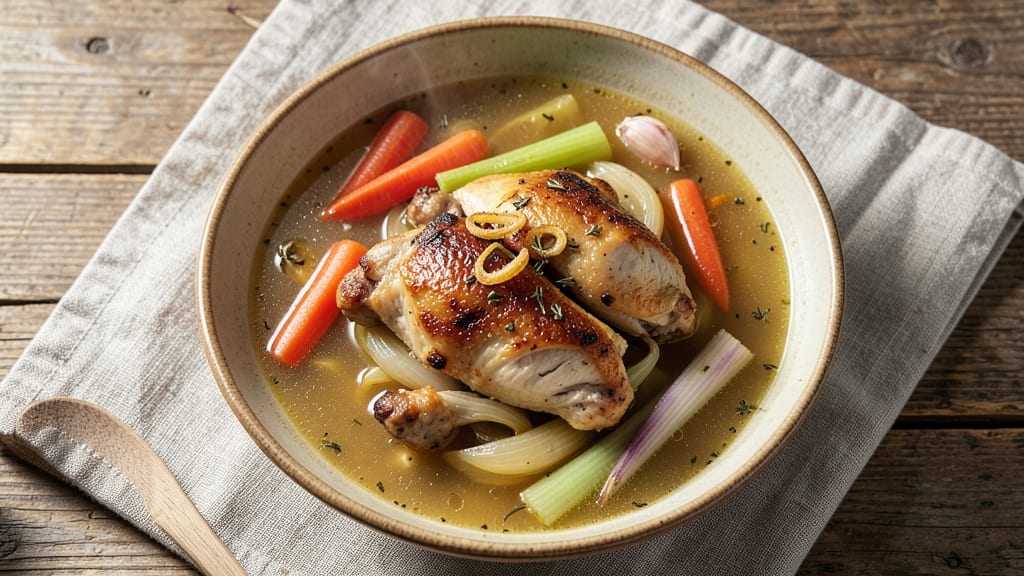
This basic chicken soup recipe from scratch brings comfort to a busy weeknight with simple ingredients and timeless flavor—no shortcuts, just honest homemade goodness. The secret lies in slow-simmered broth that extracts deep umami from chicken bones, while aromatic vegetables and herbs build layers of warmth.
I’ve perfected this version over years of testing, ensuring it’s foolproof for beginners while satisfying even the most discerning soup lovers.
The foundation starts with a homemade broth—rich, flavorful, and free from artificial additives—simmered low and slow to develop depth. You’ll use whole chicken pieces (neck and thighs work best) for maximum flavor extraction, while carrots, celery, and onions form the classic "holy trinity" of soup vegetables.
A splash of white wine or apple cider vinegar brightens the broth, balancing the natural richness.
What you’ll end up with is a hearty, nourishing bowl that’s creamy from tender chicken and vegetables, yet light enough to enjoy any day of the week. The aroma alone—warm, savory, and slightly herbal—will fill your kitchen with the promise of comfort.
This isn’t just soup; it’s a reminder that homemade always tastes better, even when life feels rushed.
Adjust the seasoning to your taste—add a pinch of red pepper flakes for heat, fresh parsley for brightness, or a squeeze of lemon before serving. The beauty of this recipe is its flexibility: it’s the perfect blank canvas for dietary preferences, from low-sodium to gluten-free.
Let’s get started on creating your bowl of homemade healing.
Ingredients for basic chicken soup recipe from scratch
Simple ingredients that transform into the ultimate homemade comfort—no shortcuts, just pure flavor.
| Ingredient | Amount | Notes |
|---|---|---|
| Whole Chicken Pieces 🍗 | 3 lb | Neck and thighs preferred for flavor |
| Yellow Onions 🧅 | 2 whole | Peeled, quartered for even cooking |
| Carrots 🥕 | 4 medium | Peeled, cut into 1-inch chunks |
| Celery Stalks 🧄 | 4 whole | Trimmed, cut into 1-inch pieces |
| Garlic Cloves 🧄 | 6 cloves | Peeled, lightly smashed |
| Dry White Wine 🍷 | ½ cup | Or substitute apple cider vinegar |
| Chicken Broth 💧 | 6 cups | Homemade preferred, low-sodium |
| Fresh Parsley 🌿 | ¼ cup | Chopped, for garnish |
| Fresh Thyme 🌿 | 2 sprigs | Or 1 tsp dried thyme |
| Bay Leaves 🌿 | 2 whole | Remove before serving |
| Salt 🧂 | 1 ½ tsp | Diamond Crystal preferred |
| Black Peppercorns 🌶️ | ½ tsp | Freshly cracked |
| Olive Oil 🫒 | ¼ cup | Extra-virgin for richness |
| Lemon Juice 🍋 | 1 tbsp | Freshly squeezed |
| Red Pepper Flakes 🌶️ | ¼ tsp | Optional for heat |
The chicken pieces are everything here. Thighs and necks pack the most flavor—Costco or local butchers often sell them pre-cut, saving you time. Look for pieces with good marbling; they’ll give you that deep, rich broth. Fresh herbs matter too—Whole Foods or farmers markets have the best selection, but grocery store bundles work in a pinch. The carrots and celery should be firm, not wilted; organic is ideal if you want to skip peeling them. For the wine, any dry white will do—Sauvignon Blanc or Pinot Grigio are foolproof choices.
No white wine? Apple cider vinegar or lemon juice brightens the broth just as well. Short on thyme? Dried works at half the amount, but fresh sprigs infuse better. The broth can be homemade (simmer chicken bones with veggies) or store-bought—Pacific Foods or Imagine brands are low-sodium and high-quality. For the carrots, baby carrots are fine, but whole carrots with skin on add more texture. The garlic? Smash those cloves—it releases more flavor without burning. And if you’re watching salt, Diamond Crystal kosher dissolves better than table salt.
This soup tastes even better the next day—3-4 days in the fridge, or 3 months frozen. I like to portion it into containers so I can grab a bowl anytime. The broth freezes beautifully, so make extra if you’re planning ahead. Fresh herbs? Store them in a jar of water in the fridge for 5-7 days. And if you’re serving it to guests, a squeeze of lemon and sprinkle of red pepper flakes right before serving makes all the difference.
Why You'll Love This Recipe
- No Chopping Chaos: I swear by the "softer is better" rule here—the carrots and celery don’t need perfect dice. Rough chunks? Totally fine. Between us, my kids help "chop" (aka smash) them with a spoon, and the soup still tastes like home.
- Golden Garlic Magic: That one extra minute of browning the garlic? Worth it. The onions and carrots caramelize just enough to give the broth this deep, savory backbone. Honestly, it’s the secret weapon—no bouillon packet can compete with real garlic and onion love.
- Leftovers That Save Me: This soup actually improves overnight. The chicken gets fork-tender, the broth deepens, and I’ve got three easy lunches ready. Freeze half? Even better. My Tuesday mornings thank me every time.
- Budget-Friendly Staple: A whole chicken costs less than takeout for two, and the veggies stretch forever. I’ll be real: this is the meal I turn to when groceries are tight, but no one ever guesses. (Yes, even on a Tuesday night.)
Step-by-step instructions for homemade chicken soup
Transform simple ingredients into comforting soup with rich flavors and tender meat.
Brown the Chicken for Maximum Flavor
Heat the 0.25 cup olive oil in a large Dutch oven over medium-high heat. Working in batches if needed, add the 3 lb whole chicken pieces and brown them on all sides for 8-10 minutes total. You're looking for golden-brown skin and meat that releases easily from the pan.
This browning step creates the Maillard reaction, which develops deep, savory flavors that infuse into the broth. Don't rush this—golden color means flavor development. Once browned, remove the chicken and set it aside on a plate.
Build the Aromatic Base
In the same Dutch oven, add the 2 whole yellow onions, 4 medium carrots, 4 whole celery stalks, and 6 cloves garlic cloves. Cook for 8-10 minutes, stirring occasionally, until the vegetables soften and the garlic becomes fragrant.
Here's where the foundation of your soup's flavor develops. The vegetables should release their natural juices and begin to caramelize slightly at the edges. If the pan starts to stick, reduce the heat slightly—you want even cooking without burning.
Deglaze and Simmer the Broth
Pour in the 0.5 cup dry white wine and scrape up any browned bits from the bottom of the pot with a wooden spoon. This deglazing step captures all the flavor you've built so far. Add the 6 cups chicken broth, 1.5 tsp salt, 0.5 tsp black peppercorns, 2 sprigs fresh thyme, 2 whole bay leaves, and the 0.25 tsp red pepper flakes (if using).
Return the chicken to the pot, along with any accumulated juices. Bring to a gentle boil, then reduce heat to low and cover partially. Let it simmer for 45-50 minutes until the chicken is fork-tender and the vegetables are cooked through.
Finish with Fresh Herbs and Brightness
Remove the chicken from the broth and let it cool slightly before shredding the meat with two forks. Return the shredded chicken to the pot. Stir in the 1 tbsp lemon juice and 0.25 cup fresh parsley. Taste and adjust seasoning if needed—this is where you can balance the flavors.
The lemon juice adds a bright, fresh contrast to the rich broth, while the parsley brings a touch of freshness. The soup should be seasoned perfectly, with the vegetables tender but still holding their shape and the chicken falling apart easily at the touch of a fork.
Serve Warm with Fresh Garnishes
Ladle the soup into bowls and garnish each serving with additional fresh parsley and a sprinkle of black peppercorns. Serve immediately while hot, with crusty bread on the side if desired.
This homemade soup delivers all the comforting qualities of classic chicken soup—tender chicken, flavorful broth, and a perfect balance of vegetables. The aroma alone will make your kitchen feel like a warm embrace, and each spoonful delivers that homemade goodness you can't get from store-bought versions.
Pro Tips For Making Basic Chicken Soup Recipe From Scratch
- Brown the Chicken First: I learned this the hard way—skipping the browning means flavorless broth. Sear the chicken pieces in batches over medium-high heat until golden, about 5-6 minutes per side. The crust locks in juices and adds depth that no stock cube can replace.
- Chop Veggies Evenly: Unevenly chopped carrots and celery make for a messy pot and uneven cooking. Cut them into ½-inch pieces so they soften at the same rate. Onions should be diced small enough to disappear—no one wants to fish out chunks.
- Don’t Rush the Simmer: After adding liquid, bring the soup to a boil, then immediately lower to a gentle simmer. Boiling too hard scatters veggies and makes the broth cloudy. A steady simmer (1.5–2 hours) pulls flavor from the chicken and veggies without breaking them apart.
- Add Garlic Late: Tossing garlic in at the start burns it before it even has a chance to shine. Instead, add minced cloves with the herbs in the last 10 minutes of cooking. This keeps it fragrant and sweet, not bitter. (Yes, even if you’re impatient like me.)
Storing and reheating this recipe
Refrigerator Storage
Let your soup cool completely before transferring it to airtight glass containers—I recommend Pyrex or Mason jars for even storage. Store in the refrigerator at 40°F or below for up to 4 days, though the flavors actually deepen overnight.
The broth will thicken slightly when chilled, so stir before reheating. Always leave ½ inch headspace to prevent spills when the liquid expands. 🥣
Freezer Storage
For longer storage, portion the soup into freezer-safe containers or ziplock bags, leaving 1 inch headspace to account for expansion. Label with the date—this soup keeps for 3 months without losing quality.
I like to freeze it in quart-sized portions for easy single-servings. Thaw overnight in the fridge before reheating for best texture. 🧊
Reheating Methods
For stovetop reheating, transfer soup to a heavy-bottomed pot and heat over medium-low heat for 10-15 minutes, stirring occasionally. Add 2-3 tablespoons of water or broth if it looks too thick.
Never boil vigorously, as this can make the broth cloudy. For microwave reheating, cover with a microwave-safe lid and heat on 50% power in 2-minute intervals, stirring between each. 🔥
Broth Preservation
Save the flavorful broth by straining it through a fine-mesh sieve after removing the chicken and vegetables. Store the strained broth in ice cube trays for easy portioning—these freeze solid and can be added to future soups or grains.
The broth keeps for 3 months in the freezer and makes an excellent base for other recipes. 💧
Reviving Day-Old Soup
If your soup tastes flat after refrigeration, revive it by adding 1 tablespoon of lemon juice or apple cider vinegar to brighten the flavors. A sprinkle of fresh herbs (parsley or thyme) also adds freshness.
For extra richness, stir in 1 tablespoon of olive oil or a pat of butter before serving. The soup will taste like it was just made! ✨
Freezer-to-Stove Tips
When reheating frozen soup, add ½ cup extra liquid (broth or water) to prevent scorching. If the soup separates after freezing, stir vigorously or blend briefly with an immersion blender to restore creaminess.
For a smoother texture, reheat on the stovetop rather than the microwave. Always taste and adjust seasoning after reheating—frozen soups often need a pinch more salt. 💡
Nutrition facts
Frequently asked questions
Can I use chicken breasts instead of thighs and necks?
The recipe calls for thighs and necks because they're flavor-packed and stay tender during long simmering. Chicken breasts will dry out and won't infuse as much flavor into the broth. If you must use breasts, add 1 extra cup of broth and simmer for only 20-25 minutes after adding them to prevent toughness.
What if I don't have white wine for deglazing?
No problem! Substitute with ½ cup apple cider vinegar or lemon juice to brighten the broth. For a neutral option, use ½ cup extra broth—just skip the acidity boost. The key is scraping up those flavorful browned bits from the pot bottom, which adds depth to your soup.
How do I make this soup vegetarian?
Replace the chicken with 2 cups of firm tofu or mushrooms (like shiitake or portobello) and use vegetable broth instead. Add 1 tbsp soy sauce or miso paste for umami depth. The same cooking method works—just reduce simmering time to 30-35 minutes for tofu or 40 minutes for mushrooms.
Why does my homemade broth look cloudy?
Cloudy broth is normal and actually indicates freshness! It happens when tiny food particles stay suspended. For clearer broth, strain it through a fine-mesh sieve or cheesecloth before serving. If you prefer cloudy broth, it means your soup is packed with flavor—just stir well before eating.
Can I make this soup in an Instant Pot?
Yes! Brown the chicken first in a skillet, then transfer everything to the Instant Pot. Use the High Pressure setting for 15 minutes, followed by a 10-minute natural release. The chicken will shred easily, and the broth will be rich. For extra flavor, add 1 extra sprig of thyme during cooking.