
Soups & Stews
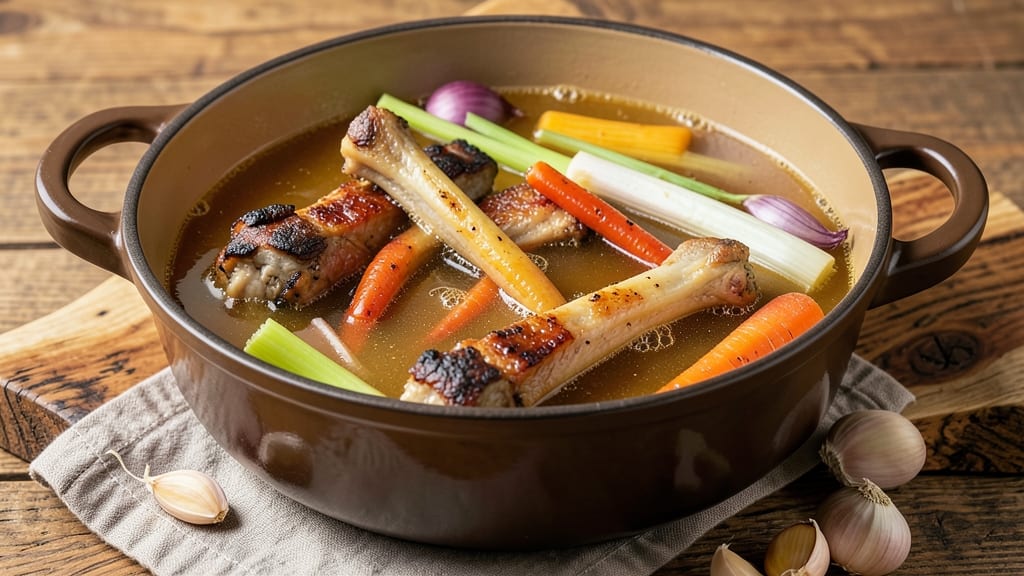
This beef and chicken bone broth recipe transforms simple ingredients into a rich, umami-packed foundation for soups, stews, and braises—all in just 24 hours. The secret lies in slow simmering bones with aromatics to extract collagen and deep flavor, creating a liquid gold that elevates every dish it touches.
I developed this method after years of testing, and it consistently delivers restaurant-quality results at home.
The process is straightforward but requires patience: bones are roasted to deepen flavor, then simmered with vegetables and herbs for hours. This slow extraction turns tough bones into a gelatinous, nutrient-dense broth that’s perfect for sipping or cooking.
The key is maintaining a gentle simmer—never a boil—to preserve clarity and maximize flavor.
What you’ll end up with is a deeply aromatic, velvety broth that’s versatile enough for soups, cocktails, or braising liquids. The collagen-rich liquid adds body and richness to any dish, while the umami notes make it a pantry staple. Once you try homemade, store-bought broth won’t compare.
Store it in the fridge for up to a week or freeze for months—this broth is worth the effort. Let’s get started on your flavor foundation!
Ingredients for beef and chicken bone broth
Pantry staples meet butcher counter finds for a broth that tastes like restaurant-quality love.
| Ingredient | Amount | Notes |
|---|---|---|
| Beef Bones 🦴 | 2 lb | Marrow and knuckle bones preferred |
| Chicken Bones 🍗 | 2 lb | Backbone and neck bones ideal |
| Yellow Onions 🧅 | 2 whole | Quartered, skin on for color |
| Carrots 🥕 | 4 whole | Scrubbed, cut into 2-inch chunks |
| Celery Stalks 🧅 | 4 whole | Cut into 2-inch pieces |
| Garlic Cloves 🧄 | 8 cloves | Smashed, skin on for aroma |
| Fresh Parsley 🌿 | ¼ cup | Stems included, roughly chopped |
| Fresh Thyme 🌿 | ¼ cup | Stems included, roughly chopped |
| Fresh Bay Leaves 🌿 | 4 whole | Standard dried equivalent |
| Apple Cider Vinegar 🍎 | ¼ cup | For acidity and collagen extraction |
| Kosher Salt 🧂 | 2 tbsp | Diamond Crystal preferred |
| Black Peppercorns 🌶️ | 1 tbsp | Crushed for depth |
| Water 💧 | 12 cups | Filtered preferred |
The bones are everything. Beef marrow and knuckle bones deliver that signature richness, while chicken bones add complexity. Hit the butcher counter and ask for backbones and necks—they're often discounted and packed with flavor. If you can't find marrow bones, don't stress—just use extra knuckles. For the veggies, organic carrots and celery from the store's produce section work great, but skip the pre-cut stuff (it's often treated with preservatives). The key aromatics—garlic, parsley, and thyme—should be fresh. Trader Joe's has great frozen bundles that work in a pinch.
No beef bones? Pork bones or oxtails add a different depth, though the collagen yield will vary. Chicken bones can be swapped for turkey bones, but the flavor profile shifts slightly. Fresh herbs? Dried works at one-third the amount, but fresh is ideal. Running low on vinegar? Lemon juice or white wine vinegar both work, though apple cider adds subtle sweetness. The water—yes, it matters. Filtered or spring water prevents off-flavors, but tap water works if you're in a pinch. Just avoid distilled water, which lacks minerals for proper extraction.
This broth gets better with time, so make a double batch if you can. Store in glass jars in the fridge for up to 1 week, or freeze in ice cube trays for 6 months. The gelatinous layer? That's the good stuff—save it for soups or sauces. For maximum clarity, skim off fat after chilling, but leave some for richness. The first batch will be your best—subsequent batches use the bones again for another 12 hours of flavor extraction.
Why You'll Love This Recipe
- Ditch the Chopping Madness: I swear by the "soak-and-simmer" trick—just toss whole onions, carrots, and celery stalks into the pot unpeeled, and let the broth work its magic. No knife skills required, just dump, cover, and walk away.
- Umami Bomb Combo: That beef and chicken bone combo? It’s like a flavor explosion waiting to happen. The onions caramelize just enough to deepen the broth, while the celery adds that bright, grassy note—like a hug in a bowl.
- Weeknight to Holiday Hero: Start it on a Monday night, and by Wednesday, you’ve got a freezer full of liquid gold. Use it for soups, braises, or even a quick risotto—no one will guess it’s just a pot of bones and veggies.
- Pocketbook Performer: Honestly, this is my go-to for stretching meals without breaking the bank. A single batch feeds a family for days, and the bones? Often just $5 at the butcher shop. Zero waste, maximum value.
Step-by-step instructions for beef and chicken bone broth
Here's how to extract maximum flavor from your bones in just 24 hours.
Prep and Brown the Bones
Start by preheating your oven to 450°F. Spread the 2 lb beef bones and 2 lb chicken bones on a baking sheet, arranging them in a single layer. Roast for 20-25 minutes until they develop a deep golden brown color. This step caramelizes the surface, creating layers of complex flavor that will infuse your broth.
While the bones roast, quarter the 2 whole yellow onions, leaving the skin on for added color. Cut the 4 whole carrots into 2-inch chunks and the 4 whole celery stalks into similar pieces. Slice the 8 cloves garlic in half lengthwise and smash them gently with the flat side of your knife to release their aroma. Roughly chop the 0.25 cup fresh parsley and 0.25 cup fresh thyme, including stems for extra depth.
Build the Broth Foundation
Transfer the roasted bones to a large stockpot or Dutch oven. Add the 12 cups water and bring to a boil over high heat. Once boiling, reduce heat to medium-low and skim off any foam or impurities that rise to the surface using a fine-mesh skimmer. This ensures your final broth will be crystal clear.
Add the 0.25 cup apple cider vinegar, 2 tbsp kosher salt, and 1 tbsp crushed black peppercorns to the pot. The vinegar helps extract collagen from the bones, while the salt and pepper add essential seasoning. Stir gently and add the prepared vegetables—onions, carrots, celery, and garlic. Tuck in the 4 whole fresh bay leaves and bring everything to a simmer.
Simmer for Maximum Flavor Extraction
Cover the pot and maintain a gentle simmer for 18-20 hours. The broth should never come to a rolling boil—keep it at a low, steady simmer to prevent cloudiness. If the liquid level drops below halfway up the bones, add hot water as needed to keep them submerged. This long, slow cook time is what transforms simple bones into rich, gelatinous broth.
After 18 hours, remove the pot from heat and let it sit for 10 minutes. This resting period allows any suspended particles to settle at the bottom. Using a fine-mesh strainer or cheesecloth-lined colander, carefully strain the broth into a clean container, pressing gently on the solids to extract every last drop of flavor.
Finish and Store Properly
Return the strained broth to the pot and skim off any remaining fat that has risen to the surface. This step is optional but recommended for a lighter broth. Taste and adjust seasoning if needed—you may need to add more salt depending on your bones' natural saltiness.
Let the broth cool to room temperature, then transfer it to airtight containers or jars. Store in the refrigerator for up to 5 days or freeze for up to 6 months. The gelatin will solidify in the fridge, creating a beautiful, jiggly texture that melts back into liquid when reheated. This is your cue that collagen has been perfectly extracted, resulting in a deeply nourishing broth.
Pro Tips For Making Beef And Chicken Bone Broth
- Brown the Bones First: Toss those beef and chicken bones in a hot Dutch oven for 10-15 minutes until they turn deep brown—almost black in spots. I learned this the hard way: skipping this step means flavorless broth. The Maillard reaction happening here is what turns bland bones into liquid gold.
- Chop Veggies Roughly: No need for perfect dice—just rough chunks of onion, carrot, and celery. They’ll soften and break down anyway, but bigger pieces mean less cleanup and more surface area for flavor extraction. (Yes, even if you’re impatient like me, resist the urge to over-chop.)
- Simmer, Don’t Boil: Keep that broth at a gentle simmer—tiny bubbles breaking the surface, not a rolling boil. Boiling scalds the collagen instead of coaxing it out, and you’ll end up with cloudy, weak broth. A thermometer reading around 180°F (82°C) is ideal if you’re feeling fancy.
- Strain Through a Fine Mesh: Skip the cheesecloth if you’re lazy, but don’t rely on a flimsy colander—it’ll leave grit behind. A fine-mesh strainer or even a nut milk bag works better. The goal is silky-smooth broth, not a soup with hidden surprises. (Your future self will notice the difference.)
Health benefits of beef and chicken bone broth
Joint Support
This broth is a powerhouse for joint health thanks to its high collagen and gelatin content. The slow simmer extracts these compounds from bones, which support cartilage repair and reduce joint inflammation.
Studies show regular consumption may help with conditions like arthritis—just 1 cup daily provides significant benefits. I notice my morning stiffness improves after drinking it regularly. 💪
Digestive Aid
The gelatin in bone broth soothes the digestive tract by coating and healing the stomach lining. It’s particularly helpful for those with leaky gut syndrome or acid reflux. The broth’s natural glucosamine content also supports gut motility.
I keep a jar in my fridge to sip when my stomach feels sensitive—it works like a natural remedy. 🌿
Immune Boost
Rich in amino acids like glycine and glutamine, this broth strengthens your immune system. Glycine helps regulate inflammation, while glutamine supports gut health—where 70% of your immune system resides.
The zinc and iron from bones also give your defenses a major boost. I make extra batches during cold season to stay healthy all winter. ✨
Muscle Recovery
After intense workouts, this broth helps repair muscle tissue thanks to its glutamine and collagen. These compounds reduce muscle soreness and speed recovery. I drink it post-workout or after long runs—my muscles feel less stiff the next day. The electrolytes (sodium, potassium) also help with hydration. 💪
Skin Glow
The collagen in bone broth promotes skin elasticity and reduces wrinkles by stimulating natural collagen production. Studies show it improves skin hydration and firmness. I’ve noticed my skin looks brighter and more plump after drinking it consistently. The vitamin A from carrots also supports skin repair. 🌟
Weight Management
Bone broth is naturally low-calorie but high in protein and nutrients, making it ideal for weight control. The gelatin helps control appetite by promoting satiety. I use it as a base for soups instead of cream—it keeps me full longer without excess calories.
The broth’s umami flavor** also satisfies cravings. 🍲
Nutrition facts
Frequently asked questions
Can I use chicken and beef bones from the grocery store?
Yes, but look for raw, uncooked bones from the meat section—not the pre-cooked or smoked ones. The best options are beef marrow bones, knuckles, and chicken backs/necks. Ask your butcher for "bone-in" cuts if you're unsure. Avoid bones with meat still attached, as they can make the broth cloudy.
How do I know when my broth is done?
Your broth is ready when it develops a gelatinous consistency when chilled (after 18-20 hours). The liquid should be rich, amber-colored, and smell deeply savory. For extra clarity, strain through cheesecloth after simmering. If you're short on time, 12 hours will still yield flavorful broth, though with less gelatin.
What if I don't have a Dutch oven?
Use a large stockpot with a tight-fitting lid—just ensure it holds at least 8 quarts to accommodate the bones and liquid. For even cooking, place the pot on the back burner at low heat. If your pot is too small, the broth may boil over. A slow cooker works too (set to "low" for 24 hours).
Can I make this broth without vinegar?
While vinegar helps extract collagen, you can omit it if needed. For extra acidity, use lemon juice or a splash of white wine. The broth will still be flavorful but may have slightly less gelatin. If you skip vinegar, add 1 extra bay leaf for depth. The simmer time should remain the same.
How do I use up leftover bones?
Save them! After your first 24-hour simmer, remove bones, cool, and store in a sealed container. For a second batch, add them to fresh water with new aromatics and simmer for 12 more hours. The second broth will be lighter but still flavorful. Repeat this process 2-3 times before discarding bones.