
Soups & Stews
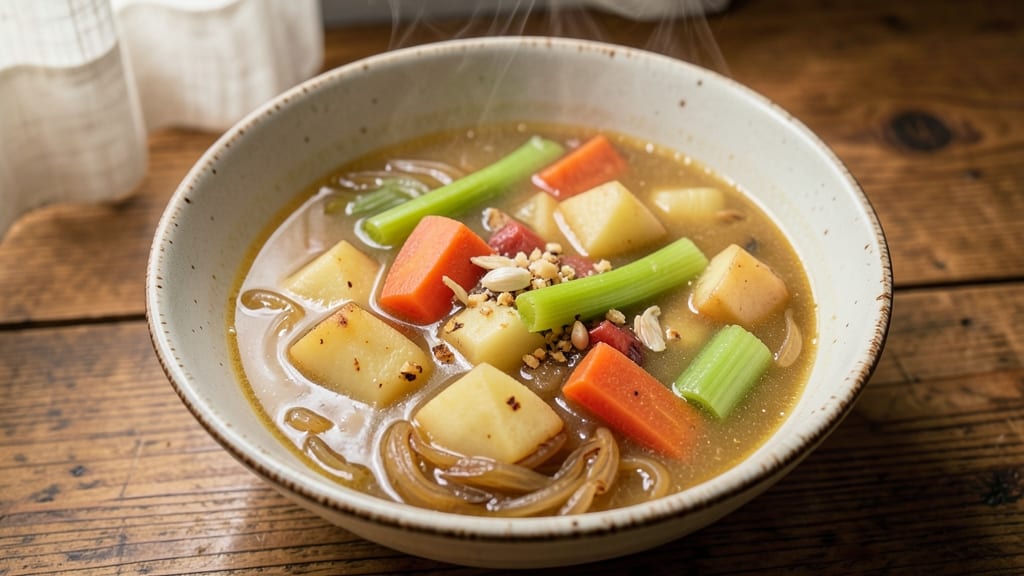
Transforming a simple can of Campbell's chicken broth into a hearty, restaurant-worthy soup takes just 20 minutes—and this recipe delivers that homestyle richness we all crave. The secret lies in building layers of flavor through aromatics and fresh ingredients while letting the broth's natural depth shine through.
I developed this method after years of perfecting one-pot meals for my crew at The Smoky Pig, where efficiency meets bold flavors.
What makes this soup special is how it balances convenience with depth. You start with that familiar chicken broth as your base, then elevate it with sautéed onions, garlic, and celery—the classic "holy trinity" that forms the flavor foundation.
Adding diced carrots, potatoes, and corn transforms it from a simple broth into a satisfying meal with texture and substance. The broth simmers until it absorbs all those flavors, creating a velvety, aromatic base that's far more complex than you'd expect.
By the time you're done, you'll have a soup that's creamy without heavy cream, rich without being heavy, and packed with the kind of comforting flavors that make weeknight dinners feel special.
The vegetables become tender but hold their shape, while the broth reduces just enough to intensify its savory notes. This is the kind of soup that disappears quickly—perfect for chilly evenings or when you need a nourishing meal in minutes.
Use leftover chicken from your roast or rotisserie for extra protein, or keep it vegetarian by omitting meat entirely. The beauty of this recipe is its flexibility—it's a blank canvas for whatever you have on hand. Let's get cooking!
Ingredients for campbell's chicken broth soup
A few pantry staples and a can of Campbell's broth create this comforting soup.
| Ingredient | Amount | Notes |
|---|---|---|
| Campbell's Chicken Broth 🥘 | 4 cups | Low-sodium preferred for control |
| Yellow Onions 🧅 | 1 ½ whole | Diced, for flavor base |
| Celery Stalks 🌿 | 3 whole | Diced, classic holy trinity |
| Garlic Cloves 🧄 | 4 cloves | Minced, aromatic foundation |
| Carrots 🥕 | 2 whole | Diced, for natural sweetness |
| Russet Potatoes 🥔 | 1 ½ lb | Diced, for creaminess |
| Sweet Corn Kernels 🌽 | 1 cup | Fresh or frozen, for texture |
| Dried Thyme 🌿 | ½ tsp | Fresh if available, half amount |
| Dried Rosemary 🌿 | ½ tsp | Crushed leaves for potency |
| Salt 🧂 | 1 tsp | Kosher or sea salt |
| Black Pepper 🌶️ | ½ tsp | Freshly ground preferred |
| Butter 🧈 | 2 tbsp | Full-fat for richness |
| Heavy Cream 🥛 | ½ cup | Optional for extra creaminess |
| Fresh Parsley 🌿 | ¼ cup | Chopped, for garnish |
The broth is your foundation—Campbell's low-sodium works best, but don't skip the salt entirely. I always grab the 10.5 oz can because it's the perfect balance of convenience and flavor. For the holy trinity, yellow onions, celery, and carrots are non-negotiable—they build that aromatic base. I buy organic carrots and celery when possible, but regular stuff works fine. The potatoes? Russets hold up better to simmering than waxy varieties. And if you're short on time, pre-diced onions and carrots from the grocery store save 5 minutes of chopping.
No fresh herbs? Dried thyme and rosemary are your friends—just halve the amount. Want to skip the butter? Olive oil works, but the butter adds that cozy richness. No heavy cream? Unsweetened almond milk stretches it nicely. The corn can be frozen kernels—just thaw before adding. And if you've got leftover chicken, shred it and toss it in for extra protein. The soup tastes even better the next day, so don't worry about overcooking the potatoes—they'll soften up perfectly.
Store leftovers in an airtight container for up to 5 days in the fridge. Freeze portions for 3 months—just reheat with a splash of water. I like to portion mine into 1-cup containers so lunches are sorted. The fresh parsley wilts fast, so add it right before serving. And if you're feeding a crowd, double the broth and veggies—this scales beautifully. The broth reduces as it cooks, so keep an eye on it if you're watching the consistency.
Why You'll Love This Recipe
- No-Panics Cooking: I’ve made this soup on nights when I was this close to calling for pizza—just 15 minutes of actual work, and it’s done. The diced potatoes and corn go straight into the broth after the veggies caramelize, so no fussing with peeling or pre-cooking. Even my roommate, who claims to hate soup, slurped his bowl clean.
- Creamy Depth Without the Effort: That half cup of heavy cream? It turns this soup from "good" to "dangerously addictive." The butter and garlic base gives it a rich, savory backbone, while the cream smooths it out like a hug in a bowl. I’ll be real: I skip the cream sometimes, but my second bowl is always the creamy one.
- Leftover Magic: This soup tastes even better the next day. I pack it in lunch containers for work, freeze portions for lazy nights, and my kids beg for it after school. The potatoes get softer, the flavors deepen, and honestly? It’s the kind of meal that makes you feel like you’re feeding a family—even if you’re just feeding yourself.
- Budget-Friendly Comfort: A can of Campbell’s broth and a bag of russet potatoes? That’s all it takes to stretch this into a meal for four. The dried herbs and butter are cheap staples, and if you use frozen corn, you’re saving even more. It’s the kind of dish that makes you feel like you’re splurging, even when you’re not.
Step-by-step instructions for Campbell's chicken broth soup
Here's how to transform simple ingredients into a hearty, comforting soup that tastes like homemade.
Sauté the Vegetable Base
Heat the 2 tablespoons butter in a large pot over medium heat. Add the 1½ diced yellow onions, 3 diced celery stalks, and 2 diced carrots. Cook for 5-6 minutes, stirring occasionally, until the vegetables begin to soften and the onions turn translucent.
Here's the thing—don't rush this step. You want the vegetables to develop some color and release their natural sweetness. Add the 4 minced garlic cloves and cook for another 30 seconds until fragrant. This aromatic foundation is what makes the soup taste so rich and layered. If the vegetables start to stick, add a splash of the 4 cups Campbell's Chicken Broth to deglaze the pan.
Build the Soup with Potatoes and Corn
Add the 1½ pounds diced russet potatoes and 1 cup sweet corn kernels to the pot. Pour in the 4 cups Campbell's Chicken Broth, bringing everything to a gentle boil. Once boiling, reduce the heat to medium-low and let it simmer for 10-12 minutes until the potatoes are tender but not falling apart.
While it simmers, sprinkle in the ½ teaspoon dried thyme, ½ teaspoon dried rosemary, 1 teaspoon salt, and ½ teaspoon black pepper. Stir gently to distribute the seasonings evenly. The broth should smell deeply savory—this is your cue that the flavors are melding together. If the soup looks too thick, add a little water to reach your desired consistency.
Finish with Cream and Fresh Herbs
Stir in the ½ cup heavy cream and simmer for an additional 3-4 minutes until the soup is creamy and heated through. The cream should blend smoothly, adding a velvety richness without curdling. Taste and adjust the seasoning if needed—sometimes the cream mellows out the flavors, so a pinch more salt or pepper might be necessary.
Remove the pot from heat and let it sit for 2 minutes to allow the flavors to settle. Then, stir in the ¼ cup chopped fresh parsley just before serving. This final step brightens the soup with a fresh, herbaceous note that cuts through the creaminess. Ladle into bowls and enjoy immediately while it's warm and comforting.
Pro Tips For Making Campbell'S Chicken Broth Soup
- Deglaze Early: If your onions and carrots start sticking after 3-4 minutes—they will—immediately splash in ¼ cup of the 4 cups Campbell's Chicken Broth to loosen the browned bits. I learned this the hard way: burned fond = bitter soup. A quick deglaze keeps the flavor rich and smooth.
- Crush That Rosemary: The 0.5 tsp dried rosemary won’t work its magic if it’s just sitting as whole sprigs. Crush the leaves between your fingers or smash them lightly with a spoon—this releases the oils and makes the soup actually taste like rosemary, not just "something herbal." (Yes, even dried herbs need love.)
- Taste Before Cream: Skip the cream step entirely if the soup isn’t seasoned right—0.5 cup heavy cream will mask underseasoned flavors. After simmering the potatoes for 10-12 minutes, pull a spoonful, add a pinch of salt, and taste. Adjust now, before the cream goes in, or you’ll be guessing.
- Potatoes First, Corn Last: Add the 1 cup sweet corn kernels only after the potatoes have simmered for 5-6 minutes. Corn cooks faster and turns mushy if it sits too long in broth. Stirring it in late keeps the texture bright and slightly crisp, like it’s still on the cob. (Trust me, your mouth will notice.)
Best sauces and condiments for these flavors
Creamy Upgrades
For an extra layer of richness, I swear by a splash of truffle oil (just ½ teaspoon) mixed into the heavy cream before adding it to the soup. The earthy aroma elevates the broth’s natural depth—trust me, it’s a game-changer.
I keep a bottle of Eataly Truffle Oil in my pantry because it’s the most consistent quality. 💫
Spicy Kick
A pinch of smoked paprika (about ¼ teaspoon) added to the sautéed vegetables gives the soup a subtle smokiness that pairs beautifully with the broth’s savory notes. For heat, stir in ½ teaspoon cayenne pepper during the final simmer with the cream.
I like to keep Penzeys spices on hand—their smoked paprika is a favorite for this exact purpose.
Cheesy Twist
When the soup reaches simmering, fold in ½ cup shredded Gruyère cheese (or sharp cheddar if that’s what you have). The cheese blends seamlessly, creating a velvety texture without curdling. I always have Murray’s Gruyère on hand for its nutty depth—it’s worth the splurge for special occasions. 🧀
Acidic Brightness
A squeeze of lemon juice (about 1 tablespoon) at the very end balances the soup’s richness. It’s a trick I learned from Master Chef Chen—just enough to brighten the flavors without overpowering.
I keep a bottle of Bragg Organic Lemon Juice in my fridge because it’s consistently tart and fresh.
Herb Infusion
For a more complex herb profile, replace the dried thyme and rosemary with 1 tablespoon chopped fresh dill and 1 tablespoon fresh basil. These herbs add a bright, citrusy note that complements the broth’s depth.
I grow my own basil in the summer, but dried works in a pinch—just halve the amount. 🌿
Nutrition facts
Frequently asked questions
Can I use any type of broth instead of Campbell's chicken broth?
While Campbell's low-sodium chicken broth works best for balanced flavor, you can substitute with homemade chicken broth or even vegetable broth for a vegetarian version. Just adjust the salt to taste since store-bought broths vary in sodium content. The key is to use a flavorful base—homemade broth adds depth, while vegetable broth keeps it light.
Why do my vegetables get mushy when simmering?
Over-simmering is the culprit! The 10-12 minutes simmer time is perfect for russet potatoes to soften but not fall apart. If your veggies turn mushy, reduce the heat to low and cover the pot loosely to trap steam. Check the potatoes with a fork—they should pierce easily but still hold their shape.
Can I make this soup ahead of time?
This soup tastes even better the next day. Let it cool completely, then store in an airtight container for up to 5 days in the fridge. Reheat gently on the stove with a splash of water to restore creaminess. The flavors deepen overnight, making it a perfect meal-prep option.
What if I don't have heavy cream?
No problem! Skip it entirely for a lighter version, or use unsweetened almond milk or coconut milk for creaminess. The soup will still be delicious—just adjust seasoning as needed since dairy-free options can be subtler. A splash of broth can help balance flavors too.