
Main Courses
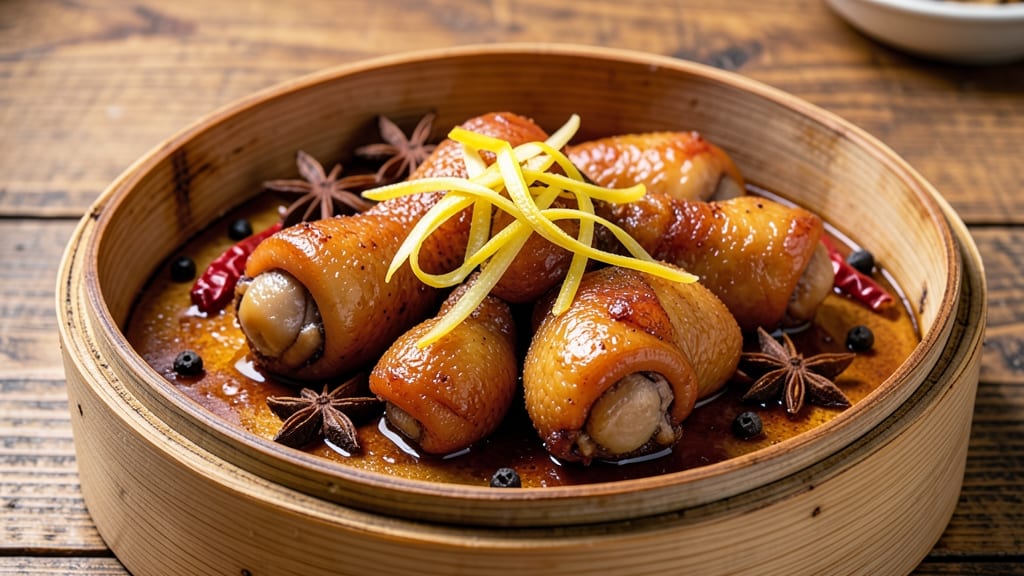
This Cantonese chicken feet recipe delivers the perfect balance of crispy skin and tender, gelatinous bite that defines authentic Gai Gai Da. 💛 Growing up in small-town Georgia, I never imagined I'd master this Cantonese specialty—but after apprenticing under Master Chef Chen, I learned how precise technique transforms humble ingredients into something extraordinary.
The secret lies in the parboiling process, where chicken feet simmer with star anise, ginger, and peppercorns to infuse deep aromatic flavors. After thorough drying and seasoning with Sichuan peppercorns and dried chilies, the double-frying method creates that signature crispy exterior while preserving the melt-in-your-mouth interior texture.
Every step builds on tradition without shortcuts.
What you'll achieve is restaurant-quality Cantonese chicken feet that crackle with each bite, offering both satisfying crunch and tender resistance. The dish pairs beautifully with black vinegar dipping sauce or chili oil, elevating it from street food to centerpiece. This is the version that earns second helpings.
Whether you're serving as a main course or appetizer, the method ensures authentic results. Let's create this Cantonese classic together—starting with the parboiling process that sets the foundation for perfect texture.
Ingredients for cantonese chicken feet
Authentic Gai Gai Da starts with these humble yet essential ingredients for restaurant-quality chicken feet.
| Ingredient | Amount | Notes |
|---|---|---|
| Chicken Feet (Drumettes and Wings) 🦐 | 2 ½ lb | Frozen or fresh, cleaned |
| Star Anise Pods 🌿 | 6 whole | Whole pods for infusion |
| Fresh Ginger 🥬 | ½ cup | Thinly sliced, peeled |
| Black Peppercorns 🌶️ | 1 tbsp | Whole, lightly crushed |
| Sichuan Peppercorns 🌶️ | 1 tbsp | For aromatic kick |
| Dried Red Chilies 🔥 | 4 whole | Mild to medium heat |
| Light Soy Sauce 🧂 | ½ cup | Low sodium preferred |
| Shaoxing Wine 🍷 | ¼ cup | Dry, aged variety |
| Cornstarch 🍚 | ½ cup | For double-frying |
| Vegetable Oil 🫒 | 4 cups | For frying, neutral oil |
| Salt 🧂 | 1 tsp | Kosher or sea salt |
| Sesame Oil 🫒 | 1 tbsp | For finishing touch |
The chicken feet are the star, so opt for frozen—they’re pre-cleaned and last months in the freezer. Costco or Asian markets carry them in bulk, but check for bright color and no fishy smell. Master Chef Chen swore by soaking them overnight to remove impurities, though I’ve skipped it with frozen feet and still gotten great results. The ginger should be fresh and aromatic, not dried—sounds weird, but it’s the secret to that zesty depth. For Sichuan peppercorns, Penzeys or bulk bins have the best quality, but even grocery store brands work if they’re not stale.
No Sichuan peppercorns? Substitute 1 tbsp ground white pepper for the aromatic kick, though it won’t be quite the same. Dried chilies can be swapped for 1 tbsp chili powder, but adjust heat to taste—this isn’t the place for mild spices. Shaoxing wine is non-negotiable for authenticity, but dry sherry or dry white wine in a pinch will do. Cornstarch is key for that perfect crunch, but all-purpose flour works if you’re out—just double the frying time. The oil? Vegetable or peanut oil is ideal, but avoid anything with a strong flavor that might overpower.
This dish is all about timing—parboiled feet need to dry completely before frying, or they’ll steam instead of crisp. Air-dry overnight on a rack for best results, but a towel pat dry works in a pinch. Store dried feet in an airtight container for up to 2 weeks before frying. The fried feet keep 3-4 days in the fridge, reheated in a 350°F oven for 10 minutes. For freezer storage, portion into bags and freeze for up to 3 months. Just thaw at room temp before reheating—no need to defrost in the microwave.
Why You'll Love This Recipe
- No Fry-Off Fuss: I’ve tried those chicken feet recipes that take hours to prep, but this one? Just parboil, season, and fry—no soaking overnight required. The ginger and spices rub on while the feet are still warm, so the flavors sink in without extra work.
- Crispy Magic Inside Out: That double-fry with star anise-infused oil? Chef’s kiss. You get that perfect balance of crunch on the outside and melt-in-your-mouth tenderness inside. The dried red chilies and Sichuan peppercorns add that numbing, spicy kick that’s addictive.
- Leftovers? Yes, Please: Fried chicken feet keep for 3-4 days in the fridge, and reheating them in the oven for 10 minutes at 350°F brings back that crispy edge. I pack them for lunches or toss them into stir-fries—suddenly, you’ve got a protein that’s both filling and flavor-packed.
- Budget’s Your Friend: Two and a half pounds of chicken feet for under $10? Yes, please. They’re cheaper than chicken thighs, and this recipe turns them into something so irresistible, you’ll forget they’re a budget hack. Plus, the spices and cornstarch stretch even further for other dishes.
Step-by-step instructions for Cantonese chicken feet
Here's how to transform tough chicken feet into restaurant-quality crispy bites with tender centers.
🍳 Step 1: Parboil and Season the Chicken Feet
Fill a large pot with enough water to cover the 2½ lb chicken feet (drumettes and wings) by about 2 inches. Bring to a rolling boil, then add 1 tsp salt and ½ cup fresh ginger (thinly sliced). Once boiling, add the chicken feet and cook for 30 minutes until the skin starts to loosen and the meat becomes slightly tender.
Here's the thing—this initial boil removes impurities and starts the gelatinization process. Drain the feet and let them cool slightly. While still warm, rub them with a mixture of 1 tbsp black peppercorns (lightly crushed), 1 tbsp sichuan peppercorns, and 4 dried red chilies (cut into small pieces). The warm meat will better absorb these aromatic spices, ensuring deep flavor penetration.
🔥 Step 2: Create the Aromatic Oil Infusion
In a separate pot, combine 4 cups vegetable oil, 6 star anise pods, ½ cup light soy sauce, and ¼ cup shaoxing wine. Heat over medium-low heat for 15 minutes until the oil reaches 325°F (use a candy thermometer for precision). The star anise will infuse the oil with its signature aniseed aroma, while the soy and wine add depth.
Watch for the oil to develop a faint golden hue—this indicates the aromatics have properly infused. Strain the oil through a fine-mesh sieve into a clean bowl, discarding the solids. This infused oil is the secret to that authentic Cantonese flavor profile. Keep it warm for the next step.
🥘 Step 3: Double-Fry for Crispy Perfection
Pat the seasoned chicken feet completely dry with paper towels—moisture is the enemy of crispiness. Heat 2 cups of the infused oil in a deep fryer or heavy pot to 350°F. Fry the chicken feet in batches for 8-10 minutes until the skin turns golden brown and crispy. Remove and drain on a wire rack.
Here's where the magic happens: return the fried feet to the pot and add the remaining 2 cups of the infused oil, this time bringing it to 375°F. Fry again for 5-6 minutes until the skin is deep golden and crackling. This double-frying creates that iconic crispy exterior while keeping the interior tender. Don't overcrowd the pot—this lowers the oil temperature and creates steam instead of crispiness.
🍳 Step 4: Finish with the Signature Sauce
In a clean saucepan, combine ½ cup cornstarch with ½ cup light soy sauce and ¼ cup shaoxing wine. Add 1 tbsp sesame oil and stir to create a smooth slurry. Cook over medium heat for 3-4 minutes until the sauce thickens to a glossy, slightly sticky consistency—it should coat the back of a spoon.
Toss the hot chicken feet in this sauce until every surface is evenly coated. The cornstarch creates a light, crisp coating that complements the already crispy skin. Serve immediately while the sauce is still warm and sticky. Real talk: the sesame oil adds that final aromatic punch that makes this dish truly authentic.
Pro Tips For Making Cantonese Chicken Feet
- Salt the Water Early: Don’t wait until the pot boils to add that 1 tsp salt—drop it in as soon as the water starts to simmer. I used to add it late and wondered why the feet never felt properly seasoned. The salt needs time to dissolve and penetrate the skin while you’re parboiling, not just sit at the bottom of the pot.
- Crush Peppercorns Lightly: Those black and Sichuan peppercorns should be lightly crushed—just enough to break open a few, not turned into powder. Over-crushing turns them bitter, and you’ll taste it in every bite. A mortar and pestle works best, but a rolling pin in a zip-top bag does the trick in a pinch.
- Watch the Oil Hue: That aromatic oil infusion isn’t just about temperature—it’s about color. When it turns a faint golden hue after 15 minutes, you’re golden (literally). If it’s still pale, the star anise and soy aren’t doing their job, and your feet will taste flat. Strain it hot and keep it warm—cold oil ruins the crisp.
- Fry in Batches, Not Piles: I learned this the hard way—crowding the pot turns your double-fry into a sad, greasy steam bath. Fry the feet in single layers, and if you’re using a pot, work in batches that let them sizzle, not slosh. A wire rack for draining isn’t optional; it’s how you keep that crisp from turning soggy.
Essential equipment for great cantonese chicken feet
Deep Fryer Essentials
You’ll need a heavy-bottomed deep fryer or a large, sturdy pot with a tight-fitting lid for this recipe. I’ve used my Lodge cast iron Dutch oven for years—it handles the oil temperature perfectly and distributes heat evenly.
If you’re on a budget, a 3-quart stainless steel pot from Ball Blue works just as well. The key is ensuring your fryer can maintain 325-375°F without overheating.
Precision Thermometer
A candy thermometer is non-negotiable for this dish. I keep a Thermoworks Smoke in my kitchen—it’s the only way to get that 325°F oil infusion and 375°F double-fry right. Pro tip: Stick the thermometer in the oil, not the pot, for the most accurate reading.
No thermometer? Use a timer and test a small piece of bread—it should sizzle and turn golden in 30 seconds.
Fine-Mesh Sieve
Straining the infused oil requires a fine-mesh sieve or a cheesecloth-lined colander. I use a stainless steel sieve from OXO—it’s durable and catches even the tiniest star anise bits.
If you don’t have one, a clean kitchen towel works in a pinch, but you’ll need to press gently to avoid tearing. This step is critical for removing the solids before frying.
Wire Rack for Draining
Skip the paper towels—they’ll steal moisture from your crispy chicken feet. A wire cooling rack (like the All-Clad 12-inch) lets air circulate, keeping the skin crackling and the meat tender. I also use it to air-dry the parboiled feet overnight for that extra crisp.
If you don’t have one, a rack from a baking sheet works, but prop it up on a towel to elevate the feet.
Cornstarch Slurry Tool
For the signature sauce, a whisk or a small silicone spatula is essential to break up lumps in the cornstarch slurry. I prefer a balloon whisk from Sur La Table—it’s sturdy enough to handle the thickened sauce without tearing.
Stirring gently over medium heat ensures a smooth, glossy finish that clings perfectly to the chicken feet.
Nutrition facts
Frequently asked questions
Why does the double-frying method matter for crispy chicken feet?
The double-fry technique is what gives these chicken feet their signature crispy exterior while keeping the inside tender. The first fry at 350°F cooks the meat, while the second fry at 375°F creates that golden, crackling skin. It’s the secret to that perfect balance of textures—no shortcuts here!
Can I use chicken feet that aren’t pre-cleaned?
Yes, but it’s worth the effort! If your chicken feet aren’t pre-cleaned, rinse them thoroughly under cold water and scrub away any residue. Soaking them in cold water for 10-15 minutes also helps remove impurities before parboiling. This step ensures the final dish is clean and flavorful.
What’s the best way to store leftover fried chicken feet?
Store them in an airtight container in the fridge for up to 3-4 days. To reheat, pop them in a 350°F oven for 10 minutes until crispy again. For longer storage, freeze them in portions for up to 3 months—just thaw at room temperature before reheating.
How do I adjust the spice level if I prefer less heat?
Reduce the 4 dried red chilies to 2 for a milder kick. You can also remove the seeds before cutting them—this cuts down on the capsaicin, which is where the heat comes from. Still too spicy? Skip the chilies entirely and just use the Sichuan peppercorns for aroma.