
Side Dishes
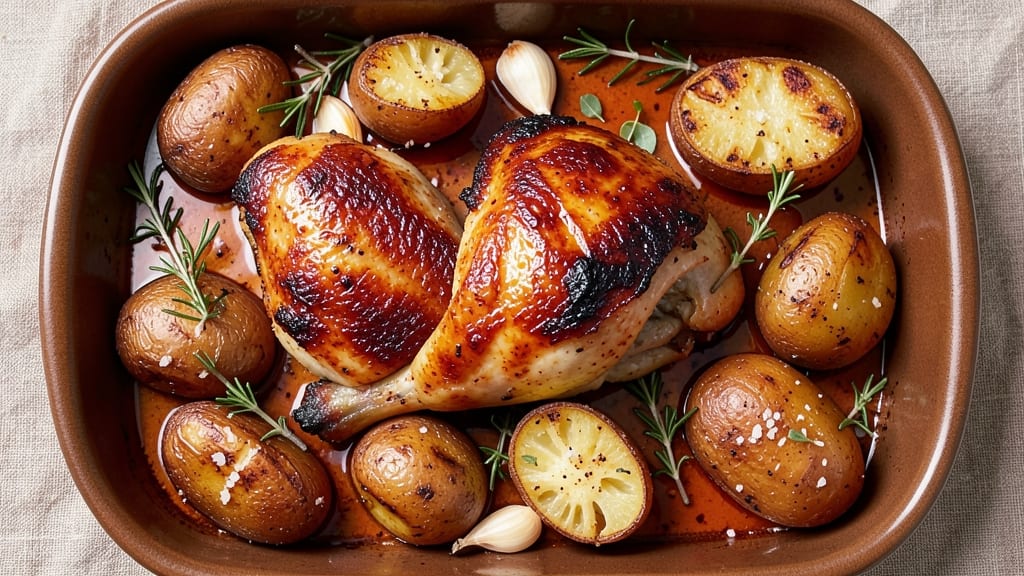
This chicken thigh and potato oven recipe delivers perfectly crispy chicken and fluffy potatoes in one pan, turning simple weeknight dinners into standout meals. This oven recipe delivers perfectly golden skin on the chicken and tender, even potatoes without the fuss of multiple dishes.
Growing up in small-town Georgia, I learned that simple ingredients—like herbs, garlic, and high heat—create the most memorable meals, and this dish proves it every time.
The secret lies in the preparation: chicken thighs marinated in a blend of garlic, paprika, and rosemary while potatoes are parboiled and tossed in olive oil and thyme. Roasting both together at 425°F ensures the chicken develops crispy skin while the potatoes bake to fluffy perfection.
This method saves time and cleanup, making it ideal for busy weeknights or meal prep.
By the time it emerges from the oven, you’ll have juicy, crisp-skinned chicken thighs and potatoes so tender they fall apart at the touch. The aromas of garlic and rosemary will fill your kitchen, while the textures—crispy, creamy, and savory—make every bite satisfying.
Serve with a drizzle of pan juices or a simple green salad for a complete, foolproof meal.
This recipe scales effortlessly for a crowd, and leftovers reheat beautifully. Whether you’re feeding a family or hosting dinner guests, it’s a dish that delivers professional results with minimal effort. Let’s get cooking!
Ingredients for chicken thigh and potato oven
Simple ingredients create restaurant-quality crispy chicken thighs and fluffy potatoes in one pan.
| Ingredient | Amount | Notes |
|---|---|---|
| Boneless Chicken Thighs 🍗 | 3 lb | Skin-on for crispiness |
| Russet Potatoes 🥔 | 3 lb | Medium, even-sized chunks |
| Extra-Virgin Olive Oil 🫒 | ½ cup | High smoke point preferred |
| Garlic Cloves 🧄 | 6 cloves | Minced, fresh preferred |
| Paprika 🌶️ | 2 tbsp | Smoked or sweet variety |
| Dried Rosemary 🌿 | 1 tbsp | Crushed for potency |
| Dried Thyme 🌿 | 1 tbsp | Fresh thyme at half amount |
| Salt 🧂 | 1 ½ tbsp | Kosher or sea salt |
| Ground Black Pepper 🌶️ | 1 tbsp | Freshly ground preferred |
| Worcestershire Sauce 🍯 | 2 tbsp | For umami depth |
| Apple Cider Vinegar 🍎 | 1 tbsp | For tenderizing |
| Butter 🧈 | 4 tbsp | Full-fat for richness |
The chicken thighs are the star here—skin-on is non-negotiable for that perfect crisp. Professional kitchens use chicken thighs over breasts because they stay juicy even at high temperatures. For best results, buy from a butcher or the meat counter at Whole Foods or Costco—look for bright red color and firm texture. Potatoes should be Russets—they hold up better to roasting than Yukon Golds. Parboiling them first ensures even cooking and that signature fluffy texture.
No Worcestershire sauce? Fish sauce plus a pinch of sugar mimics the umami depth, but it’s not the same. Fresh thyme is ideal but dried thyme at half the amount works in a pinch. The apple cider vinegar tenderizes the chicken—lemon juice works too, though it’s less traditional. If you’re short on butter, olive oil can substitute, but the dish loses that rich, buttery finish. For extra flavor, add a splash of hot sauce to the marinade—trust me, it pairs surprisingly well.
This dish reheats beautifully—450°F for 10-15 minutes restores the crisp. Store leftovers in airtight containers for up to 5 days in the fridge. For longer storage, freeze portions in ziplock bags—they keep for 3 months. I always double the recipe when cooking for a crowd, portion it out, and freeze half for later. The flavors actually improve after a day or two, as everything melds together. Just pull it out of the freezer the night before and let it thaw in the fridge.
Why You'll Love This Recipe
- One-Pan Magic: This recipe is my secret weapon for nights when I’d rather relax than scrub pans. Just toss those russet potatoes in olive oil, roast them until golden, then plop the seasoned chicken thighs on top. The residual heat does half the work while you flip the chicken and baste everything with those juices—minimal effort, maximum flavor.
- Garlic Butter Bliss: The garlic butter finish is what sells this dish for me. You melt that full-fat butter with minced garlic, pour it over everything, and suddenly you’ve got that restaurant-worthy richness. The crispy edges from the skin-on thighs? Chef’s kiss. It’s the kind of dish where every bite feels like a little reward.
- Leftover Hero: Honestly, I make this on Sundays because it’s the perfect meal to double for the week. Those crispy potatoes and tender chicken reheat like a dream—just pop them back in the oven for 15 minutes, and you’ve got dinner covered. Plus, it freezes beautifully if you’re meal-prepping ahead.
- Budget-Friendly Feast: Three pounds of chicken thighs and three pounds of russet potatoes? That’s a steal for a meal that feels special. The dried herbs and Worcestershire sauce add depth without breaking the bank, and you’re left with leftovers that stretch even further. It’s the kind of dish where you get more flavor than you’d expect from the price tag.
Step-by-step instructions for chicken thigh and potato oven recipe
This one-pan method delivers restaurant-quality results with minimal cleanup.
Season and Prep the Chicken
Pat the 3 lb boneless chicken thighs completely dry with paper towels. This drying step is crucial for crispy skin—moisture prevents browning. In a small bowl, combine the 2 tbsp paprika, 1 tbsp dried rosemary, 1 tbsp dried thyme, 1½ tbsp salt, and 1 tbsp ground black pepper. Rub this mixture evenly over all sides of the chicken thighs, pressing gently so the spices adhere well.
Next, create a marinade by whisking together the 2 tbsp Worcestershire sauce and 1 tbsp apple cider vinegar in a separate bowl. Brush this marinade generously over the seasoned chicken. Let the chicken sit at room temperature for 15 minutes while you prepare the potatoes—this ensures even cooking.
Cut and Toss the Potatoes
Peel the 3 lb russet potatoes and cut them into 1½-inch chunks, keeping them uniform in size for even cooking. In a large bowl, toss the potato chunks with the ½ cup extra-virgin olive oil until they're evenly coated. This oil will create a crispy exterior while keeping the interiors tender.
Spread the oiled potatoes on a rimmed baking sheet in a single layer, leaving space between each piece. This arrangement allows hot air to circulate freely, promoting even browning. Roast them uncovered in a 425°F oven for 20 minutes, stirring once halfway through. You'll know they're ready when they begin to turn golden brown at the edges—this is the perfect time to add the chicken.
Arrange and Roast Together
After removing the potatoes from the oven, carefully place the seasoned chicken thighs on top of the potatoes. The residual heat will help them begin cooking immediately. Return the baking sheet to the oven and roast for 30 minutes. This initial cooking period allows the chicken to develop a golden crust while the potatoes continue to crisp up.
After 30 minutes, flip the chicken thighs over and spoon any accumulated juices from the baking sheet over the potatoes. This basting technique ensures maximum flavor transfer. Continue roasting for another 20 minutes until the chicken skin is deep golden brown and crispy to the touch, and the potatoes are tender when pierced with a fork.
Finish with Butter and Garlic
Remove the baking sheet from the oven and reduce the heat to 375°F. In a small saucepan, melt the 4 tbsp butter over low heat. Add the 6 minced garlic cloves and cook for 1 minute until fragrant—don't let it brown or it will become bitter. Pour this garlic butter mixture evenly over the chicken and potatoes, tossing gently to coat everything.
Return the baking sheet to the oven and roast for an additional 10 minutes. This final step ensures the garlic butter soaks into the chicken and potatoes, adding richness and depth of flavor. The potatoes should now be fluffy on the inside with crispy edges, while the chicken will have achieved that perfect balance of crispy skin and juicy interior.
Pro Tips For Making Chicken Thigh And Potato Oven
- CRISP THE POTATOES FIRST: I used to add the chicken right away, but the potatoes end up soggy when the chicken juices pool underneath. Roast them alone at 425°F for 20 minutes first—they’ll get that perfect golden crust before the chicken even touches them. That’s when you know it’s time to layer the chicken on top.
- DON’T SKIP THE CHICKEN REST: After roasting, let the chicken thighs rest for 5-10 minutes under foil before serving. I learned this the hard way—cutting into them too soon means juices running everywhere, and the skin loses its crisp. The potatoes can stay uncovered, but cover the chicken to trap heat and keep it tender.
- USE FRESH GARLIC, NOT POWDER: The recipe calls for 6 minced cloves, and trust me, powdered garlic won’t give the same punch. Fresh garlic adds a bright, aromatic depth that dried just can’t match. Sauté it in the butter for just 1 minute—any longer and it turns bitter, which ruins the whole dish.
- BASTE WITH PAN JUICES: After 30 minutes of roasting, flip the chicken and spoon the juices from the pan over the potatoes. This isn’t just for flavor—it keeps them from drying out while the chicken finishes cooking. The potatoes soak up that rich, savory liquid like a sponge, making them taste even more tender.
Troubleshooting perfect results
Chicken Too Dry?
If your chicken ends up dry, it’s likely because you overcooked it or didn’t let it rest. Chicken thighs should reach an internal temperature of 165°F but pull them out when they hit 155°F—they’ll keep cooking off the heat.
I’ve learned this the hard way after burning through several batches! Resting for 10 minutes after removing from the oven lets juices redistribute. If it’s already cooked, try basting with ½ cup chicken broth during the last 10 minutes of roasting to keep it moist.
Potatoes Not Fluffy?
Russet potatoes should be 1½-inch chunks and parboiled briefly before roasting to ensure even cooking. If they’re still hard, they need more time—return them to the oven at 400°F for another 15-20 minutes.
Undercooked potatoes are a classic rookie mistake, but I’ve perfected my timing by testing one with a fork halfway through. Pro tip: Toss them with an extra 1 tbsp salt before roasting to help draw out moisture and crisp up.
Skin Not Crispy Enough
Crispy skin starts with drying the chicken thoroughly before seasoning—moisture is the enemy of crispiness. Pat those thighs down with paper towels until they’re almost squeaky. Also, don’t skip the room-temperature resting step—I always let mine sit for 15 minutes before roasting.
If the skin is still limp, place the baking sheet on the lowest oven rack for the final 10 minutes of cooking to maximize heat exposure. Trust me, that extra inch makes all the difference!
Juices Not Absorbed?
If the garlic butter isn’t sticking to the chicken and potatoes, it’s likely because they’re too hot when you add it. Let everything cool slightly for 2-3 minutes after removing from the oven before tossing with the butter.
For extra flavor, reduce the pan juices from the baking sheet by ½ cup and mix in 1 tbsp cornstarch to thicken before drizzling. This creates a quick, glossy sauce that coats everything perfectly—no extra dishes required!
Oven Temp Fluctuations
Ovens vary wildly, so if your chicken and potatoes cook unevenly, use an oven thermometer to check your temp. Most home ovens run 50°F hotter than they’re set to. For 425°F, adjust to 400°F if your thermometer reads 450°F.
I keep a Thermoworks Smoke thermometer in my kitchen—it’s saved me countless batches of dry chicken. If your oven has hot spots, rotate the baking sheet halfway through cooking for even results.
Nutrition facts
Frequently asked questions
Why use skin-on chicken thighs instead of boneless, skinless?
Skin-on thighs deliver the perfect balance of crispy texture and juicy meat—something skinless versions can't match. The skin acts as a natural barrier, locking in moisture while browning beautifully. Plus, it adds that irresistible crunch! For best results, pat the skin dry before seasoning to ensure maximum crispiness.
How do I prevent my potatoes from sticking to the pan?
Prevent sticking by tossing the potato chunks with ½ cup olive oil until fully coated, then spreading them on a baking sheet with plenty of space between pieces. A light dusting of flour or cornstarch before roasting also helps. For extra insurance, use a rimmed baking sheet to contain any drips.
Can I substitute fresh herbs for the dried thyme and rosemary?
Yes! Use fresh thyme and rosemary at half the amount of dried—so ½ tbsp fresh thyme replaces 1 tbsp dried. Fresh herbs add vibrant flavor, but dried versions work perfectly when fresh isn't available. Just crush dried herbs gently before using for maximum potency.
What’s the best way to reheat leftovers without drying them out?
Reheat in the oven at 450°F for 10-15 minutes to restore crispiness. Alternatively, warm in a skillet over medium heat with a splash of chicken broth to keep everything moist. Avoid microwave reheating—it makes the skin soggy!