
Main Courses
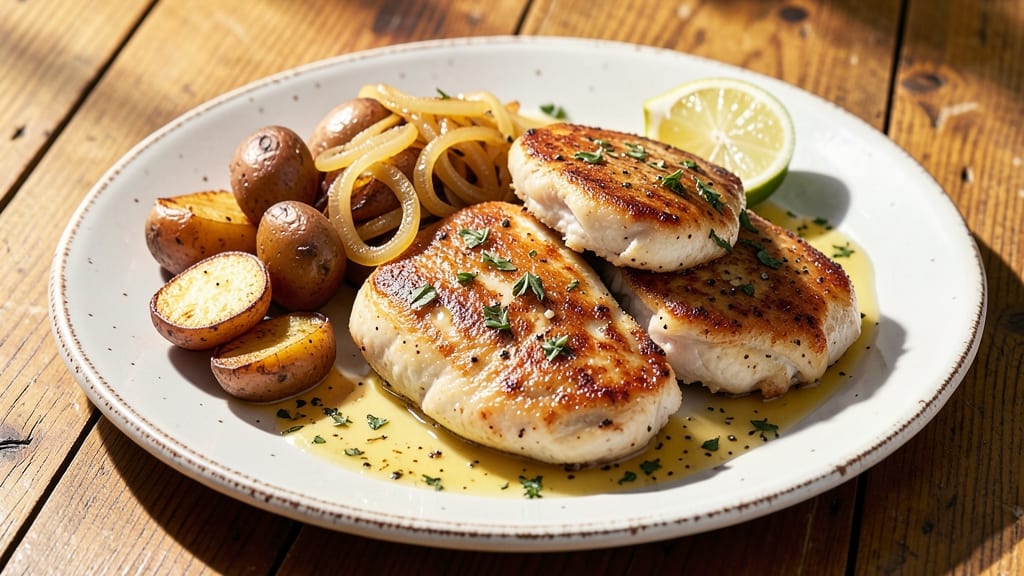
Ina Garten's Chicken Marbella recipe delivers golden-skinned crispy perfection that feels like a French bistro dinner at home. Growing up in small-town Georgia, I learned that perfect technique transforms simple ingredients into something extraordinary—this dish proves it every time.
The secret lies in searing the chicken until it develops that signature golden crust while keeping the inside juicy and tender.
This elegant yet approachable recipe combines pan-seared chicken breasts with roasted potatoes and seasonal vegetables, all finished with a bright lemon-garlic butter sauce. What makes it special is the balance of crispy skin and succulent meat, achieved through precise timing and basting.
The potatoes roast until crispy on the edges while staying fluffy inside, creating a perfect foil for the chicken.
By the time you plate this dish, you'll have perfectly golden chicken with crispy edges and tender centers, surrounded by roasted vegetables that complement rather than compete. The lemon-garlic butter sauce adds a final touch of brightness that ties everything together.
It's the kind of meal that feels both comforting and sophisticated—exactly what Ina Garten would serve at her New York kitchen table.
Whether you're cooking for a date night or a weeknight dinner, this recipe delivers restaurant-quality results with minimal fuss. The key is patience—letting the chicken rest after searing ensures it stays juicy while the skin stays crispy. Let's get started on creating this French-inspired masterpiece at home.
Ingredients for ina garten chicken marbella
Simple ingredients that transform into restaurant-quality golden-skinned perfection with French bistro flair.
| Ingredient | Amount | Notes |
|---|---|---|
| Boneless, Skinless Chicken Breasts 🍗 | 1 ½ lb | Pounded to even thickness |
| Yellow Onions 🧅 | 1 whole | Thinly sliced for roasting |
| Baby Potatoes 🥔 | 1 ½ lb | Halved for even cooking |
| Garlic Cloves 🧄 | 6 cloves | Minced for sauce and roasting |
| Unsalted Butter 🧈 | ¾ cup | Cold for searing, softened for sauce |
| Fresh Lemon Juice 🍋 | ½ cup | Freshly squeezed for brightness |
| Extra-Virgin Olive Oil 🫒 | ¼ cup | For roasting vegetables |
| Fresh Thyme Leaves 🌿 | ¼ cup | Chopped, stems removed |
| Fresh Rosemary 🌿 | 2 sprigs | Whole sprigs for roasting |
| Salt 🧂 | 1 ½ tsp | Kosher or sea salt |
| Ground Black Pepper 🌶️ | ½ tsp | Freshly ground preferred |
| Fresh Parsley 🌿 | ¼ cup | Chopped for garnish |
| Dried White Wine 🍷 | ½ cup | Sauvignon Blanc or Chardonnay |
The chicken breasts are the foundation—look for plump, even-sized pieces from the meat counter at Whole Foods or your local butcher. Pounding them to an even thickness ensures consistent cooking. For the potatoes, Yukon Golds or baby reds work best—they hold their shape while roasting. The butter should be cold and unsalted for searing (the good stuff, not the pre-packaged tub). Fresh herbs are non-negotiable here; Trader Joe's often has affordable bundles of thyme and rosemary. If you can't find fresh, dried works at one-third the amount, but the flavor won't be the same.
No white wine? Chicken broth with a splash of lemon juice works perfectly—just add the same acidity. Fresh thyme and rosemary can be swapped for dried at one-third the quantity, but the aroma won't be as vibrant. For the butter sauce, if you're short on time, melted butter mixed with lemon juice and garlic powder gets you close. The potatoes can be swapped for fingerling potatoes (just leave them whole)—they're more flavorful but take slightly longer. And if you're feeling lazy, pre-cut frozen baby potatoes (thawed and dried) work in a pinch, though fresh is always better.
This dish reheats beautifully—just warm the chicken and potatoes in a 350°F oven for 10 minutes to restore crispiness. Store leftovers in the fridge for 3-4 days, covered to keep the chicken moist. For the sauce, keep it separate until serving to prevent sogginess. The herbs can be prepped ahead and stored in the fridge for 3 days, wrapped in damp paper towels. If you're planning ahead, the potatoes and onions can be roasted a day in advance and reheated—just add a pat of butter before serving to refresh the crispiness.
Why You'll Love This Recipe
- One-Pan Magic: I love how this recipe turns three components—chicken, potatoes, and onions—into a cohesive meal without a single extra pot. The chicken sears in the same skillet where the sauce finishes, and the veggies roast on sheets that double as side dishes. No frantic cleanup, just a few sheets and one pan to wipe down.
- Crispy-Golden Perfection: That lemon juice marinade? It’s the secret to skin so crispy it practically shatters between your teeth, but the inside stays juicy and tender. The garlic and rosemary in the potatoes and onions add depth, while the wine sauce ties everything together in a way that feels restaurant-worthy but takes 45 minutes max.
- Leftover Lifesaver: I make this on Sundays, and honestly, the leftovers are even better the second day. The chicken stays moist if you cover it properly, and the sauce clings to it like a flavor hug. My kids ask for it three nights in a row—no complaining, just seconds.
- Budget-Friendly Luxe: You’d think using white wine and butter would break the bank, but the chicken and potatoes are affordable staples, and the herbs (even fresh ones) stretch far. It’s the kind of meal where you can splurge on a nice bottle of wine for the sauce without stressing over the rest of the grocery bill.
Step-by-step instructions for golden-skinned chicken marbella
Here's the method to achieve Ina Garten's signature crispy, golden chicken with perfectly roasted sides.
Prepare and Season the Chicken
Begin by pounding the 1½ lb boneless, skinless chicken breasts to an even ½-inch thickness between two sheets of plastic wrap using a meat mallet. This ensures even cooking and prevents dryness. Season both sides generously with 1½ teaspoons salt and ½ teaspoon ground black pepper, pressing the seasoning into the meat so it adheres evenly.
Next, place the chicken breasts in a shallow dish and pour the ½ cup fresh lemon juice over them. Let them marinate for 15 minutes at room temperature while you prepare the remaining ingredients. This acid marinade not only adds brightness but also helps tenderize the chicken slightly. The lemon juice will also contribute to that signature golden color when roasted.
Roast the Potatoes and Onions
Preheat your oven to 425°F. While the chicken marinates, halve the 1½ lb baby potatoes and thinly slice the 1 yellow onion. Toss both in a large bowl with ¼ cup extra-virgin olive oil, ¼ cup chopped fresh thyme leaves, 2 sprigs fresh rosemary (leaves stripped), ½ teaspoon salt, and ½ teaspoon black pepper. Spread the potatoes and onions evenly on two rimmed baking sheets, ensuring they're in a single layer for even browning.
Roast for 25-30 minutes, stirring once halfway through, until the potatoes are golden brown and tender when pierced with a fork. Remove them from the oven and set aside, keeping them warm. The onions should be caramelized and sweet, adding depth to the dish. This step builds the aromatic foundation that complements the chicken beautifully.
Sear the Chicken for Crispy Skin
Heat ¼ cup extra-virgin olive oil in an oven-safe skillet over medium-high heat until shimmering. Carefully add the marinated chicken breasts and cook for 3-4 minutes per side until the skin is deep golden brown and crispy. The lemon juice in the marinade will help create that signature golden crust while keeping the chicken juicy inside.
Transfer the skillet to the preheated 425°F oven and continue roasting for 8-10 minutes until the chicken reaches an internal temperature of 165°F. The residual heat in the skillet ensures the chicken finishes cooking evenly while maintaining that crispy exterior. This two-step cooking process is key to achieving the perfect balance of texture and doneness.
Deglaze and Finish with Wine Sauce
While the chicken roasts, reduce the oven temperature to 375°F. Remove the skillet from the oven and place it on the stovetop over medium heat. Add ½ cup dried white wine and scrape up any browned bits from the bottom of the pan with a wooden spoon. This deglazing step captures all the flavorful fond that's built up during searing.
Simmer the wine for 3-4 minutes until reduced by half. Stir in ¾ cup unsalted butter, cut into small pieces, and whisk until melted and emulsified into a glossy sauce. The butter adds richness and helps create a silky, velvety consistency. Return the chicken to the skillet, spooning the sauce over the top, and let it cook for an additional 2 minutes to heat through completely.
Garnish and Serve
Transfer the chicken to a warm serving platter and spoon the remaining sauce over the top. Garnish with ¼ cup chopped fresh parsley for a pop of color and freshness. Serve immediately alongside the roasted potatoes and onions. The crispy golden skin on the chicken will contrast beautifully with the tender, flavorful interior, while the caramelized vegetables add a satisfying element to each bite.
This dish delivers on the promise of golden-skinned perfection with every element working together. The crispy chicken, aromatic vegetables, and rich wine sauce create a harmonious balance that's both impressive and comforting. Enjoy with a simple green salad to complete the meal.
Pro Tips For Making Ina Garten Chicken Marbella
- Pound Chicken Evenly: DESCRIPTION: Skip the uneven thickness—this is where dry chicken starts. Use a meat mallet (or rolling pin in a pinch) to tap the breasts to exactly ½-inch. I learned this the hard way when one side came out rubbery while the other was perfect.
- Caramelize Onions First: DESCRIPTION: If your onions aren’t sweet and golden by the end of the 25-30 minutes, pull them out early and finish them on the stovetop with a splash of the 0.5 cup dried white wine (yes, use leftover wine—it’s worth it). The deeper caramelization makes the whole dish taste richer.
- Don’t Rush the Wine Reduction: DESCRIPTION: The sauce won’t emulsify properly if you rush the 3-4 minutes of wine simmering. Let it bubble gently until it’s noticeably reduced by half—this is what makes the butter sauce silky, not just melted. Trust the process, even if it feels slow.
- Use Cold Butter for Searing: DESCRIPTION: Cut the 0.75 cup unsalted butter into tiny cubes and keep them cold until you’re ready to add them to the wine. Cold butter melts slower, giving you time to whisk it into a glossy sauce instead of a greasy blob. (I used to just dump in soft butter and wonder why my sauce looked sad.)
Serving suggestions for this recipe
Elegant Plating Tips
Arrange the golden-skinned chicken breasts on a warm platter, fanning them slightly for visual appeal. I always use a large slate board or wooden cutting board for that rustic bistro feel—it adds warmth to the presentation. Place the crispy edges facing outward so guests can see that signature golden crust.
Sauce Presentation
Spoon the lemon-garlic butter sauce over the chicken in a circular motion, letting it pool slightly at the edges. For extra elegance, drizzle a thin line of sauce down the center of the platter before adding the chicken. This creates a beautiful contrast with the crispy skin.
Vegetable Accompaniment
Fan the roasted potatoes and onions around the chicken in a circular pattern, leaving space in the center for the sauce. The caramelized onions should be placed closest to the chicken, while the potatoes can be arranged slightly farther out.
This creates visual balance and highlights the golden chicken as the star.
Fresh Garnish Finishing
Sprinkle the chopped parsley over the top of the chicken and vegetables just before serving. I like to arrange it in small clusters rather than scattering it randomly—this adds a pop of color without overwhelming the dish. A squeeze of fresh lemon wedge on the side completes the presentation beautifully.
Side Dish Pairings
For a complete meal, serve with a simple arugula salad dressed with olive oil and lemon or a light green salad with balsamic vinaigrette. The acidity cuts through the richness of the chicken and potatoes. I also love adding a crusty baguette for soaking up any extra sauce.
Wine Pairing Suggestion
A crisp Sauvignon Blanc or Chardonnay complements this dish perfectly by balancing the richness of the butter sauce. I reach for a French Loire Valley Sauvignon Blanc—its citrus notes pair beautifully with the lemon in the chicken.
For a red option, a light Pinot Noir works well without overpowering the flavors.
Nutrition facts
Frequently asked questions
Why does the chicken need to be pounded to even thickness?
Pounding the 1½ lb boneless, skinless chicken breasts ensures they cook evenly and stay juicy throughout. Uneven thickness can lead to dry spots—thicker areas take longer to cook than thinner ones, which can overcook while the rest remains underdone. This step guarantees a perfectly tender interior with crispy skin every time.
Can I skip the wine in the sauce and use something else?
If you don’t have ½ cup dried white wine, substitute with an equal amount of chicken broth mixed with 1 tablespoon lemon juice. The acidity mimics the wine’s brightness while keeping the sauce flavorful. Just simmer until reduced by half before adding the butter.
How do I keep the roasted potatoes crispy after reheating?
Reheat the potatoes in a 350°F oven for 10 minutes with a pat of butter brushed on top. This restores their crispiness without sogginess. Alternatively, crisp them up in a skillet with a little olive oil for 3-4 minutes over medium-high heat before serving.
What’s the best way to check if the chicken is fully cooked?
Use a meat thermometer to check the thickest part of the chicken—it should read 165°F. The skin should also be deep golden brown and crispy. If unsure, let it rest for 5 minutes after cooking; the internal temperature will rise slightly, ensuring it’s safe and juicy.
Can I make this dish ahead of time?
Yes! Prep the herbs and roast the potatoes and onions a day ahead—just reheat at 375°F until crispy. For the chicken, cook it fresh for the best texture, but you can marinate it up to 4 hours ahead in the fridge. Store leftovers for 3-4 days covered to keep the chicken moist.