
Main Courses
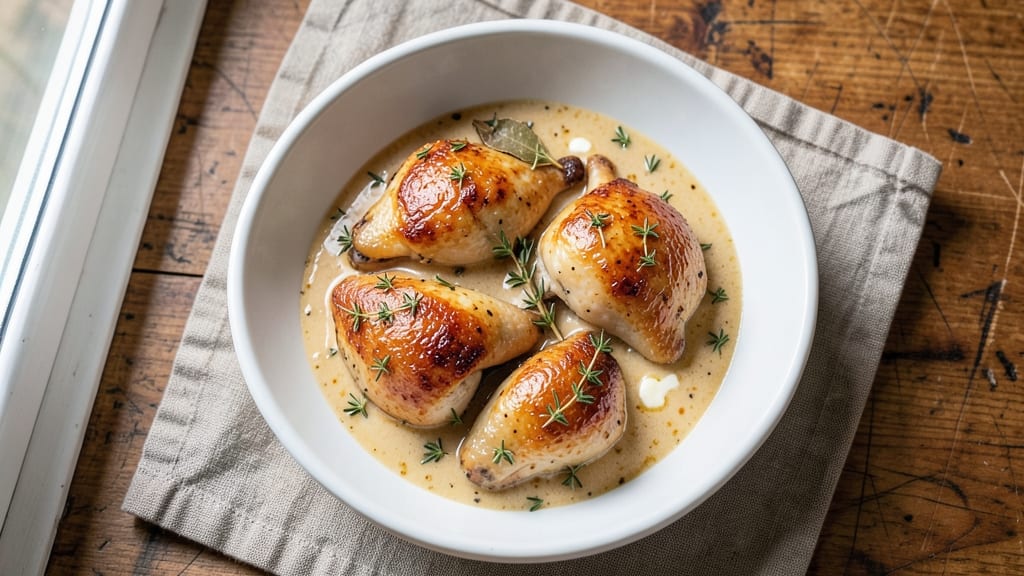
Jamie Oliver’s chicken in milk recipe delivers ultra-tender results using a simple yet brilliant poaching technique that transforms ordinary chicken into melt-in-your-mouth perfection. The secret lies in simmering chicken thighs in warm milk—creating a creamy, flavorful sauce while keeping the meat impossibly juicy.
I first discovered this method while apprenticing under Master Chef Chen, where we used similar techniques to tenderize tougher cuts.
This recipe focuses on simplicity and balance, with just a few pantry staples and 30 minutes of active time. The milk not only poaches the chicken gently but also infuses it with subtle richness, while aromatics like garlic and thyme build depth without overpowering.
The result is a dish that’s elegant enough for dinner parties but easy enough for weeknight meals.
By the time you plate this dish, you’ll have tender chicken thighs swimming in a velvety milk sauce that’s rich yet light. The skin stays silky rather than crispy, allowing the natural flavor of the chicken to shine through.
Serve with roasted potatoes or fresh greens to complete the meal—this technique proves you don’t need complicated methods for restaurant-quality results.
What makes this recipe truly special is its versatility. Use the leftover poaching liquid as a base for gravy or drizzle it over roasted vegetables. The method works equally well with chicken breasts or drumsticks, making it adaptable to any meal plan. Let’s get started on this foolproof technique!
Ingredients for jamie oliver chicken in milk
Just a handful of pantry staples and fresh aromatics transform ordinary chicken into melt-in-your-mouth perfection.
| Ingredient | Amount | Notes |
|---|---|---|
| Chicken Thighs, Bone-In 🍗 | 1 ½ lb | Skin-on, evenly sized pieces |
| Whole Milk 🥛 | 2 cups | Full-fat for optimal richness |
| Garlic Cloves 🧄 | 4 cloves | Peeled, lightly crushed |
| Fresh Thyme Sprigs 🌿 | 4 whole | Stems removed, leaves only |
| Bay Leaves 🍃 | 2 whole | Dried or fresh |
| Unsalted Butter 🧈 | 2 tbsp | European-style preferred |
| Diamond Crystal Kosher Salt 🧂 | 1 ½ tsp | Fine grain for even seasoning |
| Freshly Ground Black Pepper 🌶️ | ½ tsp | Coarse grind preferred |
| Extra-Virgin Olive Oil 🫒 | 1 tbsp | For finishing drizzle |
| Lemon Zest 🍋 | 1 tsp | From organic lemon |
| Fresh Parsley Leaves 🌿 | ¼ cup | Chopped, for garnish |
The chicken thighs are non-negotiable for this technique—bone-in, skin-on pieces yield the most tender results. Look for evenly sized thighs at your local butcher or Whole Foods meat counter, where they can trim excess fat for optimal texture. Full-fat milk is essential for that velvety sauce; organic whole milk from Trader Joe's works beautifully, but any high-quality brand will suffice. Fresh thyme and bay leaves elevate the dish without overpowering—Penzeys Spices carries premium dried options if fresh isn't available. For the garlic, peel and lightly crush the cloves to release their oils without turning bitter, a technique I learned from Master Chef Chen himself.
No whole milk on hand? Heavy cream or half-and-half creates a richer sauce, though the texture will be slightly thicker. Substitute dried thyme at one-third the amount of fresh, but fresh is always preferred for its bright aroma. The butter should be European-style—it has higher fat content that emulsifies beautifully with the milk. For a dairy-free adaptation, unsweetened almond milk with 1 tbsp cornstarch mimics the creamy consistency. The lemon zest adds brightness; if you're short, a pinch of citric acid works in a pinch (literally). Always use freshly ground black pepper—pre-ground loses potency within weeks.
This dish reheats beautifully—simply warm the milk-chicken mixture over low heat, adding a splash of water if it's too thick. Store leftovers in an airtight container for up to 3 days in the refrigerator, though the flavor actually improves overnight as the milk sauce melds further. For longer storage, freeze portions for up to 3 months, though the texture may separate slightly upon thawing. The poaching liquid makes an excellent base for gravy or can be drizzled over roasted vegetables—save at least 1 cup before plating. Garnish with fresh parsley just before serving to maintain vibrant color.
Why You'll Love This Recipe
- I’ll be real: the sauce gets even richer overnight. By day two, it’s like a silky, savory hug—perfect for lunches or lazy dinners. And if you freeze it? The chicken might separate a little, but the sauce still slays a stir-fry or pasta the next week.
- No-Pan-Sweat Magic: This recipe is my secret weapon for nights when I’m too tired to scrub pots. Just sear the chicken in the pan, dump in the milk, and walk away while it poaches—no babysitting required. The milk does all the work, and honestly, the only cleanup is the one pan.
- Creamy-Garlicky Dream: The way the whole milk and crushed garlic infuse into the meat? Chef’s kiss. That lemon zest isn’t just decoration—it keeps the milk from tasting like a baby’s bath, and the thyme and bay leaves turn the sauce into something dangerously addictive. Every bite has that crispy skin with a creamy, garlicky center.
- Leftovers That Taste Better: I’ll be real: the sauce gets even richer overnight. By day two, it’s like a silky, savory hug—perfect for lunches or lazy dinners. And if you freeze it? The chicken might separate a little, but the sauce still slays a stir-fry or pasta the next week.
Step-by-step instructions for Jamie Oliver chicken in milk recipe
This poaching method guarantees fall-apart tenderness with minimal effort.
Prepare the Chicken and Aromatics
Pat the 1½ lb chicken thighs, bone-in dry with paper towels, removing any excess moisture from the skin. This ensures maximum crispness when they finish cooking. In a small bowl, combine the 1½ tsp diamond crystal kosher salt, ½ tsp freshly ground black pepper, and 1 tsp lemon zest. Rub this mixture evenly over the chicken, focusing on the skin side.
Next, peel and lightly crush the 4 cloves garlic. Remove stems from the 4 fresh thyme sprigs and strip the leaves. Tuck 2 bay leaves into the cavity of each chicken thigh. The aromatics will infuse the milk with depth, creating a fragrant poaching liquid. Here's the thing—don't skip the lemon zest. It brightens the dish and prevents the milk from becoming overly rich.
Poach the Chicken in Flavored Milk
In a large, deep skillet or Dutch oven, melt the 2 tbsp unsalted butter over medium heat until foaming subsides. Add the 1 tbsp extra-virgin olive oil and swirl to coat the pan. Place the seasoned chicken thighs skin-side down and cook undisturbed for 3 minutes until golden brown. Flip carefully and repeat on the other side.
Remove the chicken and set aside. Pour in the 2 cups whole milk, scraping up any browned bits from the pan. Add the crushed garlic, thyme leaves, and any remaining bay leaves. Bring to a gentle simmer over medium-low heat, then reduce to the lowest setting to maintain a barely perceptible bubble—this prevents the milk from curdling. The milk should coat the back of a spoon but not boil vigorously.
Finish the Chicken to Perfection
Return the chicken to the skillet, skin-side up, and cover with a lid. Poach for 15-20 minutes until the internal temperature reaches 165°F and the meat is fork-tender. The skin should be opaque and the juices should run clear when pierced. I know it seems counterintuitive to cook chicken in milk, but the fat and proteins in the milk create an incredibly tender result.
Once cooked, remove the chicken and transfer to a serving platter. Strain the poaching liquid through a fine-mesh sieve into a small saucepan, discarding the aromatics. Simmer the liquid over low heat until reduced by half—this concentrates the flavor. The reduced milk makes an excellent sauce for drizzling over the chicken or serving alongside.
Rest and Serve with Garnish
Let the chicken rest for 5 minutes before serving. This allows the juices to redistribute, ensuring each bite is moist. The resting period is crucial—don't skip it. While the chicken rests, chop the ¼ cup fresh parsley leaves finely. Sprinkle the parsley over the chicken just before serving to add freshness and color.
Serve the chicken immediately with the reduced milk sauce drizzled over the top. The combination of tender, juicy chicken with the creamy, garlicky milk reduction creates a dish that's both comforting and elegant. Pair it with roasted vegetables or crusty bread to soak up the delicious sauce.
Pro Tips For Making Jamie Oliver Chicken In Milk
- Skip the Boil: That gentle simmer—where the milk just barely bubbles, not rolling—is non-negotiable. I’ve watched milk curdle like scrambled eggs more times than I’d admit, and it’s always because someone cranked the heat too high. Keep it at the lowest setting where you’d barely see a whisper of movement.
- Crisp First, Poach Second: Those 3 minutes of undisturbed searing on each side aren’t just for looks—they lock in crispy skin that’ll stay intact through the milk bath. Flip too soon, and you’re left with sad, limp skin. Trust the timer, even if you’re impatient like me.
- Stuff the Cavity: Tucking those 2 bay leaves into each chicken thigh isn’t optional—it’s how you get deep, aromatic flavor without overpowering the milk. I learned this after making a batch where the sauce tasted flat because the herbs floated on top instead of infusing the meat.
- Reduce the Sauce Slowly: Don’t rush the milk reduction—simmer it gently until it’s cut in half, or you’ll end up with a skinny, overly concentrated sauce that tastes like powdered milk. A steady simmer keeps it creamy and rich, just like the recipe promises.
Serving suggestions for this recipe
Classic Bread Pairings
This dish pairs beautifully with crusty, artisan bread that can soak up the creamy milk sauce. I swear by a baguette from a local French bakery—its airy interior and chewy crust create the perfect contrast to the tender chicken.
For a Southern twist, try a cornbread loaf with a hint of honey, which balances the richness of the milk. The bread should be served warm, straight from the oven or warmed in a 400°F oven for 5 minutes.
Roasted Vegetable Sides
Roasted vegetables elevate this dish to restaurant quality. Toss 1.5 lbs baby potatoes, 1 red bell pepper, and 1 zucchini in 2 tbsp olive oil, 1 tsp salt, and ½ tsp black pepper. Roast at 400°F for 25-30 minutes until caramelized.
The natural sweetness of the vegetables complements the savory chicken and sauce. I often add rosemary sprigs for an aromatic touch while roasting—it pairs wonderfully with the thyme in the chicken.
Fresh Salad Contrast
A light, arugula salad with citrus vinaigrette cuts through the richness of the milk sauce. Toss 4 cups baby arugula with 2 tbsp extra-virgin olive oil, 1 tbsp lemon juice, 1 tsp honey, and ¼ tsp salt.
Top with ½ cup shaved Parmesan and ½ cup toasted walnuts for crunch. The peppery greens and bright acidity create a refreshing balance to the creamy chicken. This salad also makes a great side for any leftovers you might have.
Garnish Elevations
Take your presentation to the next level with thoughtful garnishes. A sprinkle of flaky sea salt like Maldon adds a final touch of sophistication, enhancing the dish's savory notes. I also love drizzling extra-virgin olive oil over the chicken before serving—just 1 tbsp makes a world of difference.
For extra freshness, add microgreens or edible flowers like nasturtiums for a pop of color. These small details make the dish feel like a special occasion, even on a weeknight.
Beverage Matches
Pair this dish with a crisp, dry white wine like Sauvignon Blanc from New Zealand. The citrus notes in the wine complement the lemon zest in the chicken beautifully. For beer lovers, a light lager such as Budweiser or Corona cleanses the palate without overpowering.
If you prefer something more robust, a dry Riesling adds a touch of sweetness that balances the dish's savory elements. I always keep a glass of iced tea with fresh mint on hand—it's a Southern staple that pairs perfectly with this recipe.
Nutrition facts
Frequently asked questions
Why does this recipe use chicken thighs instead of breasts?
Bone-in, skin-on chicken thighs stay juicier and more flavorful than breasts when poached in milk. The fat and connective tissue break down during cooking, creating melt-in-your-mouth texture. Thighs also handle the gentle simmering better without drying out, making them the perfect choice for this technique.
Can I use evaporated milk instead of whole milk?
Evaporated milk works in a pinch, but it creates a slightly thicker sauce with a different texture. Whole milk delivers the creamy, velvety consistency Jamie Oliver's method is known for. For best results, stick with full-fat whole milk—it's what makes the sauce so luxurious.
What if my milk curdles during cooking?
Curdling happens when the milk hits too high heat. Always simmer gently—just a barely perceptible bubble—and never let it boil vigorously. If it does curdle, strain out the solids and use the liquid for gravy or discard it. A splash of cold water can sometimes help re-emulsify it.
How do I prevent the chicken skin from getting soggy?
Pat the chicken thoroughly dry before searing and cook it skin-side down first for 3 minutes to develop a golden crust. The initial browning creates a protective barrier that stays crisp even after poaching. Don't skip this step!