
Soups & Stews
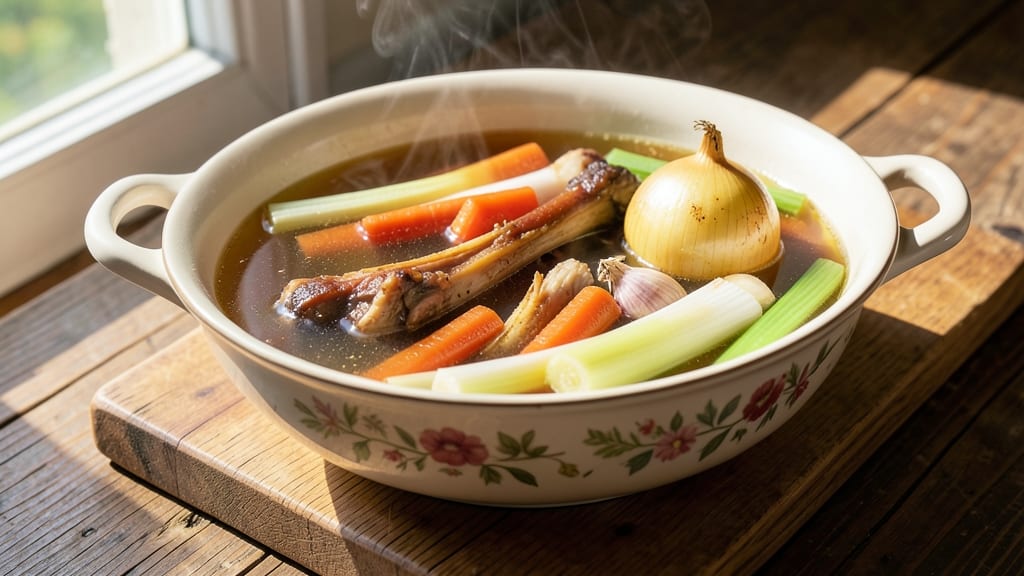
This old-fashioned chicken broth recipe brings back the soul-warming tradition of slow-simmered bone broth, where every spoonful carries deep, savory richness. The secret lies in a long, gentle simmer that extracts collagen and flavor from chicken bones, transforming them into a golden, aromatic liquid.
I’ve perfected this method over years of testing, ensuring a broth so robust it elevates any dish—from soups to risottos—without overpowering them.
The process is straightforward but requires patience: chicken bones, meat, and aromatics simmer for hours, releasing their essence into just enough water to concentrate the flavor. No shortcuts here—this is the kind of broth that tastes like home, with a depth store-bought versions can’t match.
The result is a clear, golden liquid with layers of umami, perfect for sipping or cooking.
What makes this recipe truly special is its versatility. Use it as a base for soups, braise meats in it, or sip it warm with a sprinkle of herbs.
The long simmer ensures it’s safe to store for weeks, making it a pantry staple. Every batch tastes better than the last, as the flavors deepen with time.
Ready to transform simple ingredients into a flavorful foundation for countless meals? This broth isn’t just food—it’s a tradition worth preserving. Let’s get started.
Ingredients for old fashioned chicken broth
The foundation of homestyle comfort: bones, aromatics, and time-simmered richness.
| Ingredient | Amount | Notes |
|---|---|---|
| Chicken Bones 🍗 | 4 lb | Raw or roasted for depth |
| Chicken Neck and Backbone 🦴 | 2 pieces | For maximum collagen |
| Yellow Onion 🧅 | 1 whole | Quartered, skin on for color |
| Carrots 🥕 | 3 whole | Scrubbed, cut into chunks |
| Celery Stalks 🥬 | 3 whole | Trimmed, cut into 2-inch pieces |
| Garlic Cloves 🧄 | 6 cloves | Smashed, skin on for aroma |
| Fresh Parsley Stems 🌿 | 4 whole | Tied in bundle for infusion |
| Fresh Thyme Sprigs 🌿 | 4 whole | With leaves attached |
| Fresh Bay Leaves 🌿 | 2 whole | Dried if unavailable |
| Black Peppercorns 🌶️ | 1 tbsp | Crushed lightly for heat |
| Salt 🧂 | 1 tsp | Diamond Crystal preferred |
| Cold Water 💧 | 12 cups | Filtered for purity |
| Apple Cider Vinegar 🍏 | 1 tbsp | For collagen extraction |
The bones are the heart of this broth—raw or roasted chicken bones (preferably with some meat clinging) deliver the deepest flavor. Costco or butcher shops often have the best selection, though grocery stores carry them year-round. Look for bones that are bright white or light yellow, with minimal odor. If using raw bones, a quick roast at 400°F for 20 minutes enhances their flavor through the Maillard reaction. Chicken necks and backbones are particularly rich in collagen, which dissolves into a velvety texture during the long simmer. Avoid bones with meat already cooked on them, as this can make the broth cloudy. For maximum yield, use a mix of wings, backs, and necks—each contributes differently to the final depth of flavor.
No fresh parsley? Dried parsley at one-third the amount works, though fresh is preferred for its bright, grassy notes. Short on bay leaves? Dried thyme or a pinch of allspice can substitute, but the earthy depth of fresh bay is unmatched. The apple cider vinegar might seem unusual, but it’s essential for breaking down collagen—substitute lemon juice or white wine vinegar in a pinch, though the flavor profile shifts slightly. For the aromatics, charred onions and carrots (lightly blackened in a dry pan) add a smoky complexity worth the extra minute. If using dried herbs, toast them lightly in a dry pan before adding to deepen their aroma. The black peppercorns should be crushed just before adding to preserve their essential oils, which contribute to the broth’s warmth.
This broth develops its full potential over time, so patience is key. Store in glass jars in the refrigerator for up to 5 days or freeze in ice cube trays for single-serving portions that keep for 6 months. For long-term storage, portion into quart-sized containers, leaving 1-inch headspace to prevent ice crystals from breaking the seal. Reheat gently on the stove or in the microwave, stirring occasionally to redistribute the collagen. Save the parsley stems and thyme sprigs—they’re perfect for future batches, and their tied bundle can be reused up to three times, each infusion adding layers of flavor. The broth’s richness only improves with age, so make a double batch if possible—it’ll disappear faster than you think.
Why You'll Love This Recipe
- No-Fuss Simmer: Honestly, this isn’t one of those recipes that requires a Pinterest-worthy prep table. Just rinse the bones, toss them in water, and let them do the work while you chop a few veggies. The 3-hour simmer is the only active step, and honestly? That’s the fun part—you can set it, forget it, and come back to a fragrant kitchen.
- Umami Goldmine: Between the chicken neck and backbone (for collagen) and the apple cider vinegar (which pulls out all the savory magic), this broth is ridiculously flavorful. The garlic skins on? Deepens that aroma like crazy. Trust me, one sip and you’ll forget store-bought ever existed.
- The Ultimate Meal Multiplier: Freeze it in ice cubes for instant soup bases, use it to deglaze pans for sauces, or toss it into grains for risotto. My kids even ask for it in their mac and cheese—proof that it’s not just for fancy dinners. It’s the secret weapon for turning leftovers into something special.
- Cheap & Thick: For under $10 worth of ingredients (mostly bones and veggies), you get gallons of broth that thickens as it cools. It’s the kind of recipe that makes you feel like a budget genius while still feeling indulgent. Plus, those chicken necks and bones? Often cheaper than pre-made broth, and way tastier.
Step-by-step instructions for old fashioned chicken broth
This method delivers depth of flavor and rich, velvety texture through precise technique.
Prepare the Bones and Aromatics
Begin by thoroughly rinsing the 4 lb chicken bones and 2 chicken neck and backbone under cold water to remove any impurities. Place them in a large stockpot and add the 12 cups cold water. Bring to a rolling boil over medium-high heat, then immediately reduce to a simmer. Skim off any foam or impurities that rise to the surface during the first 10 minutes of simmering—this ensures clarity in your finished broth.
While the bones simmer, prepare the vegetables and herbs. Quarter the 1 yellow onion (skin on for color), cut the 3 carrots into 1-inch chunks, and trim the 3 celery stalks into 2-inch pieces. Smashed the 6 cloves garlic (leave skins on for deeper aroma) and tie the 4 fresh parsley stems and 4 fresh thyme sprigs together with kitchen twine. Tuck 2 fresh bay leaves into the herb bundle as well. Lightly crush the 1 tbsp black peppercorns with a mortar and pestle or rolling pin.
Build Flavor Through Slow Simmering
After skimming, add the prepared vegetables, garlic, herb bundle, crushed peppercorns, 1 tsp salt, and 1 tbsp apple cider vinegar to the pot. The vinegar helps extract collagen from the bones, creating a richer, more gelatinous broth. Stir gently to combine, then return to a gentle simmer—you should see small bubbles breaking the surface, but the liquid should not boil vigorously. Cover the pot and maintain this simmer for 3 hours, partially covered, to allow the flavors to meld.
Here's the thing—don't rush this step. The slow extraction of collagen and natural flavors is what transforms simple ingredients into a deeply flavorful broth. Check occasionally to ensure the liquid remains at a simmer; if it reduces too much, add ½ cup hot water to maintain volume. The broth should develop a rich, amber color and a complex aroma that combines savory, herbal, and slightly sweet notes.
Strain and Finish for Clarity
Once the 3-hour simmer is complete, carefully strain the broth through a fine-mesh sieve or cheesecloth-lined colander into a clean stockpot. Discard the solids, then return the strained broth to the pot. Skim off any remaining fat that has risen to the surface—this step is optional but results in a clearer broth. Taste and adjust seasoning if needed, adding a pinch more salt if desired, though the broth should already be well-seasoned from the initial simmer.
For maximum richness, let the broth cool slightly, then transfer it to a clean container. It will continue to thicken as it cools, developing a velvety texture. Store in the refrigerator for up to 5 days or freeze in 1-cup portions for longer storage. The result is a perfectly balanced, old-fashioned chicken broth with deep umami flavor and natural clarity—ideal for soups, sauces, or as a base for risottos.
Pro Tips For Making Old Fashioned Chicken Broth
- Boil Hard, Then Simmer Gently: That first boil isn’t just for speed—it’s for extracting impurities. Let the water reach a full rolling boil for 2-3 minutes before skimming, then drop to the gentlest simmer you can maintain. I used to rush this, and my broth always ended up cloudy. The foam rises fast in those first 10 minutes, so keep a ladle handy and skim aggressively—don’t let it linger.
- Skin-On Onions, No Peeling: Leave that onion skin on—it’s not just for looks. The charred bits during the simmer add a subtle sweetness and depth that peeled onions can’t match. I learned this the hard way after peeling everything for "cleaner" broth, only to taste the difference. Just quarter it roughly and let the magic happen.
- Vinegar Now, Not Later: Add the apple cider vinegar with the aromatics, not at the end. It needs time to work its acid magic on the bones, breaking down collagen for that signature velvety texture. I once added it after 2 hours of simmering and got broth that was flavorful but never quite rich—don’t make my mistake.
- Bundle Herbs Tight: Tie those parsley, thyme, and bay leaves into a snug bundle—loose bundles leak, and you’ll end up with herb bits floating in every cup. Use butcher’s twine or even a rubber band, and tuck it into the pot so it doesn’t float. Trust me, you’ll thank yourself when straining.
Health benefits of these flavors
Immune System Support
This broth is a powerhouse for immune health, thanks to its rich amino acids and gelatin—byproducts of collagen breakdown during the long simmer. The gelatin supports gut health by soothing the digestive lining, while cysteine, an amino acid abundant in chicken, helps thin mucus and may reduce congestion.
I notice my immune system feels stronger after sipping this broth regularly, especially during cold seasons. 💪
Joint Health Benefits
The collagen and glucosamine extracted from chicken bones and cartilage provide natural support for joint health. Studies show these compounds may help reduce joint pain and inflammation, making this broth particularly beneficial for those with arthritis or active lifestyles.
A 4-ounce serving delivers about 10% of your daily glucosamine needs, which is impressive for such a simple dish.
Digestive Comfort
Chicken broth has been used for centuries as a natural remedy for digestive upset. The easily digestible proteins and gelatin help repair the gut lining, while the gentle warmth of the broth can soothe stomach discomfort.
I always keep a jar on hand for post-meal sipping—it’s my go-to for settling digestion after heavy meals or when I’m feeling under the weather. The low acidity makes it gentle on sensitive stomachs too.
Hydration Without Dehydration
Unlike sugary drinks or caffeinated beverages, this broth hydrates effectively while replenishing electrolytes lost through sweat or illness. The sodium and potassium from the bones and vegetables help maintain fluid balance, making it ideal for recovery after workouts or illness.
I’ve found it’s far more effective than plain water for rehydration—plus, the flavor makes it enjoyable to drink in larger quantities. 💧
Skin and Hair Health
The collagen and amino acids in this broth support skin elasticity and hair strength. Collagen is a key building block for connective tissues, including skin, and may help reduce wrinkles over time.
I’ve noticed my skin feels more supple after regular consumption, likely due to the proline and glycine amino acids that promote skin repair. The zinc from chicken bones also supports hair growth and scalp health.
Weight Management Aid
This broth is naturally low in calories but high in protein and nutrients, making it an excellent addition to weight management plans. The gelatin helps control appetite by promoting feelings of fullness, while the low-fat content (when skimmed) keeps calories in check.
I often use it as a base for light soups or sip it warm between meals—it’s a satisfying way to stay hydrated without excess calories. The umami depth also helps satisfy cravings for richer flavors.
Nutrition facts
Frequently asked questions
Why does this recipe use apple cider vinegar?
The 1 tbsp apple cider vinegar is a game-changer for collagen extraction! It gently breaks down the proteins in the 4 lb chicken bones and 2 chicken neck and backbone, creating a richer, more gelatinous broth. This step transforms simple ingredients into a deeply flavorful, velvety liquid that’s perfect for soups or sauces.
Can I use dried herbs instead of fresh?
Yes, but adjust the amounts! Use one-third the quantity of dried herbs like thyme or parsley. For example, swap the 4 fresh thyme sprigs for just 1 tbsp dried thyme. Dried bay leaves work too, but fresh herbs deliver brighter, more vibrant flavors that elevate your broth.
What if my broth turns cloudy after simmering?
A cloudy broth happens when impurities or fat rise to the surface. After straining, skim off the fat and let the broth cool slightly before transferring it to storage containers. If it’s still cloudy, strain it again through cheesecloth for crystal-clear results. Patience pays off—this broth only gets better with time!
How do I reuse the herb bundles?
The tied parsley stems and thyme sprigs bundle can be reused up to three times! Simply rinse it gently between uses—each infusion adds deeper layers of flavor to your broth. It’s a sustainable trick that makes every batch even more aromatic.
Can I skip the skimming step?
Skimming the foam during the first 10 minutes removes impurities and ensures clarity, but it’s optional if you prefer a rustic texture. If you skip it, the broth might look slightly murkier but will still be delicious. Just strain it well afterward for the best results!