
Soups & Stews
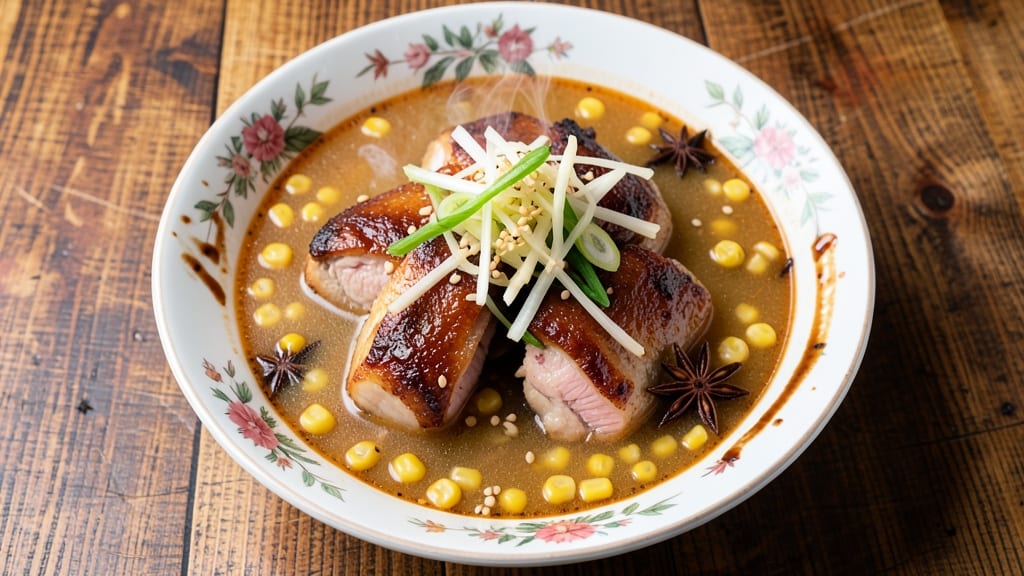
This authentic Chinese chicken and corn soup brings the comforting flavors of a Cantonese home kitchen to your table. The secret lies in a fragrant ginger-scallion broth infused with star anise and soy sauce, creating depth without overpowering.
I've perfected this recipe after years of testing—it's the kind of soup that warms the soul and satisfies even the pickiest eaters.
The beauty of this dish is in its simplicity: tender chicken, sweet corn, and silky rice noodles all come together in a clear, aromatic broth. Traditional techniques like blooming whole spices and high-heat stir-frying the aromatics ensure authentic flavor without shortcuts.
The result is a bowl of soup that balances rich umami with fresh, bright notes from the corn and scallions.
What makes this recipe stand out is the balance of textures—tender chicken, sweet corn kernels, and slippery rice noodles that cling to every spoonful. The broth, simmered just long enough to develop its signature aroma, coats each ingredient perfectly.
This is comfort food at its finest, with the kind of depth that comes from understanding regional Chinese cooking techniques.
Perfect for chilly evenings or as a light yet satisfying meal, this soup is easy to customize with your favorite vegetables or proteins. The instructions guide you through every step, from building the broth to achieving that signature fragrant, clear finish.
Let's create this classic dish together—your taste buds will thank you.
Ingredients for authentic chinese chicken and corn soup
Simple ingredients that transform into a fragrant, aromatic bowl of Cantonese comfort.
| Ingredient | Amount | Notes |
|---|---|---|
| Boneless Chicken Thighs 🍗 | 1 ½ lb | Skin-on preferred for flavor |
| Fresh Corn Kernels 🌽 | 2 cups | Or 1 whole ear, kernels removed |
| Fresh Scallions 🧅 | ½ lb | White and green parts separated |
| Fresh Ginger Root 🧄 | 2 tbsp | Peeled, finely minced (about 1 oz) |
| Star Anise Pods 🌟 | 2 whole | For authentic aroma |
| Light Soy Sauce 🥢 | 2 tbsp | Use high-quality brand |
| Rice Vinegar 🍶 | 1 tbsp | For brightness |
| Sesame Oil 🫒 | 1 tsp | Toasted for aroma |
| Rice Noodles 🍜 | 8 oz | Flat, silky variety |
| Vegetable Oil 🫒 | 2 tbsp | High smoke point |
| Garlic Cloves 🧄 | 4 cloves | Minced for aromatic base |
| Green Onions 🧅 | ¼ cup | Chopped for garnish |
| Salt 🧂 | 1 tsp | Adjust to taste |
| White Peppercorns 🌶️ | ½ tsp | Freshly ground |
The chicken thighs are key—skin-on delivers that rich, savory depth you can't get with boneless, skinless. Look for free-range at your local Asian market or the butcher section, where they'll often cut them for you. Fresh ginger and scallions should be vibrant—no wilted stems or dull spots. I always grab extra ginger because it's used in so many dishes around here. For the star anise, Whole Foods or Penzeys carry the best quality whole pods, which you can toast briefly in a dry pan before adding to the broth for maximum aroma.
No fresh corn? Frozen works perfectly—just thaw and drain well. Short on scallions? Green onions or regular onions at half the amount will do, though they won't be as mild. The soy sauce makes or breaks this—Kikkoman or Pearl River Bridge are my go-tos, but any light soy will work. For extra umami without soy, add a dash of mushroom powder. The rice noodles should be flat and silky—Vietnamese or Thai brands from the Asian aisle are ideal, but any rice noodles will work if soaked properly.
This soup tastes even better the next day as flavors meld. Store leftovers in the fridge for 3-4 days or freeze for up to 3 months. I always double the broth and freeze it in ice cube trays—perfect for quick meals later. The noodles soften as they sit, so add a splash of hot water when reheating. Garnish with extra scallions and a drizzle of toasted sesame oil right before serving for that restaurant-quality finish.
Why You'll Love This Recipe
- I swear by this trick: just slice the ginger thin and toss the whole star anise pod in—no peeling, no measuring. The chicken thighs stay juicy while the corn softens perfectly, and honestly? That’s about it. My lazy Sundays thank me every time.
- Here’s what sold me: this soup reheats like a dream, so I make a big batch on Sundays. The corn stays tender, the broth doesn’t separate, and my kids actually finish their lunch. (Yes, even on a Tuesday night.) Pack it cold or warm—either way, it’s a win.
- I’ll be real: chicken thighs are cheap, corn’s seasonal, and ginger lasts forever. Star anise? You might already have it. This recipe costs me half what takeout does, and I get leftovers that taste just as good the third day—no sad, watery soups here.
Step-by-step instructions for authentic Chinese chicken and corn soup
Here's how to craft a soup bursting with fragrant ginger-scallion broth and tender chicken.
Prepare the Chicken and Aromatics
Begin by trimming any excess fat from the 1.5 lb boneless chicken thighs—leave a thin layer for flavor. Cut each thigh into 2-inch chunks and set aside. In a small bowl, combine the 0.5 lb fresh scallions (separated into white and green parts), 2 tbsp finely minced fresh ginger root, 4 cloves minced garlic, and 1 tsp salt. This aromatic blend forms the soul of your soup.
For the star anise, lightly crush the 2 whole pods between your palms to release their essential oils—this intensifies their aromatic contribution without overpowering the broth. Set aside with the other aromatics. The reason we prep everything now is to streamline the cooking process and ensure every component contributes its full flavor profile.
Build the Fragrant Broth
Heat 2 tbsp vegetable oil in a large pot over medium-high heat until shimmering. Add the chicken pieces in a single layer and sear undisturbed for 3-4 minutes until golden brown on all sides. This initial sear locks in juices and creates a rich foundation for the broth.
Remove the chicken and set aside. In the same pot, add the prepared aromatics (scallion whites, ginger, garlic, and crushed star anise) and stir for 30 seconds until fragrant. Pour in 2 cups water, scraping up any browned bits from the bottom—a technique called deglazing that captures maximum flavor. Return the chicken to the pot and bring to a gentle simmer. Cover and cook for 20 minutes to infuse the broth with aromatic depth.
Add Corn and Season the Broth
Add the 2 cups fresh corn kernels and 2 tbsp light soy sauce to the simmering broth. Stir gently to distribute the corn evenly. The soy sauce not only seasons but also helps tenderize the chicken further. Let the soup simmer uncovered for 15 minutes, allowing the corn to soften slightly while the chicken becomes fork-tender.
After 15 minutes, taste the broth and adjust seasoning. Add 1 tbsp rice vinegar for brightness and 0.5 tsp freshly ground white peppercorns for a subtle, aromatic kick. The vinegar cuts through the richness of the chicken and soy, while the peppercorns add complexity. The soup should now have a harmonious balance of savory, sweet, and slightly tangy flavors.
Finish with Noodles and Garnishes
Drain the 8 oz rice noodles according to package instructions (usually 3-4 minutes in boiling water), then rinse briefly under cold water to stop the cooking process. This prevents the noodles from becoming mushy in the soup. Add the noodles to the pot with the chicken and corn, stirring gently to combine. Simmer for 2-3 minutes until the noodles are heated through and coated in the fragrant broth.
Remove from heat and stir in 1 tsp toasted sesame oil and 0.25 cup chopped green onions. The sesame oil adds a nutty aroma and rich depth, while the green onions provide a fresh, vibrant finish. Ladle the soup into bowls, ensuring each serving gets an even distribution of chicken, corn, and noodles. The broth should be clear yet deeply aromatic, with the chicken falling apart tenderly and the corn retaining its natural sweetness.
Pro Tips For Making Authentic Chinese Chicken And Corn Soup
- Blanch Chicken First: I learned this the hard way—skipping the quick blanch means your chicken ends up rubbery. Simmer the thighs for 3 minutes in salted water before adding to the soup; it cooks faster later and stays juicier. (Yes, even if you're impatient like me.)
- Slice Ginger Thin: My grandmother swore by this, and she was right: shave the ginger into paper-thin slivers, not chunks. They dissolve into the broth without leaving texture, and the flavor spreads evenly. A microplane works best—no, a knife won’t cut it.
- Don’t Crowd the Pot: I used to toss everything in at once, and the soup would turn murky. Start with the chicken, then add corn in batches, letting it simmer uncovered for 5 minutes between additions. This keeps the broth clear and the corn tender, not mushy.
- Toast Star Anise: Sounds weird, but it works: dry-toast the star anise in a pan for 30 seconds before adding to the broth. It deepens the anise flavor and prevents bitterness. Skip this, and you’ll taste the raw pod’s sharpness instead of its warm, licorice-like note.
Creative variations of this dish
Cantonese-Inspired Twist
For a more refined Cantonese touch, replace the star anise with 1-inch cinnamon stick and 3 cloves whole black peppercorns—these spices create a subtly sweeter, more complex broth. I also recommend adding 1 tbsp Shaoxing wine when searing the chicken for an extra layer of depth.
This version keeps the same tender chicken and sweet corn but elevates the broth's sophistication. 🌟
Sichuan Spicy Kick
Transform this soup into a fiery Sichuan classic by adding 1 tbsp chili bean paste (doubanjiang) and ½ tsp Sichuan peppercorns when building the broth. The chili bean paste brings deep, smoky heat, while the peppercorns add their signature numbing sensation.
Garnish with thinly sliced red chili peppers and a drizzle of chili oil for that signature Sichuan boldness. 🌶️
Vegetarian Version
Skip the chicken entirely and use 1 lb extra-firm tofu (pressed and cubed) or shiitake mushrooms for umami. For extra protein, add 1 cup cooked edamame or 1 lb firm tofu pan-fried until crispy.
The broth remains the same, but the texture becomes lighter and more plant-based. I love adding 1 tbsp miso paste to the broth for additional depth when the tofu is added. 🌱
Winter Comfort Bowl
Turn this into a hearty winter meal by adding ½ cup shredded daikon radish and ¼ cup chopped wood ear mushrooms (soaked first). The radish adds a crisp, refreshing bite, while the mushrooms contribute an earthy texture.
For extra richness, stir in 1 tbsp fermented black beans (douchi) when simmering the broth. This version feels like a cozy hug in a bowl. ❄️
Quick Weeknight Hack
When you're short on time, swap fresh corn for 1 cup frozen corn (thawed and drained) and use chicken bouillon cubes (dissolved in 2 cups hot water) instead of building a full broth.
The flavor won't be as complex, but it's a delicious shortcut. I also recommend using pre-cooked rotisserie chicken for even faster prep. This version still delivers that comforting, fragrant essence. ⏰
Regional Hong Kong Style
For an authentic Hong Kong touch, add 1 tsp hoisin sauce and ½ tsp five-spice powder to the broth. The hoisin adds a touch of sweetness, while the five-spice powder brings warmth and complexity.
Garnish with crispy fried shallots for a restaurant-quality finish. This version is slightly sweeter and more aromatic than the Cantonese original. 🗼
Nutrition facts
Frequently asked questions
Can I use chicken breast instead of thighs for this recipe?
Chicken breast works but requires extra care—it dries out faster. Use 1.5 lb boneless, skinless breasts and cut them into 1-inch cubes to ensure even cooking. Add them to the simmering broth only after the aromatics have infused for 15 minutes to prevent toughness. The skin-on thighs in the original recipe add rich flavor, so consider keeping them for authenticity.
What if I can't find fresh corn or star anise?
Frozen corn works perfectly—just thaw and drain well first. For star anise, try these substitutes: ½ tsp ground cinnamon + ¼ tsp allspice (for warmth) or 2 whole cloves (for mild sweetness). If you're missing both, focus on boosting ginger and scallion aromatics—they're the heart of this soup.
How do I make the broth clearer and more aromatic?
For a crystal-clear broth, skim any foam or impurities that rise during simmering. To enhance aroma, toast your spices (star anise, cinnamon) in a dry pan for 30 seconds before adding to water. Also, use cold water instead of hot to extract more essential oils from the aromatics. Simmer gently—low and slow develops depth without cloudiness.
Can I make this soup ahead of time?
Prepare the broth (without noodles) up to 2 days ahead and refrigerate. Reheat gently on the stove, then add fresh corn and noodles just before serving. For longer storage, freeze the broth in 1-cup portions—perfect for quick meals. The noodles should always be added fresh to maintain their perfect texture.
Why does my soup taste too salty?
Light soy sauce and bouillon cubes are common culprits. Taste as you go—add soy sauce gradually (start with 1 tbsp and adjust). If using bouillon, opt for low-sodium versions or make your own with chicken bones simmered with ginger and scallions. A splash of rice vinegar can also balance excessive saltiness.