
Soups & Stews
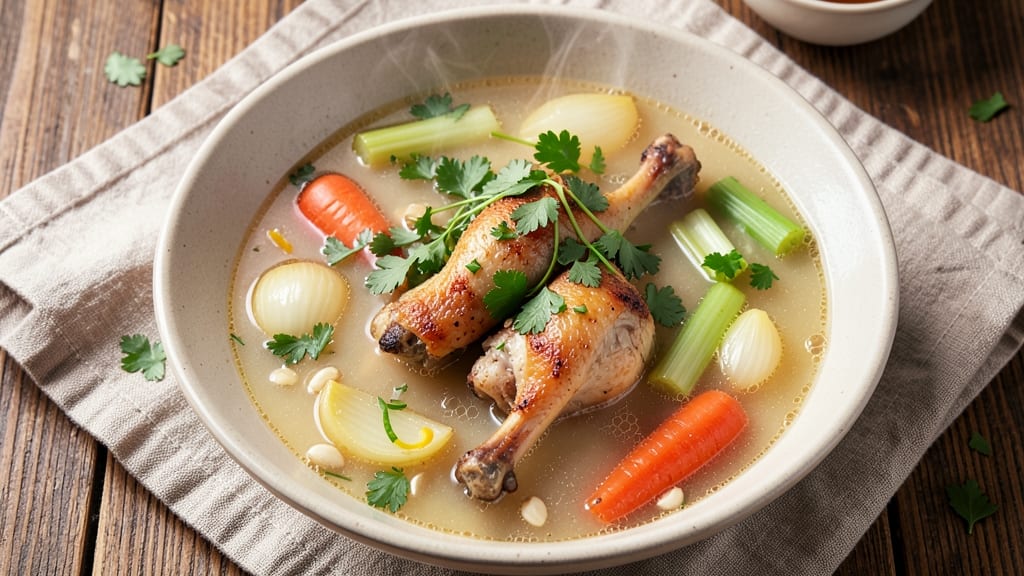
This basic chicken stock soup recipe transforms simple pantry staples into a deeply comforting, restaurant-quality bowl of soup—no fancy techniques required. The secret lies in building flavor through slow simmering, where chicken bones and vegetables infuse the broth with rich, savory depth that store-bought versions can't match.
I've perfected this one-pot method over years of testing, ensuring even beginners can achieve professional results with minimal effort.
The process begins with a flavorful base: chicken bones (or a rotisserie chicken for convenience) simmered with aromatic vegetables and herbs to extract maximum gelatin and taste.
Skimming the foam during the first 30 minutes removes impurities, while a long, gentle simmer—about 2 hours—breaks down collagen for that velvety, bone-broth-like texture.
The result is a clear, golden broth so rich it needs little more than a touch of salt and a sprinkle of fresh herbs to shine.
What sets this recipe apart is its versatility—use it as a blank canvas for any vegetables, grains, or proteins you have on hand.
The broth alone is a healing elixir, but when combined with tender chicken, fluffy rice, or crisp greens, it becomes a hearty meal that warms both body and soul. The best part? Leftovers taste even better the next day as flavors meld further.
Perfect for weeknight dinners, meal prep, or soothing colds, this soup proves homemade comfort food doesn't require complicated steps—just patience and a few key ingredients. Let's get started on creating your own batch of golden, flavorful broth that'll become a staple in your kitchen.
Ingredients for basic chicken stock soup
Simple ingredients that build restaurant-quality flavor through slow simmering and patience.
| Ingredient | Amount | Notes |
|---|---|---|
| Chicken Bones 🍗 | 2 lb | Raw or rotisserie chicken carcass |
| Yellow Onion 🧅 | 1 whole | Quartered, skin on |
| Carrots 🥕 | 4 medium | Whole, unpeeled for color |
| Celery Stalks 🌿 | 3 whole | Cut into 2-inch pieces |
| Garlic Cloves 🧄 | 4 cloves | Smashed for deeper flavor |
| Fresh Parsley 🌿 | ¼ cup | Stems included for stock |
| Fresh Thyme 🌿 | 2 sprigs | Or 1 tsp dried thyme |
| Black Peppercorns 🌶️ | 10 whole | Crushed lightly |
| Bay Leaves 🍃 | 2 whole | Dried, standard size |
| Salt 🧂 | 1 tsp | Kosher or sea salt |
| Water 💧 | 8 cups | Filtered preferred |
| White Wine Vinegar 🍷 | 1 tbsp | For brightness (optional) |
| Chicken Breast 🍗 | 1 lb | Boneless, skinless, cubed |
| Long-Grain White Rice 🍚 | ½ cup | Uncooked, for serving |
The chicken bones are the foundation—rotisserie carcasses from grocery stores work perfectly, but raw bones from a butcher give deeper flavor. Look for organic or pasture-raised if possible, though conventional works fine. Carrots and celery add natural sweetness and color, while the onion and garlic form the aromatic base. Whole spices like peppercorns and bay leaves infuse better than ground versions. Fresh herbs like parsley and thyme should be vibrant—wilted means less flavor. For the water, filtered is ideal, but tap works in a pinch if you boil it first to remove chlorine.
No fresh thyme? Dried works at one-third the amount. Out of vinegar? Lemon juice at double the quantity brightens the broth similarly. Using rotisserie chicken? Skip the extra chicken breast—just add the carcass. For a vegetarian version, swap bones for mushrooms and use vegetable broth. The rice is optional but transforms this into a complete meal—brown rice or quinoa work too if you prefer. If you're short on time, pre-cut vegetable mixes from the store save chopping effort.
This broth keeps beautifully—5 days refrigerated or 6 months frozen. For freezing, portion into ice cube trays for easy single-use servings. The rice cooks in 15 minutes while the broth reheats, making this perfect for meal prep. Leftovers actually improve as flavors meld further. Store the broth in airtight containers, leaving headspace for expansion. For extra richness, strain and reduce the broth by half before serving over rice.
Why You'll Love This Recipe
- Soup in 30 Minutes: I swear by this—just toss the bones, veggies, and water in a pot, simmer until the carrots soften, and boom. No fancy techniques, no waiting hours. That onion and celery base builds flavor while you’re still chopping lettuce for dinner.
- Umami Bomb: The garlic and caramelized onion alone make this taste like a hug, but the chicken bones? They turn the broth into liquid gold. Honestly, my picky roommate now asks for seconds—no joke.
- Meal Prep MVP: Make a big batch on Sunday, and you’ve got lunch/dinner covered for days. Freeze half for when you’re too tired to cook. (Yes, even on a Tuesday night.) The carrots and celery hold up perfectly—no sad, watery soup here.
- Budget Magic: Chicken bones are cheap, and this recipe stretches them into days of meals. Between us, I’ve fed a crowd for under $10 using this base. Plus, the leftovers taste better the next day—proof it’s worth the effort.
Step-by-step instructions for homemade chicken stock soup
Transform simple ingredients into rich, aromatic stock with this straightforward one-pot method.
Prepare the Vegetables and Aromatics
In a large stockpot, combine the 2 lb chicken bones with the 1 whole yellow onion (quartered), 4 medium carrots (left whole with skins), and 3 whole celery stalks (cut into 2-inch pieces). This vegetable combination creates a balanced flavor profile while maximizing nutrient extraction from the bones.
Add the 4 cloves garlic (lightly smashed), 2 sprigs fresh thyme, 10 whole black peppercorns (crushed), and 2 whole bay leaves. The garlic and thyme will infuse deep aromatic qualities, while the peppercorns and bay leaves add subtle complexity. Don't peel the carrots—the skins contain valuable nutrients and natural sweetness that enhances the stock's depth of flavor.
Build the Stock Foundation
Pour in the 8 cups water and add 1 tablespoon white wine vinegar (if using) and 1 teaspoon salt. The vinegar helps draw out collagen from the bones, creating a clearer, more flavorful broth. Bring everything to a rolling boil over high heat, then immediately reduce to a gentle simmer. You'll see bubbles rise steadily but not vigorously.
Skimming is critical here. Use a fine-mesh skimmer to remove any foam or impurities that rise to the surface during the first 15 minutes of simmering. This ensures your stock remains crystal clear. Keep the liquid at a steady simmer for 2 hours, maintaining a barely visible bubble—this low-and-slow approach extracts maximum gelatin and flavor from the bones.
Add Chicken Breast and Cook
After 2 hours, add the 1 lb cubed chicken breast to the pot. The chicken will absorb the rich stock flavors while cooking through. Return to a gentle simmer and cook for an additional 15-20 minutes, or until the chicken reaches an internal temperature of 165°F and is no longer pink in the center.
During this time, the chicken will break apart easily, allowing you to remove it with a slotted spoon and shred it for serving. The stock should now have a deep golden color and an intense, aromatic scent. If you find the stock is too strong at this point, you can remove the bones and aromatics, then continue simmering uncovered for another 10 minutes to reduce slightly.
Finish with Rice and Season
Strain the stock through a fine-mesh sieve into a clean pot, pressing gently on the solids to extract maximum flavor. Return the strained stock to the heat and bring to a gentle boil. Add the 0.5 cup long-grain white rice and 1 tablespoon white wine vinegar (if not added earlier). The vinegar brightens the flavors and balances the richness of the stock.
Reduce heat to low and simmer uncovered for 15-20 minutes, stirring occasionally, until the rice is tender and the liquid has thickened slightly. The soup should coat the back of a spoon but remain light enough to easily lift the rice. Taste and adjust seasoning with additional salt if needed—homemade stock often requires careful balancing at this stage.
Serve Warm with Fresh Herbs
Ladle the soup into bowls and garnish each serving with 2 tablespoons chopped fresh parsley. The parsley adds a fresh, bright contrast to the rich stock and complements the deep umami flavors. Serve immediately while hot, as the soup continues to develop in flavor as it cools.
This method transforms simple ingredients into a deeply flavorful, nourishing soup that captures all the richness of homemade bone broth. The combination of slow-simmered stock with tender chicken and perfectly cooked rice creates a comforting, balanced meal that's perfect for any occasion.
Pro Tips For Making Basic Chicken Stock Soup
- Char the Bones First: I learned this the hard way—roasting chicken bones for 20-30 minutes at 425°F (yes, even if they’re raw) deepens the flavor more than a slow simmer ever will. The crust on those bones? That’s where the richness lives.
- Cut Celery, Carrots Small: No, "chopped" isn’t specific enough—aim for ¼-inch dice for the carrots and celery. Smaller pieces cook faster, release flavor more evenly, and won’t leave you with a soup full of half-raw vegetable chunks. (Your future self will notice the difference.)
- Salt the Water Like the Sea: Skip the "lightly salted" approach—this isn’t tea. Use 1 tablespoon of kosher salt per gallon of water (or 2 teaspoons per quart). It seasons the bones properly and prevents blandness, even if you forget to add more later.
- Strain Twice, Once Hot: Use a fine-mesh strainer first to catch all the bits, then line it with cheesecloth or a coffee filter for that silky texture. Do it while the stock is still hot—cold stock clings to fibers like glue, and you’ll end up with a murky mess. (I know, I’ve done it.)
Perfect pairings for this dish
Classic Side Pairings
Start with a simple crusty baguette sliced into thick pieces and toasted with garlic-infused olive oil—just brush each slice with 2 tablespoons olive oil and 1 minced garlic clove, then toast until golden. The bread soaks up the rich broth beautifully, creating a perfect handheld pairing. 🥖
For a lighter option, serve with a mixed greens salad tossed in 1 tablespoon lemon juice, 2 tablespoons olive oil, and a pinch of salt. Add ¼ cup sliced radishes and 2 tablespoons chopped walnuts for crunch. The acidity cuts through the soup's richness while adding freshness.
Comforting Bread Options
Cornbread made with 1 cup cornmeal, 1 cup all-purpose flour, and 1 cup buttermilk pairs wonderfully with this soup. Bake at 375°F for 20 minutes and serve warm with a pat of salted butter. The slight sweetness balances the savory broth.
For a heartier choice, try cheesy garlic bread using 1 French baguette, ½ cup shredded mozzarella, and 2 tablespoons butter mixed with 1 minced garlic clove. Toast until the cheese melts and turns golden—this adds a gooey, indulgent element.
Drink Pairings
A crisp white wine like Sauvignon Blanc from New Zealand or Pinot Grigio from Italy complements the soup's brightness. The citrus notes in these wines mirror the vinegar and herbs in the broth, creating a harmonious balance. 🍷
For beer lovers, a light lager such as Peroni or Heineken works perfectly. The subtle maltiness won’t overpower the soup’s depth, while the carbonation cleanses the palate between bites. Avoid heavy stouts or IPAs—they can clash with the delicate broth.
Toppings and Garnishes
Finish each bowl with 2 tablespoons chopped fresh parsley and a drizzle of high-quality olive oil for a pop of color and freshness. For extra richness, add 1 tablespoon crumbled feta cheese or shaved Parmesan—just a light sprinkle enhances the umami flavors.
If you love heat, stir in ½ teaspoon red pepper flakes or a dash of hot sauce before serving. The spice cuts through the soup’s richness and adds a bright, zesty kick that pairs surprisingly well with the broth’s depth.
Nutrition facts
Frequently asked questions
Can I use rotisserie chicken instead of raw bones?
Rotisserie chicken works perfectly—just remove all meat from the bones first. The skin and cartilage will still infuse rich flavor into your broth. For best results, use 2-3 pounds of carcass to match the recipe's depth. The bones from a whole rotisserie chicken typically yield enough stock for 4 servings.
How do I know when the stock is ready?
Your stock is done when it has a deep golden color and the bones are falling apart after 2 hours of simmering. The broth should also smell intensely aromatic with no raw chicken scent remaining. For extra clarity, strain through a fine-mesh sieve before adding rice. If you're short on time, you can reduce simmering to 1.5 hours but flavor will be slightly less developed.
What if my stock tastes too strong?
Simmering uncovered for 10-15 extra minutes will reduce the liquid and mellow the flavor. You can also dilute with ½ cup water per quart of stock. For immediate balance, add 1 tablespoon lemon juice or 1 teaspoon vinegar—this brightens the broth without changing its texture. The rice will also help absorb excess richness when cooked in the stock.
Can I make this soup in an Instant Pot?
Yes! Use the "High Pressure" setting for 45 minutes after adding all ingredients. Release pressure naturally, then strain and proceed with the rice. The Instant Pot version cooks 30% faster but requires no skimming. For best results, add ½ cup extra water to account for pressure cooking differences. The flavor will be slightly different but still delicious.
What vegetables can I add for extra nutrition?
Spinach, kale, or Swiss chard wilt beautifully when added during the final 5 minutes of cooking. For heartier options, include ½ cup diced potatoes or ½ cup sliced mushrooms with the initial vegetables. Zucchini or bell peppers also work well—they add color and freshness without overpowering the broth. Just avoid adding hard vegetables like turnips that need longer cooking times.