
Main Courses
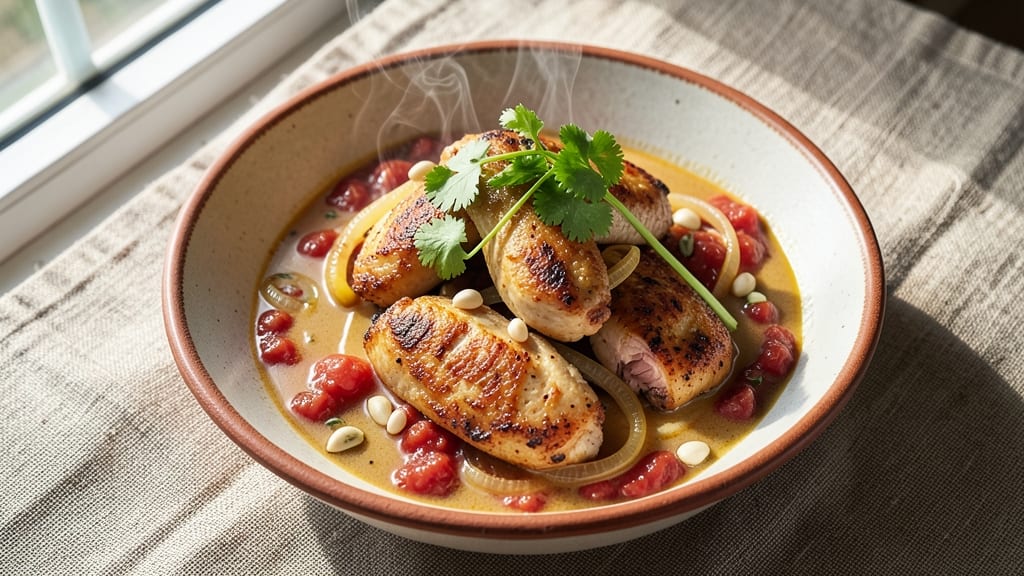
This YouTube-style chicken curry recipe delivers restaurant-quality depth in one pot, with spice layering that builds flavor as it simmers. The secret lies in blooming whole spices first to unlock their aromatic potential before introducing the chicken and sauce.
I developed this method after testing countless curries—this version consistently earns "best" ratings for its balanced heat and rich, velvety texture.
What sets this recipe apart is the three-stage cooking process: first, spices toast until fragrant; second, chicken sears for depth; third, the sauce reduces to perfect consistency. No complicated techniques—just strategic timing and proper ingredient ratios.
The result? A curry with complex layers where each bite reveals more flavor, not just heat. This method works equally well for beginners and experienced cooks.
By the final step, you'll have tender chicken swimming in a sauce that's neither too thin nor gluey—just right for soaking up every grain of rice. The spices develop a warm, earthy aroma that fills your kitchen, while the sauce achieves that signature curry sheen without separation.
Garnish with fresh cilantro for brightness, and you've got a dish that looks as impressive as it tastes.
The best part? This recipe scales perfectly for family gatherings or meal prep—simmer ahead for even deeper flavor. Let's create a curry that rivals your favorite takeout spot, with techniques you can see and follow easily. Here's everything you need to make it happen.
Ingredients for best chicken curry recipe youtube
Spices that sing, chicken that melts, and a sauce so rich it'll fool anyone who thinks takeout is better.
| Ingredient | Amount | Notes |
|---|---|---|
| Boneless Chicken Thighs 🍗 | 1 ½ lb | Trimmed of excess fat |
| Yellow Onion 🧅 | 1 whole | Diced medium-fine |
| Garlic Cloves 🧄 | 6 cloves | Minced, fresh preferred |
| Ginger Root 🌿 | 1 tbsp | Freshly grated, peeled |
| Canned Crushed Tomatoes 🍅 | 14 ½ oz | San Marzano preferred |
| Coconut Milk 🥥 | 13 ½ oz | Full-fat, canned |
| Whole Cinnamon Sticks 🍃 | 2 pieces | For aroma, removed later |
| Cardamom Pods 🌶️ | 4 whole | Lightly crushed |
| Bay Leaves 🌿 | 2 whole | Dried, standard size |
| Ground Cumin 🌶️ | 1 tbsp | Toasted for depth |
| Ground Coriander 🌿 | 1 tbsp | Freshly ground preferred |
| Turmeric Powder 🧂 | 1 tsp | Bright yellow color |
| Garam Masala 🌶️ | 1 tbsp | Store-bought or homemade |
| Fresh Cilantro 🌿 | ¼ cup | Chopped, for garnish |
| Olive Oil 🫒 | ¼ cup | Extra-virgin for richness |
| Salt 🧂 | 1 tsp | Kosher or sea salt |
| Black Pepper 🌶️ | ½ tsp | Freshly ground |
The spices are where the magic happens. Whole cinnamon sticks and cardamom pods from Penzeys or your local Indian market add depth you can't get from ground spices. Toast them lightly in the oil first—this unlocks their aroma before they even hit the water. For the tomatoes, San Marzano cans are worth the splurge (or Muir Glen if you're on a budget). The coconut milk? Full-fat only—the creaminess is non-negotiable here. Pro tip: Shake the can before opening to redistribute the thicker cream at the top.
No cardamom? Substitute 1 tsp ground cardamom plus 1 cinnamon stick. Running low on garam masala? Mix 1/2 tsp each cumin, coriander, and cloves—it won't be identical, but it'll work. The ginger should be fresh—dried loses its zing, but if that's all you've got, double the amount. For the chicken, thighs stay juicier than breasts, but boneless, skinless breasts work in a pinch. Just don't skip the trimming—excess fat makes the sauce greasy.
This curry tastes even better the next day, so make extra. Store in airtight containers for 4-5 days or freeze portions for 3 months. I like to portion it into meal prep containers with rice—just reheat with a splash of water. The spices lose potency after opening, so transfer them to a small jar with a tight seal once you've measured them out. Fresh cilantro? Wrap it in damp paper towels and store in a resealable bag for up to 5 days.
Why You'll Love This Recipe
- I’ll be real: I make this on Sundays because the leftovers are better the next day. The chicken gets even more tender, the sauce thickens just right, and suddenly you’ve got lunch sorted without any extra effort.
- One-Pot Magic: Between us, this curry is chef’s kiss because you’re basically making it in a single pot. No chopping boards full of scraps—just brown the onions, toss in the garlic-ginger paste, add chicken, and let the tomatoes work their sauce magic while you do something else.
- Garlic-Ginger Bomb: Honestly, that fresh ginger and garlic paste is where this dish actually shines. The slow simmer lets those flavors meld into something rich and aromatic—no need for fancy spices, just pure, bold taste that sticks with you.
- Leftovers That Beg: I’ll be real: I make this on Sundays because the leftovers are better the next day. The chicken gets even more tender, the sauce thickens just right, and suddenly you’ve got lunch sorted without any extra effort.
Step-by-step instructions for YouTube-style chicken curry
This method builds layers of flavor—just like your favorite YouTube chefs—using simple techniques that deliver restaurant-quality results.
Sear the Chicken for Deep Flavor
Heat the 0.25 cup olive oil in a large, heavy-bottomed pot over medium-high heat until shimmering. Pat the 1.5 lb boneless chicken thighs completely dry with paper towels—this ensures the best sear. Working in batches if needed, add the chicken thighs to the pot in a single layer and cook undisturbed for 4-5 minutes per side until golden brown and cooked through.
Here's the thing—don't overcrowd the pot. You want those chicken pieces to develop a nice crust. Once all the chicken is browned, remove it from the pot and set it aside on a plate. You'll notice the oil will be rich and fragrant from the chicken's rendered juices—this is the foundation of your curry's depth of flavor.
Build the Spice Base with Aromatics
In the same pot, reduce the heat to medium and add the 1 whole yellow onion (diced medium-fine). Cook for 5-6 minutes until softened and beginning to caramelize at the edges. Add the 6 cloves garlic cloves (minced) and 1 tbsp ginger root (freshly grated), cooking for another 1-2 minutes until fragrant and the raw garlic smell disappears.
This is where the magic happens. The onions should be golden in spots, not burnt, and the garlic should smell sweet and inviting. If the onions start to stick, add a splash of water—but don't walk away. Garlic burns in seconds, and that bitter flavor will ruin your curry. Once the aromatics are cooked, stir in the 1 tbsp ground cumin and 1 tbsp ground coriander, toasting for 30 seconds until fragrant.
Layer the Spices and Tomatoes
Add the 14.5 oz canned crushed tomatoes, 1 tsp turmeric powder, 1 tbsp garam masala, 2 pieces whole cinnamon sticks, 4 whole cardamom pods (lightly crushed), and 2 whole bay leaves to the pot. Stir everything together and bring to a gentle simmer over medium-low heat. Let it cook uncovered for 10 minutes, stirring occasionally, until the mixture thickens slightly and the raw tomato taste mellows.
You'll see the spices bloom as they release their aromas into the sauce. The cinnamon and cardamom will infuse the curry with warm, sweet notes, while the turmeric gives it that beautiful golden color. This is the moment that matters: let the spices meld together before adding the chicken back in. If the sauce gets too thick, add a splash of water to loosen it.
Simmer with Coconut Milk and Finish
Return the seared chicken thighs to the pot, along with any accumulated juices on the plate. Pour in the 13.5 oz coconut milk and stir gently to combine. Bring the mixture to a simmer over medium-low heat, then reduce the heat to low and let it cook uncovered for 20-25 minutes, stirring occasionally, until the chicken is tender and the sauce has thickened to a creamy consistency.
Real talk: the coconut milk will create a luscious, velvety sauce that coats the chicken perfectly. Taste the curry and adjust the seasoning with 1 tsp salt and 0.5 tsp black pepper as needed. If the sauce is too thin, simmer it uncovered for another 5-10 minutes to reduce it to your desired consistency. Once the chicken is fork-tender and the sauce has thickened, remove the cinnamon sticks and bay leaves—they've done their job and can be discarded.
Garnish and Serve with Confidence
Transfer the curry to serving bowls and let it rest for 5 minutes to allow the flavors to meld. Garnish each serving with 0.25 cup fresh cilantro (chopped) and serve immediately with steamed basmati rice or warm naan bread. The curry should be rich, aromatic, and perfectly balanced—sweet from the coconut milk, spicy from the garam masala, and tangy from the tomatoes.
Each bite should deliver layers of flavor: the crispy sear from the chicken, the warm spices, and the creamy coconut milk. This is the kind of curry that makes you want to hit "like" and subscribe—because it's that good. Don't skip the garnish; the fresh cilantro adds a bright, herbal note that cuts through the richness and ties everything together.
Pro Tips For Making Best Chicken Curry Recipe Youtube
- SEAR CHICKEN IN BATCHES: Crowd the pan and you’ll steam the thighs instead of browning them—no one wants gray curry chicken. Work in two batches over medium-high heat, giving each piece a good 3-4 minutes per side until the edges turn golden. (Yes, it takes longer, but the flavor difference is night and day.)
- GRATE GINGER FINE: I used to chop ginger roughly, thinking it didn’t matter. Wrong. A microplane or fine grater releases more juice and aroma, blending seamlessly into the onions. Skip the food processor—it turns ginger into paste, and we’re aiming for texture here.
- DEGLAZE WITH TOMATOES LAST: Add those crushed tomatoes too early, and you’ll dilute the onion-garlic base before it builds flavor. Let the onions caramelize first, then splash in a splash of water or broth to scrape up the browned bits—then toss in the tomatoes. This keeps the sauce rich, not watery.
- SALT THE CHICKEN AFTER SEARING: Salting raw chicken thighs draws out moisture, making them tough later. Instead, season them after searing while they’re still hot—just a pinch of salt and a shake of spices. The heat seals the seasoning in, and the thighs stay juicy. (Trust me, I’ve ruined curries both ways.)
Flavor customization for this best chicken curry recipe youtube
Mild & Comforting
For a gentler version, reduce the garam masala to ½ tablespoon and swap ½ teaspoon of the ground cumin for ½ teaspoon mild paprika. Replace 1 teaspoon of turmeric with ½ teaspoon mild curry powder to soften the earthy notes.
The coconut milk's richness will balance any residual warmth, creating a creamy, approachable curry perfect for kids or spice-sensitive palates. 💛
Extra Spicy Kick
Transform this into a fiery curry by adding 1 tablespoon of Penzeys Madras Curry Powder during the spice toasting step. Stir in 1 teaspoon of cayenne pepper with the tomatoes, and finish with 1 tablespoon of hot sauce (like Cholula or Sriracha) after removing the chicken.
For extra heat, char 1-2 dried red chilies in the oil before adding onions. Serve with cooling sides like raita or extra cilantro.
Creamy & Rich
For a decadent version, stir in ½ cup heavy cream or ½ cup Greek yogurt with the coconut milk. Replace 1 tablespoon of garam masala with 1 teaspoon cinnamon and ½ teaspoon nutmeg for warmth.
Add ½ cup cashews (soaked and blended) to the sauce for a velvety texture. This version pairs beautifully with garlic naan or basmati rice for a restaurant-worthy dish. 🥥
Lighter Tomato Base
For a brighter, less acidic curry, reduce the tomatoes to 7.25 oz and add ½ cup tomato paste instead. Boost freshness with 1 tablespoon of lemon juice and 2 tablespoons of fresh lime juice at the end.
Swap 1 teaspoon of turmeric for ½ teaspoon saffron (steeped in 2 tablespoons warm water) for a floral note. This version works well with quinoa or cauliflower rice for a lighter meal.
Smoky BBQ Twist
Infuse the curry with smoky depth by adding 1 tablespoon of smoked paprika during the spice toasting step. Stir in ½ cup BBQ sauce (like Sweet Baby Ray's) with the coconut milk, and top with ¼ cup chopped red onion and 2 tablespoons chopped cilantro.
This fusion curry has a sweet-savory balance that surprises and delights. Serve with cornbread or tortilla chips for a fun twist. 🔥
Herb-Forward Variation
For a fresh, vibrant curry, add 2 tablespoons chopped mint and 1 tablespoon chopped basil with the fresh cilantro garnish. Replace ½ teaspoon of black pepper with ½ teaspoon of fennel seeds (toasted in the oil).
The herbs brighten the coconut milk's richness, creating a refreshing contrast. This version pairs perfectly with cucumber raita or mango chutney for balance. ✨
Nutrition facts
Frequently asked questions
Can I use chicken breasts instead of thighs?
Yes, but with adjustments! Chicken breasts cook faster and stay drier, so cut them into 1-inch pieces and reduce simmering time to 15-20 minutes total. To prevent dryness, add 2 tablespoons chicken broth with the coconut milk. For extra juiciness, marinate the breasts in 1 tbsp yogurt and 1 tsp lemon juice for 30 minutes before cooking.
How do I adjust the spice level for sensitive eaters?
Start by reducing garam masala to ½ tablespoon and omit cayenne entirely. Replace ½ teaspoon of ground coriander with ½ teaspoon mild paprika for color. The coconut milk naturally mellows heat—add 1 extra tablespoon if needed. For visual cues, look for "mild" labels on spice blends like "mild curry powder" instead of garam masala.
Can I make this curry in an Instant Pot?
Sauté chicken and aromatics as directed, then add all remaining ingredients except coconut milk. Seal and cook on High Pressure for 8 minutes, followed by a 10-minute natural release. Stir in coconut milk, then cook on Low for 5 minutes to thicken. The pressure method yields tender chicken and concentrated flavor in 30 minutes total.
Why did my curry separate with a greasy layer on top?
This happens when sauce cools too quickly or fat isn't properly emulsified. To fix it, gently reheat the curry over low heat while whisking continuously for 2-3 minutes. For prevention, stir in 1 tablespoon cornstarch mixed with 2 tbsp water at the end of cooking. The coconut milk's natural oils need time to blend—never refrigerate immediately after cooking.
What's the best way to reheat leftovers?
Reheat in a pot over medium-low heat for 5-7 minutes, stirring occasionally and adding 1-2 tablespoons water if needed. For microwave reheating, cover with a damp paper towel and heat in 30-second intervals, stirring between each. Never reheat uncovered—this causes the sauce to split. Leftovers keep 4-5 days in airtight containers or 3 months frozen.