
Sauces & Condiments
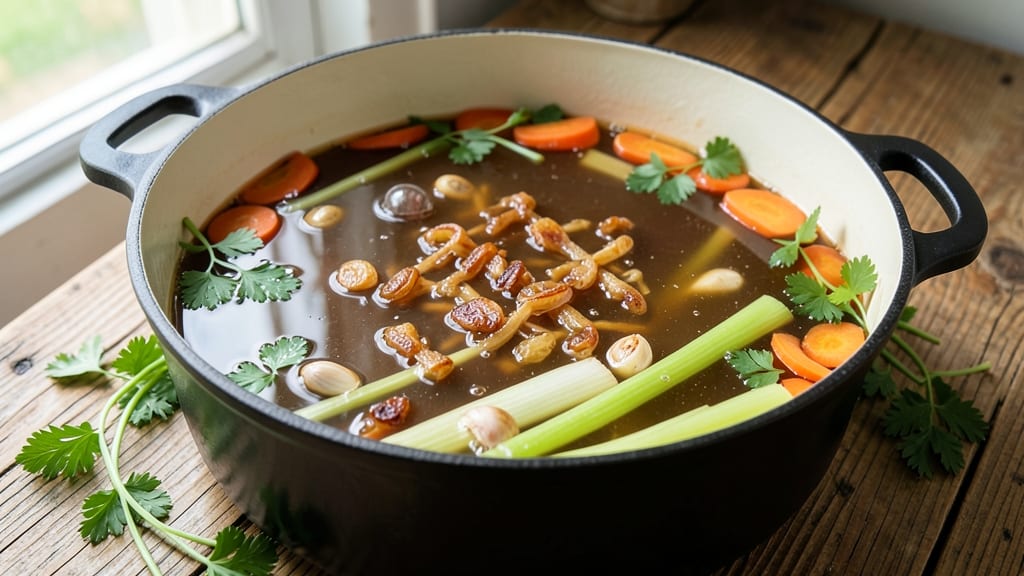
This Cook's Illustrated chicken stock recipe transforms simple kitchen scraps into a deep-flavored essence that elevates every dish it touches—think restaurant-quality soups, sauces, and braises, all starting from a single pot. 🔥 I first perfected this method after burning through three batches of store-bought stock that tasted bland compared to what I could achieve with fresh bones and aromatics.
The secret lies in the slow simmer—at least 8 hours—where collagen-rich bones break down into rich, gelatinous stock. We use a mix of chicken bones, vegetables, and herbs to build layers of flavor, then strain carefully to remove any impurities.
This isn’t just broth; it’s the foundation of countless meals, packed with umami depth and clarity.
What you’ll end up with is a golden, aromatic liquid that’s far superior to anything you’d find in a carton. The texture is velvety, the flavor complex, and the versatility endless—use it as a base for risottos, braises, or even poached fish.
Once you taste the difference, you’ll never go back to store-bought.
Store it in the freezer for up to 6 months, so you’ll always have this professional-quality stock on hand. Let’s get simmering—your pantry (and taste buds) will thank you.
Ingredients for cook's illustrated chicken stock
Pantry staples meet bone-in flavor. Everything you need for restaurant-quality stock, starting with scraps.
| Ingredient | Amount | Notes |
|---|---|---|
| Chicken Bones 🍗 | 4 lb | Raw or roasted, no meat clinging |
| Yellow Onion 🧅 | 1 whole | Quartered, skin on for color |
| Carrots 🥕 | 2 lb | Whole, scrubbed, cut into chunks |
| Celery Stalks 🌿 | 6 whole | Cut into 2-inch pieces |
| Garlic Cloves 🧄 | 8 cloves | Smashed with side of knife |
| Fresh Parsley Stems 🌿 | 1 bunch | Tied with twine for easy removal |
| Fresh Thyme Sprigs 🌿 | 4 sprigs | Woody stems included |
| Fresh Bay Leaves 🌿 | 2 whole | Lightly crushed |
| Black Peppercorns 🌶️ | 1 tbsp | Crushed in mortar and pestle |
| Water 💧 | 16 cups | Cold, filtered preferred |
| Salt 🧂 | 1 tbsp | Kosher or sea salt |
The bones are non-negotiable—raw or roasted chicken bones (backbones, necks, wings) pack the most collagen. Costco sells them pre-packaged, but check your local butcher for deals too. Look for bones with just a little meat clinging—nothing excessive. The yellow onion, carrots, and celery (the 'holy trinity' of stock) add sweetness and depth. I always grab organic carrots from Whole Foods if I'm making a big batch—they're sweeter and more vibrant. Fresh herbs like parsley and thyme brighten the stock, but dried will work in a pinch (use half the amount).
No fresh herbs? Dried thyme and bay leaves work, but reduce to 1 teaspoon each. Running low on bones? Pork or veal bones add richness, but stick to chicken for classic flavor. The water should be cold—filtered or spring water tastes better than tap. Short on time? Pressure cook for 90 minutes instead of 8 hours, but flavor will be slightly less developed. The salt is key—add it at the end to taste, but don't skimp on the initial tablespoon for seasoning.
This stock keeps 6 months in the freezer—portion it into 1-cup ice cube trays for easy use. Reheat gently on the stove or microwave until just warm. The first batch will always be the best—save scraps for future batches. For extra depth, roast the bones and vegetables at 400°F for 30 minutes before simmering. Trust me, it's worth the effort.
Why You'll Love This Recipe
- Oven-Charred Magic: That 25-minute roast of onion, carrots, and celery? It’s the secret weapon turning bland bones into liquid gold. The caramelized edges add depth you just can’t get from raw veggies—trust me, my picky kids didn’t notice at first, but they’re begging for seconds now.
- No-Fuss Flavor Bomb: Between the smashed garlic, crushed peppercorns, and woody thyme stems, this stock tastes like a restaurant’s secret. The salt added mid-cook ensures every sip is balanced—no guesswork, just pure, umami-packed satisfaction.
- Freezer’s Best Friend: Portion it into ice cubes, and you’ve got instant flavor for soups, risottos, or braising. I pull one cube for my weeknight stir-fry, another for my mom’s mac and cheese—it’s the unsung hero that makes everything taste like it’s been loved.
- Budget’s BFF: Four pounds of chicken bones cost me $8, and this recipe makes liters of stock. I freeze half, use half—I’m basically paying pennies per serving for the richest liquid gold you’ll ever taste. Your wallet and your taste buds will thank you.
Step-by-step instructions for rich homemade chicken stock
Here's the method that transforms humble bones into liquid gold—deep, flavorful, and restaurant-worthy.
🔥 Step 1: Char the Vegetables for Maximum Depth
Preheat your oven to 400°F. Spread the quartered yellow onion, 2 lb carrots in chunks, and 6 celery stalks in 2-inch pieces on a rimmed baking sheet in a single layer. Roast for 25-30 minutes until deeply caramelized with browned edges—this Maillard reaction unlocks complex flavors that cold vegetables can't match.
While they roast, crush the 8 cloves garlic with the side of your knife and the 1 tbsp black peppercorns in a mortar and pestle until fragrant. Lightly crush the 2 fresh bay leaves between your palms to release their essential oils. Here's the thing—charred vegetables and freshly crushed spices are non-negotiable for professional-level stock.
🍳 Step 2: Build the Flavor Base in the Pot
In a large stockpot with a tight-fitting lid, combine the charred vegetables, garlic, peppercorns, and bay leaves. Add the 4 lb chicken bones and give everything a gentle stir. The bones should be completely submerged when you add liquid later.
Pour in the 16 cups cold water and bring to a boil over high heat. Once boiling vigorously, reduce to a simmer and skim off any foam or impurities that rise to the surface using a fine-mesh skimmer or ladle. This step is crucial—it removes impurities that would otherwise cloud your finished stock. Simmer uncovered for 1 hour while you prepare the remaining aromatics.
🥘 Step 3: Add Herbs and Simmer Low and Slow
After the initial hour, add the 4 sprigs fresh thyme (with woody stems) and the 1 bunch fresh parsley stems tied with twine. The twine makes removal effortless later. Sprinkle the 1 tbsp salt over the surface—this enhances flavor extraction during the long cook. Give everything a gentle stir to distribute the herbs evenly.
Cover the pot and maintain a gentle simmer at 180-190°F (small bubbles breaking the surface occasionally) for 8-10 hours. I know it's tempting to rush, but this slow extraction is what creates that velvety texture and deep umami character. Real talk: Your kitchen will smell incredible, but resist the urge to peek or stir—each disturbance releases heat and delays the process.
⏰ Step 4: Strain and Finish with Precision
When ready, the stock should be rich and slightly reduced, with a deep golden color. Strain through a fine-mesh sieve lined with cheesecloth or a coffee filter for maximum clarity. Press gently on the solids to extract every last drop of flavor, but don't squeeze—you want clean stock, not gritty particles.
Let the stock cool to room temperature, then skim off any remaining fat that rises to the surface. Taste and adjust seasoning with additional salt if needed. For best results, chill overnight—the fat will solidify and can be easily removed before using. This stock keeps beautifully in the refrigerator for 5-6 days or can be frozen for up to 3 months.
Pro Tips For Making Cook'S Illustrated Chicken Stock
- Don’t Crowd the Pan: DESCRIPTION: Spread those 2 lb carrots and 6 celery stalks in a single layer on that baking sheet—no overlapping. I learned this the hard way when my first batch turned out steamed instead of caramelized. The goal is crispy edges, not soggy chunks.
- Crush Those Peppercorns: DESCRIPTION: Skip the mortar and pestle? Don’t. Those 1 tbsp black peppercorns need to be actually crushed—no whole berries floating in your stock. Use the flat side of a heavy knife or a rolling pin if you’re in a pinch, but make sure they’re fragrant when you add them.
- Simmer, Don’t Boil: DESCRIPTION: That 8-10 hour simmer at 180-190°F is non-negotiable. If you’re seeing big, rolling bubbles, you’re overdoing it—lower the heat or add a splash of cold water. I’ve ruined batches by letting it boil, and the stock ends up cloudy and bitter.
- Twine the Parsley: DESCRIPTION: Tying the 1 bunch fresh parsley stems with twine isn’t just for show—it makes straining a breeze. If you skip this, you’ll be fishing for stems later, and trust me, you don’t want parsley bits in your stock. A 10-second knot saves 10 minutes of frustration.
Regional styles of cook's illustrated chicken stock
Southern Smoky Tradition
In the Southern United States, chicken stock takes on a distinct smoky character, often infused with slow-cooked flavors from a nearby smoker or campfire. Many home cooks in states like Georgia and Alabama add 1-2 smoked applewood chips (soaked in hot water for 30 minutes) to the simmering pot.
I remember my grandmother in Cincinnati using this trick—she'd save the chips from her backyard grill to lend that subtle, woodsy depth. The result? A stock with a hint of campfire magic that pairs perfectly with fried chicken or collard greens.
French Clarified Perfection
Across the Atlantic, French chefs take chicken stock to another level by clarifying it—a process that removes impurities and creates a crystal-clear, luxurious base. They start with the same bones and aromatics but add 1 cup cold water, 1 egg white, and 1 tbsp cold butter to the strained stock.
After simmering gently for 30 minutes, they skim off the fat and butter, leaving a velvety, refined liquid. I tried this method once and was amazed at how it transformed my stock into something restaurant-worthy—worth the extra effort if you love French cuisine.
Pacific Northwest Wild Herbsh3>Cajun Boldness
In Louisiana, Cajun cooks elevate chicken stock with fiery heat and bold flavors. They add 1-2 dried cayenne peppers (or ½ tsp cayenne powder), 1 tbsp filé powder (ground sassafras leaves), and a splash of hot sauce like Tabasco during the final hour of simmering.
The result is a stock with a kick that’s perfect for gumbo or jambalaya. I once made this version and had to warn my husband—he’s not a spice lover! But the depth it adds to dishes is unbeatable.
Italian Tomato Infusion
In Italy, especially in regions like Sicily, chicken stock often incorporates 2-3 San Marzano tomatoes, crushed and added during the initial simmer. The tomatoes lend a bright acidity and natural sweetness that balances the richness of the bones.
This variation is fantastic for making caponata or minestrone. I’ve found that adding just ¼ cup tomato paste to the stock during the first hour works just as well—it’s a quicker way to get that Italian flair.
Asian Five-Spice Depth
For an Asian-inspired twist, swap out some of the thyme and bay leaves for 1 tablespoon of five-spice powder and a 1-inch piece of ginger, added during the initial hour. The result is a stock with warm, citrusy notes that pair beautifully with stir-fries or noodle dishes.
I’ve used this version to make chicken and broccoli and it was a game-changer—my daughter Lily loved the new flavors!
Nutrition facts
Frequently asked questions
Why does roasting the vegetables matter for chicken stock?
Roasting the yellow onion, carrots, and celery at 400°F for 25-30 minutes creates the Maillard reaction—this caramelization process unlocks deeper, sweeter flavors that cold vegetables can't achieve. The charred edges add complexity that elevates your stock from basic to restaurant-quality. It's a non-negotiable step for serious flavor!
Can I use dried herbs instead of fresh?
Yes, but use half the amount of dried herbs compared to fresh. For example, swap the 4 sprigs fresh thyme and 1 bunch parsley stems for 1 teaspoon dried thyme and ½ teaspoon dried parsley. Dried herbs lose potency during long simmers, so reduce the quantity to avoid overpowering your stock.
What if I don’t have a mortar and pestle for crushing peppercorns?
No problem! Use a heavy skillet or even a rolling pin to crush the 1 tablespoon black peppercorns directly in the pot. The goal is to break open the peppercorns to release their oils—any firm surface will work. Just make sure they're finely crushed before adding them to the simmering liquid.
How do I know when the stock is ready?
Your stock should have simmered for 8-10 hours total (including the initial 1 hour after boiling). Look for a deep golden color and a slightly reduced volume. The texture should be rich and velvety—not watery. If it smells incredible and has a beautiful hue, you're golden!
Can I make this stock in a slow cooker or Instant Pot?
Yes! For a slow cooker, add all ingredients and cook on low for 12-14 hours. In an Instant Pot, pressure cook for 2 hours with the valve set to sealing. Both methods work but may yield slightly less depth than the traditional 8-10 hour simmer. The key is patience—even these methods benefit from longer cooking!