
Main Courses
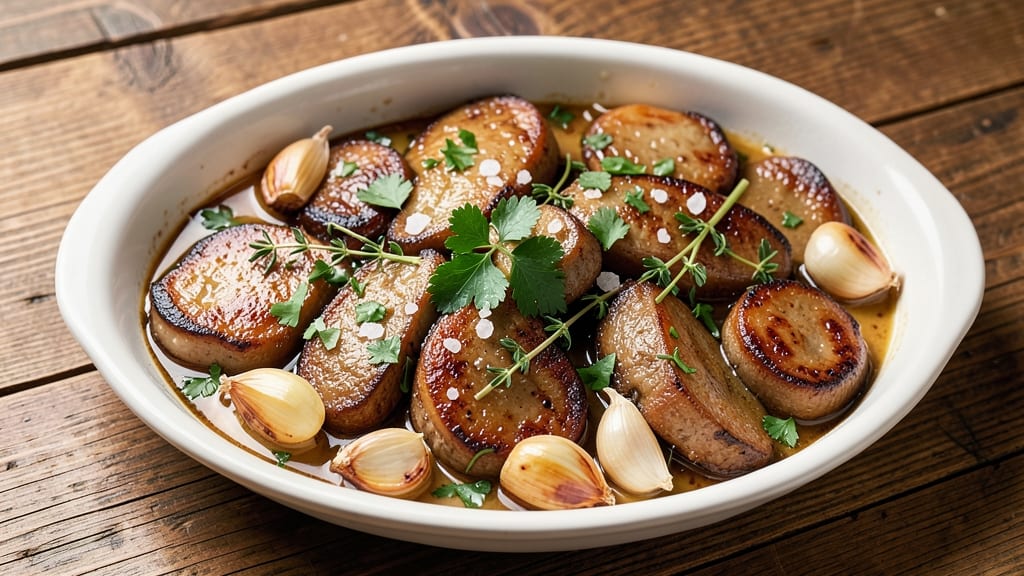
This baked chicken livers recipe transforms humble offal into a luxurious, earthy centerpiece with a pan-seared crust that locks in rich flavors. The secret lies in proper preparation—soaking to tenderize, careful trimming, and a high-heat sear before baking—creating a dish that balances gamey depth with buttery richness.
What makes this technique special is the butter-basting method that builds a golden crust while keeping the interior juicy and velvety.
Unlike traditional braised versions, this approach delivers a crispy exterior and tender interior in just 30 minutes, making it perfect for weeknight dinners that feel special. The recipe uses simple ingredients—chicken livers, butter, garlic, and herbs—but the method elevates them into something restaurant-worthy.
No special equipment is needed beyond a skillet and baking sheet, though a meat thermometer ensures perfect doneness every time.
By the time you pull these from the oven, you'll have chicken livers with a caramelized crust that shatters at the touch and a moist, flavorful center that melts in your mouth. The aroma alone transforms any meal into an occasion-worthy experience.
Serve with roasted potatoes or a crisp green salad to balance the richness, or drizzle with a tangy pan sauce for extra depth.
This method works equally well for chicken hearts or a mix of offal, making it versatile for different dietary preferences. The key is patience during preparation—proper soaking and trimming remove bitterness while preserving texture.
Whether you're a home cook looking to expand your repertoire or a seasoned chef refining techniques, this recipe delivers professional results with minimal fuss.
Ingredients for baked chicken livers
Simple ingredients elevated by technique: livers, butter, and herbs create luxurious crusts.
| Ingredient | Amount | Notes |
|---|---|---|
| Chicken Livers 🍗 | 1 ½ lb | Fresh, trimmed of connective tissue |
| Unsalted Butter 🧈 | ½ cup | Cold, cut into 1-inch cubes |
| Garlic Cloves 🧄 | 6 cloves | Minced, skin removed |
| Fresh Thyme Leaves 🌿 | ¼ cup | Chopped, stems removed |
| Fresh Parsley Leaves 🌿 | ¼ cup | Chopped, for garnish |
| Diamond Crystal Kosher Salt 🧂 | 1 ½ tsp | For soaking and seasoning |
| Black Peppercorns 🌶️ | ½ tsp | Freshly cracked |
| Extra-Virgin Olive Oil 🫒 | 2 tbsp | For searing |
| Cold Water 💧 | 4 cups | For soaking livers |
| Lemon Juice 🍋 | 1 tbsp | Freshly squeezed |
| All-Purpose Flour 🌾 | 2 tbsp | For dredging if needed |
The chicken livers are the star—freshness is non-negotiable. Look for vibrant, deep red livers at your local butcher or high-end grocery store like Whole Foods, avoiding any with grayish hues or strong ammonia scent. Trim all connective tissue and membranes meticulously, as these contribute bitterness. For the best texture, soak them in cold water with lemon juice for 30 minutes before cooking—this tenderizes while removing residual blood. The butter should be European-style (82% fat content) for superior browning, available at specialty markets or online retailers like Murray's Cheese.
No fresh thyme? Dried thyme at one-third the amount works in a pinch, though fresh offers superior aroma. Substitute parsley with cilantro or chives if needed, though parsley's bright note complements the dish best. For the butter cubes, cold is critical—they should sizzle dramatically when hitting the hot pan. The olive oil should be light, not robust, to avoid overpowering the delicate flavors. If your livers are particularly fibrous, a quick flour dredge before searing creates an extra-crisp crust, though this step is optional for purists.
Store any unused butter cubes in an airtight container in the freezer for up to 3 months, while fresh herbs should be wrapped in damp paper towels and refrigerated for 5-7 days. The livers themselves are best used immediately, but prepped livers can be refrigerated in a sealed container for 24 hours before cooking. This recipe makes enough for two meals—double the batch, freeze half, and thaw overnight in the fridge for restaurant-quality results anytime.
Why You'll Love This Recipe
- Foolproof Timing: I swear by this recipe for nights when I’m staring at the clock at 7:30. Fifteen minutes of prep, then hands-off baking—no frying, no flipping, just golden-brown perfection while you sip wine or fold laundry.
- Rich Umami Magic: That butter-basted garlic and thyme? It transforms chicken livers from "meat I avoid" to "why didn’t I try this sooner." The parsley at the end brightens the deep, savory richness—like a hug for your taste buds.
- Weeknight to Weekend: Use the leftovers for breakfast hash (yes, really) or pack them in lunchboxes. My kids groan when they see them but inhale them cold the next day—proof they’re sneaky good for any meal.
- Budget Powerhouse: A pound of livers feeds four for under $10. Honestly, I buy them in bulk, freeze what I won’t use, and treat myself to this recipe when I’m broke but craving something special. (Between us, it’s my go-to for date nights too.)
Step-by-step instructions for baked chicken livers with a rich pan-seared crust
Transform delicate chicken livers into a luxurious dish with a crispy exterior and tender interior.
Soak and Prepare the Chicken Livers
Place the 1.5 lb chicken livers in a large bowl and cover them completely with the 4 cups cold water. Add the 1 tbsp lemon juice and 1.5 tsp Diamond Crystal kosher salt, then stir gently to combine. Soaking removes any bitterness and tenderizes the meat. Let them soak for 30 minutes, stirring occasionally.
After soaking, drain the livers and rinse them thoroughly under cold water. Pat them completely dry with paper towels—this step is critical for achieving a crispy crust later. Remove any remaining connective tissue or silver skin, as these can make the livers tough. Once dry, place them in a bowl and set aside.
Create the Herb Butter Mixture
In a small bowl, combine the 0.5 cup cold unsalted butter (cut into 1-inch cubes), 6 cloves minced garlic cloves, 0.25 cup chopped fresh thyme leaves, and 0.5 tsp freshly cracked black peppercorns. Mix gently with a fork until the butter is softened and the herbs are evenly distributed. This mixture will infuse the livers with deep, aromatic flavors.
Set the herb butter aside at room temperature while you prepare the livers for cooking. The butter should be soft enough to spread easily but not melted—this ensures it coats the livers evenly during searing. If it feels too cold, let it sit for another 5 minutes before proceeding.
Sear the Livers for a Crispy Crust
Heat a large oven-safe skillet over medium-high heat until it's very hot. Add the 2 tbsp extra-virgin olive oil and swirl to coat the bottom evenly. Working in batches to avoid overcrowding, add the chicken livers in a single layer. Let them sear undisturbed for 2-3 minutes per side until they develop a deep golden-brown crust.
During the last 30 seconds of searing, press down gently on the livers with a spatula to ensure even contact with the pan. This prevents curling and guarantees a crispy exterior. Once browned, transfer the livers to a plate and set aside. Repeat with the remaining batches, keeping the cooked livers warm.
Finish with Herb Butter and Bake
Return the skillet to the stovetop and reduce the heat to medium-low. Add the herb butter mixture and let it melt, stirring occasionally for 1-2 minutes until it becomes fragrant. The butter should foam slightly but not brown. Pour the melted herb butter evenly over the seared livers, coating them completely.
Transfer the skillet to a preheated 400°F oven and bake for 8-10 minutes, or until the livers are cooked through and the butter has turned golden and bubbly. They’re done when the internal temperature reaches 160°F—use an instant-read thermometer to check. The livers should be tender but not rubbery.
Rest and Serve with Garnish
Remove the skillet from the oven and let the livers rest for 5 minutes before serving. This allows the juices to redistribute, ensuring each bite is moist and flavorful. Garnish each serving with 0.25 cup chopped fresh parsley leaves and a drizzle of any remaining herb butter from the skillet.
Serve the livers immediately, accompanied by crusty bread or roasted potatoes to soak up the rich, herby sauce. The contrast of the crispy crust and tender interior makes this dish unforgettable—perfect for a special occasion or a gourmet weeknight meal.
Pro Tips For Making Baked Chicken Livers
- USE COLD LIVERS: Pull them straight from the fridge—cold livers render fat cleaner and stay juicier. I learned this the hard way after greasy, overcooked batches when I skipped this step. Pat them dry first, though, or you’ll steam them instead of sear them.
- SMASH THE GARLIC: Mince it fine, then press each clove flat with the side of your knife. This releases more flavor into the butter without turning the dish bitter. (Yes, it looks like overkill, but trust me—your taste buds will notice.)
- WATCH THE THYME: Don’t just toss in sprigs—strip the leaves and scatter them after baking. The heat will crisp them slightly, adding texture and aroma. If you add them early, they’ll turn to mush and disappear.
- SAVE THE FAT: Drain the livers after searing, but save that golden butter-garlic-thyme fat in a jar. It’s perfect for finishing the dish or future pan sauces. (I used to toss it—now I hoard it like liquid gold.)
Creative variations of this dish
French Classic Style
Transform this recipe into a classic sauté de foie de volaille by serving the livers with a red wine reduction. Deglaze the skillet after searing with ½ cup dry red wine (like Bordeaux or Pinot Noir) and reduce by half before adding the livers.
Finish with 1 tbsp cold butter to create a glossy sauce. Garnish with chopped chives and serve with buttery egg noodles or roasted fingerling potatoes. 🍷
Spanish Chorizo Twist
For a bold Spanish-inspired version, wrap each liver in thinly sliced Spanish chorizo before searing. The chorizo adds smoky depth and a slight kick. After baking, drizzle with a smoky paprika-infused pan sauce made by deglazing the skillet with 2 tbsp sherry vinegar and 1 tbsp tomato paste.
Pair with garlic aioli and crusty pan con tomate for a tapas-style feast. 🌶️
Italian Pan Sauce
Elevate the dish with an Italian touch by finishing the livers with a lemon-garlic pan sauce. After baking, deglaze the skillet with ¼ cup dry white wine and 2 tbsp chicken stock, then whisk in 1 tbsp lemon zest and 1 tbsp capers.
Toss the livers in the sauce before serving over creamy polenta or wilted spinach. Garnish with toasted pine nuts for crunch. 🍋
Moroccan Spiced Crust
Infuse the livers with warm Moroccan flavors by mixing 1 tsp ground cumin, ½ tsp ground coriander, and ¼ tsp cinnamon into the herb butter.
After searing, sprinkle the livers with the spiced butter before baking. Serve with a side of harissa-roasted carrots and warm couscous for a fragrant, aromatic dish. 🌿
Asian-Inspired Ginger-Glaze
Give the livers an Asian flair by tossing them in a ginger-soy glaze after baking. Mix 2 tbsp soy sauce, 1 tbsp honey, 1 tbsp grated fresh ginger, and 1 tsp rice vinegar.
Brush the glaze over the livers in the final 2 minutes of baking. Serve with jasmine rice and quick-pickled cucumbers for a refreshing contrast. 🌱
Cheesy Stuffed Livers
For a decadent twist, stuff the livers with a herb cheese filling before baking. Mix ¼ cup cream cheese with 1 tbsp chopped dill and 1 tbsp chopped chives, then spoon into the center of each liver.
Secure with a toothpick and bake as directed. Top with crumbled feta and toasted breadcrumbs** for extra texture. 🧀
Nutrition facts
Frequently asked questions
Why do chicken livers need soaking before cooking?
Soaking removes blood and bitterness while tenderizing the meat. The 30-minute lemon-water soak also helps break down connective tissue, ensuring a silky texture. Skip this step and risk a gamey, tough result—especially important for beginners!
Can I use frozen chicken livers for this recipe?
Fresh is ideal, but frozen works if thawed properly. Place livers in a sealed bag and submerge in cold water for 2-3 hours (change water halfway). After thawing, follow the same soaking process—never cook frozen livers directly from the freezer.
What's the best way to check doneness?
Use a meat thermometer—livers are done at 160°F internally. The edges should pull away slightly from the center when gently pressed. Overcooking turns them rubbery, so watch closely during the final 8-10 minutes in the oven.
How do I prevent the livers from curling during searing?
Pat them bone-dry first, then press firmly with a spatula during the last 30 seconds of searing. A light flour dredge (2 tbsp) also helps create a stable crust. Work in small batches to avoid overcrowding the pan—this ensures even heat distribution.
What's the best side dish pairing?
For contrast, try crispy roasted potatoes or wilted greens with a tangy vinaigrette. The richness of the livers pairs beautifully with acidity—lemon wedges or a quick-pickled onion salad cut through the richness perfectly.