
Main Courses
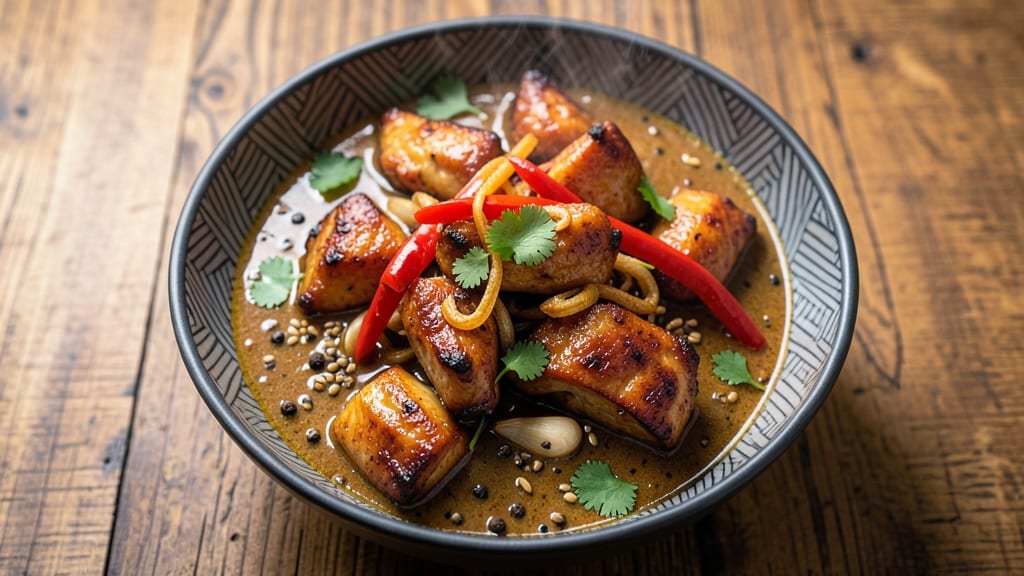
This black pepper chicken curry recipe transforms simple ingredients into a restaurant-quality dish with layers of heat, aroma, and depth. The secret lies in a balanced blend of black peppercorns, cumin, and coriander, toasted to unlock their full potential before simmering with coconut milk and tomatoes.
I first made this version during a Charleston heatwave when I needed bold flavors to cut through humidity—it became an instant favorite.
The technique starts with marinating chicken in yogurt and spices for at least 2 hours (overnight works even better), ensuring tender meat and maximum flavor absorption. Then comes the tempering stage—blooming whole spices in hot oil to create aromatic layers that build complexity as the curry simmers.
The coconut milk adds creamy richness without overpowering the peppery kick, while a touch of tamarind balances the heat.
By the time you serve it, you'll have a dish with juicy chicken pieces suspended in a velvety sauce that's fragrant with toasted spices and bright with citrus. The black peppercorns deliver a slow-building warmth that lingers on the palate, while the coconut milk provides a luxurious contrast.
This curry pairs perfectly with basmati rice or warm naan, ready to transport you to a bustling Indian street corner.
What makes this recipe work is the balance—enough heat to excite, enough creaminess to satisfy, and enough technique to feel professional. The process is straightforward but yields results that impress even seasoned cooks. Let's create this flavor-packed masterpiece together.
Ingredients for black pepper chicken curry
Here's what you need to create this restaurant-worthy black pepper chicken curry with bold flavors and fragrant coconut depth.
| Ingredient | Amount | Notes |
|---|---|---|
| Boneless Chicken Thighs 🍗 | 1 ½ lb | Cut into 1-inch pieces |
| Plain Yogurt 🥛 | 1 cup | Full-fat preferred |
| Black Peppercorns 🌶️ | 1 tbsp | Whole, lightly crushed |
| Ground Cumin 🌿 | 1 tbsp | Toasted for depth |
| Ground Coriander 🌿 | 1 tbsp | Freshly ground preferred |
| Garlic Cloves 🧄 | 6 cloves | Minced, fresh preferred |
| Ginger Root 🌿 | 1 tbsp | Fresh, grated |
| Coconut Milk 🥥 | 13 ½ oz | Full-fat canned |
| Crushed Tomatoes 🍅 | 14 ½ oz | Canned, no added salt |
| Tamarind Paste 🍯 | 1 tbsp | Adjust for tartness |
| Vegetable Oil 🫒 | ½ cup | High smoke point |
| Salt 🧂 | 1 ½ tsp | Kosher or sea salt |
| Lemon Juice 🍋 | 1 tbsp | Freshly squeezed |
| Fresh Cilantro 🌿 | ¼ cup | Chopped, for garnish |
| Red Chili Flakes 🌶️ | ½ tsp | Optional for extra heat |
The chicken thighs are non-negotiable here—they stay juicy while absorbing the marinade, unlike breasts which can dry out. Look for bone-in, skin-on thighs at Whole Foods or your local butcher for extra flavor. The yogurt should be plain and full-fat (Greek or regular)—low-fat versions won't coat the chicken properly. For spices, Penzeys Spices or bulk bins at Indian markets give you the freshest, most aromatic options. Toast your whole spices in a dry pan for 30 seconds before grinding—they'll develop deeper, nuttier flavors that make this curry sing.
No full-fat coconut milk? Light coconut milk plus a splash of heavy cream gets you close. Short on tamarind? Lime juice plus a pinch of sugar mimics the tang. The crushed tomatoes can be fresh if you're feeling fancy, but San Marzano cans from Trader Joe's are perfect—they're sweet, meaty, and never watery. Fresh ginger and garlic are worth the extra minute to grate and mince. Pre-minced garlic from the jar? Not worth it here. The red chili flakes are optional, but if you skip them, add an extra pinch of black peppercorns to keep that signature heat.
Marinate the chicken for at least 2 hours—overnight is even better. The spices will work their magic, breaking down the meat fibers for tender results. Store any leftover curry in airtight containers for 3-4 days in the fridge, or freeze portions for up to 3 months. The sauce actually improves overnight as the flavors meld. I like to reheat it gently on the stove with a splash of water to restore its velvety texture. Garnish with fresh cilantro right before serving—it adds that bright, herbal finish that makes everything feel fresh.
Why You'll Love This Recipe
- No-Yogurt Waste: That thick, tangy yogurt marinade doesn’t just flavor the chicken—it’s the secret to tender meat and a creamy sauce. No straining, no mess, just spoon it right from the jar straight into the pot. (Between us, I’ve ruined curries by overthinking this step—don’t overthink it.)
- Peppery Heat Payoff: Crushing whole peppercorns in the oil? Yes. That burst of fresh black pepper heat cuts through the richness of the thighs, and the cumin-coriander base keeps it warm and earthy. It’s the kind of flavor that lingers—like a good spice cabinet memory.
- Leftover Goldmine: This curry actually improves the next day. The chicken gets even more fall-off-the-bone tender, and the sauce thickens into something almost gravy-like. Freeze half for lazy nights, or reheat it with naan for a 2-minute dinner. (My college self would’ve cried.)
- Pantry-Friendly Power: Five ingredients you’re probably already using: chicken thighs, yogurt, cumin, coriander, and pepper. No specialty items, no last-minute grocery runs. Honestly, I’ve made this with whatever spices were in my cupboard and still got a solid, reliable dish. Budget win.
Step-by-step instructions for black pepper chicken curry
Here's how to build bold, fragrant layers of spice and coconut richness in your curry.
Marinate the Chicken with Black Pepper and Yogurt
Cut the 1.5 lb boneless chicken thighs into 1-inch pieces and place them in a mixing bowl. Add the 1 cup plain yogurt, 1 tbsp lightly crushed black peppercorns, 1 tbsp ground cumin, 1 tbsp ground coriander, 1.5 tsp salt, and 0.5 tsp red chili flakes. Using your hands, gently massage the marinade into the chicken until every piece is evenly coated.
Cover the bowl and refrigerate for at least 30 minutes—this lets the spices penetrate deeply. I like to marinate for up to 2 hours if possible, as the yogurt tenderizes the meat while the peppercorns infuse their sharp, aromatic punch. The longer it sits, the more complex the flavor becomes.
Sauté Aromatics in Vegetable Oil
Heat the 0.5 cup vegetable oil in a heavy-bottomed pot over medium heat until shimmering but not smoking. Add the 6 minced garlic cloves and 1 tbsp grated ginger root, cooking for 2-3 minutes until fragrant and just beginning to turn golden. This step builds the aromatic foundation—don't rush it.
Add the 14.5 oz crushed tomatoes and 1 tbsp tamarind paste, stirring to combine. Let the mixture simmer for 5 minutes until the tomatoes break down and the sauce thickens slightly. The tamarind adds a tangy depth that balances the richness of the coconut milk we'll add later.
Cook the Marinated Chicken
Add the marinated chicken to the pot in a single layer, spreading it out to ensure even browning. Cook for 5-6 minutes over medium-high heat, stirring occasionally, until the chicken develops a golden crust on all sides. This step is crucial—it locks in the flavors before we add the coconut milk.
Pour in the 13.5 oz coconut milk and stir gently to combine. The mixture will bubble vigorously as the coconut milk heats. Reduce the heat to medium-low and let the curry simmer uncovered for 20-25 minutes, stirring occasionally, until the chicken is tender and the sauce has thickened to a velvety consistency.
Finish with Fresh Herbs and Brightness
Stir in the 1 tbsp freshly squeezed lemon juice and 0.25 cup chopped fresh cilantro, adjusting the seasoning with additional salt if needed. The lemon juice brightens the dish, cutting through the richness of the coconut and balancing the bold pepper flavors. Taste and add more red chili flakes if you prefer extra heat.
Let the curry rest for 5 minutes off the heat before serving. This allows the flavors to meld completely. Serve with steamed basmati rice or warm naan, and watch as the aromatic steam rises with every spoonful—this is where the magic happens.
Pro Tips For Making Black Pepper Chicken Curry
- CRUSH THE PEPPERCORNS: Don’t just eyeball it—lightly toast whole black peppercorns in a dry pan for 30 seconds until fragrant, then grind them fresh. Pre-ground pepper loses its punch fast, and this step adds depth that jarred spices can’t match. (Yes, it’s an extra 30 seconds, but your curry will taste like it simmered for hours.)
- MARINATE THE CHICKEN DRY FIRST: Pat the chicken thighs bone-dry with paper towels before coating them in yogurt. The yogurt will cling better, and the skin will crisp up properly when you sear it. I used to skip this, and my curry always ended up soggy—now the thighs stay juicy but develop that perfect char.
- LOW AND SLOW AFTER THE SEAR: Once the chicken browns and you’ve added the spices, immediately reduce the heat to medium-low and cover the pot.* Black pepper curry needs time to meld, not burn. I learned this after one batch tasted bitter—turns out, rushing the simmer ruins the pepper’s bright, peppery finish.
- UPGRADE WITH A SPLASH OF CREAM: Stir in 2 tablespoons of heavy cream or coconut milk at the very end—just before serving. It cuts the richness of the yogurt and balances the pepper’s heat without overpowering the spices. (I know, it’s not traditional, but trust me: your curry will taste restaurant-quality.)
Wine and beer pairings for this black pepper chicken curry
White Wine Pairings
For this bold black pepper curry, I reach for a crisp Chenin Blanc from the Loire Valley—its citrus notes and slight mineral edge cut through the coconut richness while complementing the pepper's warmth.
A Viognier from California also works beautifully, with its floral aroma and peach undertones balancing the spice. Avoid heavy whites like Chardonnay—their buttery texture clashes with the dish's brightness.
If you prefer something lighter, a dry Riesling from Germany adds a refreshing acidity that enhances the tamarind's tang. I've also had great success with a Sauvignon Blanc from New Zealand, where its zesty grapefruit flavors mirror the lemon finish in the curry.
Serve these wines slightly chilled (45-50°F) to preserve their crispness against the warm spices. 🍷
Red Wine Options
While whites are traditional, a light-bodied Pinot Noir from Oregon can work if you prefer red. Its delicate berry notes and subtle earthiness won't overpower the dish, especially if you choose a younger vintage with bright acidity.
I'd avoid heavier reds like Cabernet Sauvignon—their tannins would compete with the pepper's heat.
For a more adventurous pairing, try a Gamay from Beaujolais. Its juicy red fruit flavors and silky texture complement the curry's complexity without dominating. Serve these reds at 55-60°F to let their fruitiness shine alongside the pepper's warmth. 🍇
Beer Pairings
A crisp Indian Pale Ale (IPA) with citrusy hops balances the curry's spice perfectly. Look for a West Coast IPA like Stone Ruination or a New England IPA with its hazy, juicy profile.
The hop bitterness tempers the pepper's heat while the fruity malt complements the coconut. Serve at 45-50°F to highlight these contrasting flavors.
For a non-alcoholic option, a ginger beer with a touch of lime adds refreshing zing. I've also enjoyed pairing this curry with a Belgian Witbier, where its coriander and orange peel notes echo the dish's aromatic spices. The effervescence cleanses the palate between bites. 🍺
Spirit Pairings
A small glass of gin with a twist of lemon makes an unexpected but excellent pairing. The botanical notes in quality gins (like Hendrick's) complement the pepper and ginger, while the citrus brightens the coconut.
For a richer option, a light rum cocktail with lime and soda adds tropical warmth that mirrors the curry's depth.
If you prefer whiskey, an unaged bourbon with its vanilla notes creates an interesting contrast to the pepper's sharpness. I've also had success with a Japanese whisky, where its clean finish lets the curry's complex flavors stand out.
Serve spirits at room temperature to appreciate their full character alongside the dish. 🥃
Nutrition facts
Frequently asked questions
Can I use chicken breasts instead of thighs for this curry?
While possible, I recommend thighs for this recipe—they stay juicy and tender while absorbing the bold marinade. If you must use breasts, pound them thin and marinate for at least 4 hours (overnight is best). Cook them at medium-low heat to prevent drying out, and add them to the curry only 10 minutes before serving.
How can I adjust the heat level in this curry?
The recipe balances heat with coconut creaminess. For milder heat, reduce the red chili flakes to ¼ tsp or omit entirely. For extra spice, add ½ tsp cayenne with the black peppercorns or serve with extra chili flakes on the side. The tamarind already adds tangy balance, so adjust gradually.
What's the best way to reheat leftovers?
Reheat gently on the stove over low heat with 2 tbsp water or coconut milk to restore creaminess. Avoid microwaving—it makes the sauce greasy. For extra flavor, add a splash of lemon juice or fresh cilantro when reheating. Store leftovers in airtight containers for 3-4 days or freeze for 3 months.
Can I make this curry in an Instant Pot?
Yes! Sauté the aromatics as directed, then add chicken, tomatoes, tamarind, and spices. Cook on High Pressure for 8 minutes, then quick-release. Stir in coconut milk and simmer 5 minutes on Sauté mode. The pressure cooker cuts time but may make the sauce slightly thinner—reduce it longer if needed.
What are the best sides to serve with this curry?
Classic pairings include steamed basmati rice (absorbs the sauce beautifully) or garlic naan (for scooping). For freshness, add a cucumber raita (yogurt with grated cucumber and mint) or blistered green beans. The coconut richness also works well with roasted sweet potatoes or cauliflower rice for a lighter option.